



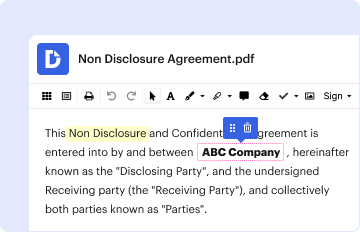
01. Edit your form online
Type text, add images, blackout confidential details, add comments, highlights and more.

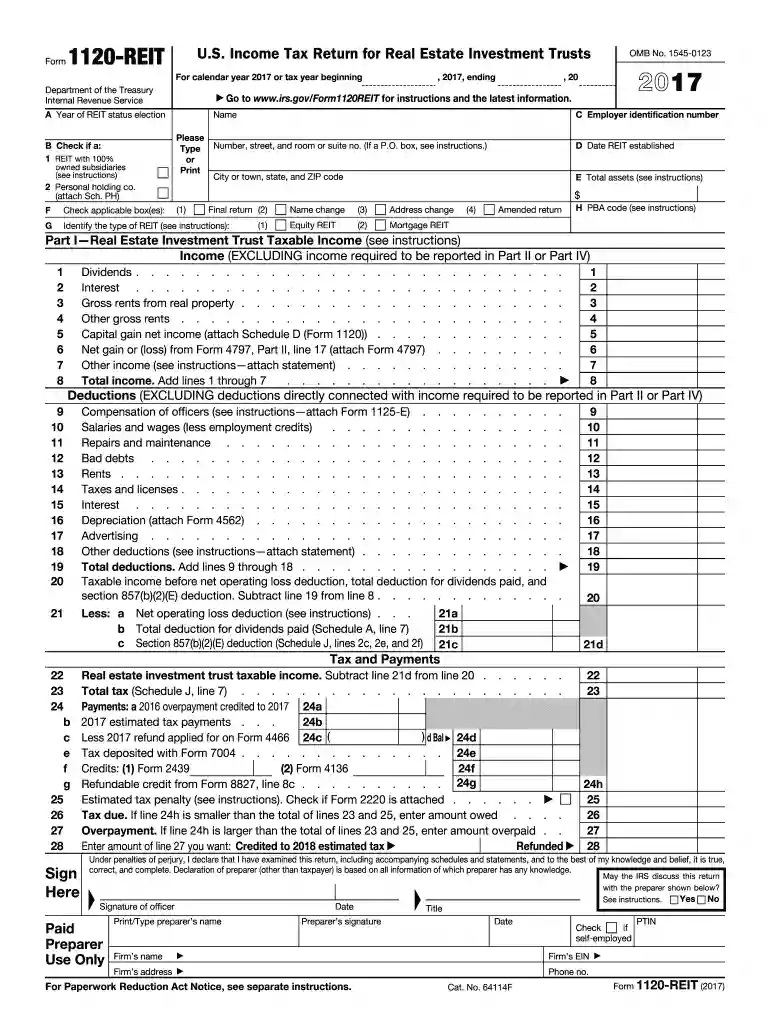
Type text, add images, blackout confidential details, add comments, highlights and more.
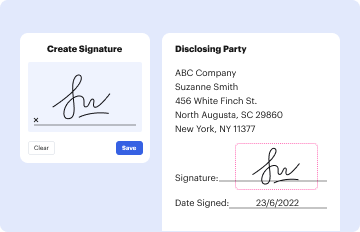
Draw your signature, type it, upload its image, or use your mobile device as a signature pad.

Send it via email, link, or fax. You can also download it, export it or print it out.
The Form 1120-REIT, also known as the U.S. Income Tax Return for Real Estate Investment Trusts, is a tax form used by Real Estate Investment Trusts (REITs) to report taxable income, deductions, and taxes related to U.S. operations. It’s essential for REITs to comply with IRS regulations and fulfill their tax obligations for the year 2017. The form requires comprehensive reporting of income sources, deductions related to business operations, and tax computations, ensuring that the trust adheres to the federal tax laws governing its operations.
The form encompasses several critical components that REITs must address:
Income Reporting: Trusts must outline all income sources, including rents, dividends, and interest, that contribute to the overall revenue.
Deductions: REITs can claim various deductions related to operating expenses, which are pivotal in reducing taxable income.
Tax Calculation: This section includes the computation of taxes on net income derived from foreclosure properties and other applicable tax obligations.
Gather Necessary Information: Compile all financial documents, including income statements, expense reports, and any previous tax filings relevant to the form.
Review IRS Instructions: Carefully examine the IRS guidelines specific to Form 1120-REIT to ensure full compliance with submission requirements.
Complete Each Section:
Verify and Double-Check: Ensure all figures and entries are accurate, preventing potential discrepancies.
Submission: Decide the method of submission, whether online through IRS e-filing or via mail.
The primary users of this form are Real Estate Investment Trusts operating within the U.S. These entities are typically involved in real estate investments like rental properties, mortgage loans, or property development, showcasing the need for specialized tax treatment under IRS regulations.


The form legally captures detailed tax liabilities and entitlements of REITs. It aligns with U.S. tax laws, ensuring that trusts fulfill their federal obligations by reporting accurate and complete financial activities. Proper completion of the form is critical to avoid potential legal repercussions or penalties from the IRS.
The IRS provides explicit guidelines for Form 1120-REIT, delineating detailed instructions for each section. It covers important specifications, such as eligibility criteria for REIT status, applicable exemptions, and penalties for failure to submit or inaccurately filling out the form.
REITs are required to file the Form 1120-REIT by the 15th day of the fourth month after the end of their tax year. For trusts operating on a calendar year basis, the due date is typically April 15, unless extended.
Filing the 2017 Form 1120-REIT necessitates several supporting documents, including:
Non-compliance with the filing deadline or inaccurately reporting figures can result in significant penalties. The IRS imposes fines for late submissions, understated tax liabilities, or incomplete documentation. It is imperative for trusts to maintain rigorous accounting standards to avoid such repercussions.
Tax software programs such as TurboTax or QuickBooks offer functionalities to assist in preparing Form 1120-REIT. Utilizing compatible software can streamline the process, ensuring accuracy and compliance with IRS standards. These tools also facilitate electronic filing, enhancing efficiency in tax submissions.
We've got more versions of the 2017 Form 1120-REIT. U.S. Income Tax Return for Real Estate Investment Trusts form. Select the right 2017 Form 1120-REIT. U.S. Income Tax Return for Real Estate Investment Trusts version from the list and start editing it straight away!
| Versions | Form popularity | Fillable & printable |
|---|---|---|
| 2025 | 4.5 Satisfied (52 Votes) | |
| 2024 | 4.4 Satisfied (24 Votes) | |
| 2023 | 4.6 Satisfied (20 Votes) | |
| 2022 | 4.1 Satisfied (57 Votes) | |
| 2021 | 4.8 Satisfied (246 Votes) | |
| 2020 | 4.3 Satisfied (199 Votes) | |
| 2019 | 4.3 Satisfied (223 Votes) | |
| 2018 | 4.4 Satisfied (117 Votes) | |
| 2017 | 4.3 Satisfied (50 Votes) | |
| 2016 | 4.4 Satisfied (280 Votes) | |
| 2015 | 4.3 Satisfied (163 Votes) |
At DocHub, your data security is our priority. We follow HIPAA, SOC2, GDPR, and other standards, so you can work on your documents with confidence.
Instructions for Form 1120-REIT, U.S. income tax return for real estate investment trusts. Author / Creator: United States. Internal Revenue Service. AvailableRead more
Mar 31, 2026 Corporation, trusts, and associations electing to be treated as Real Estate Investment Trusts file this form to report their Current revision.Read more


