



01. Edit your 1120 reit online
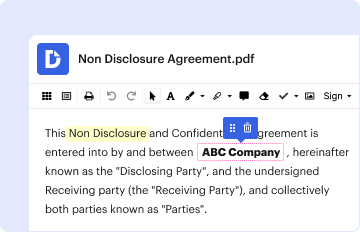
Type text, add images, blackout confidential details, add comments, highlights and more.

Type text, add images, blackout confidential details, add comments, highlights and more.
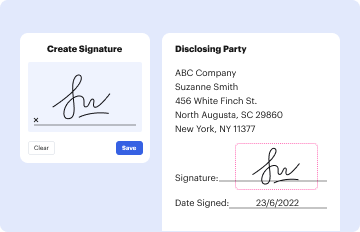
Draw your signature, type it, upload its image, or use your mobile device as a signature pad.

Send real estate investment form via email, link, or fax. You can also download it, export it or print it out.
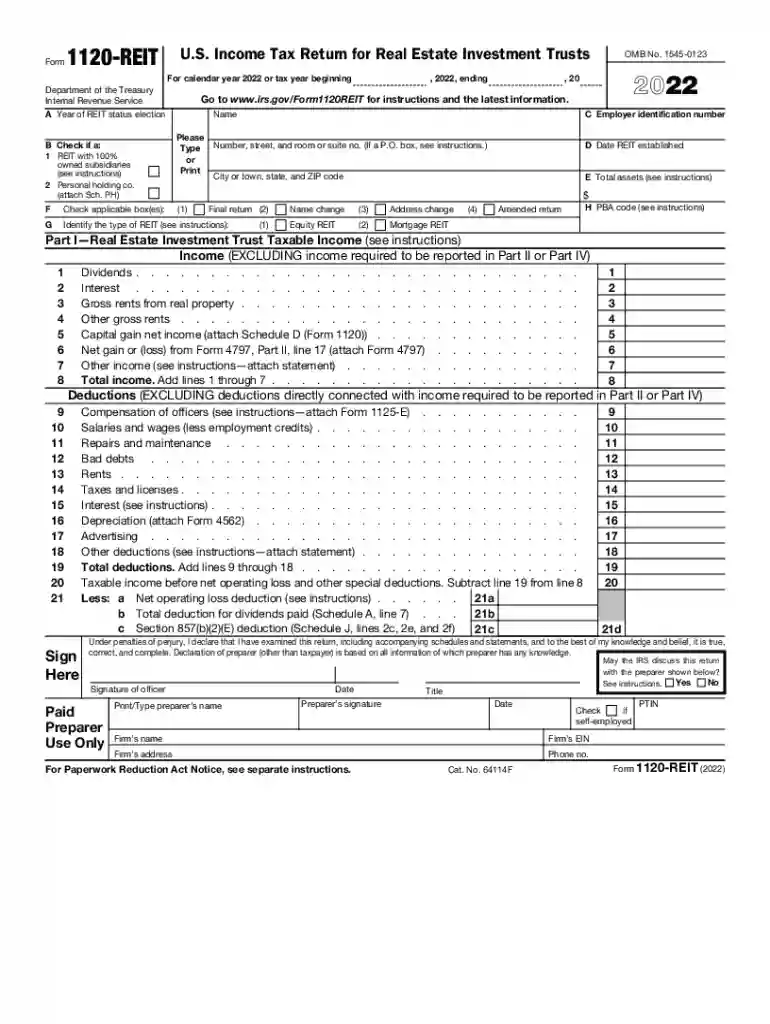
Form 1120-REIT, officially known as the U.S. Income Tax Return for Real Estate Investment Trusts, is a critical document for entities classified as Real Estate Investment Trusts (REITs) in the United States. This form is used to report the trust's income, deductions, and credits to the Internal Revenue Service (IRS). REITs attract specific tax treatments because they provide tax-advantaged opportunities to individual investors interested in real estate markets, allowing them to earn income through real estate investments without directly owning property.
Form 1120-REIT is exclusively used by Real Estate Investment Trusts. A REIT is typically a company that owns or finances income-producing real estate across a range of property sectors. To avoid corporate income taxes, a REIT is required to comply with the Internal Revenue Code provisions, including the distribution of at least 90% of taxable income in the form of shareholder dividends annually. Entities like residential, commercial, or mortgage REITs regularly submit this form to adhere to federal tax obligations.
Primary sections of Form 1120-REIT are dedicated to reporting the organization's total income, dividends paid, and other financial data. The form requires detailed sections for:
Understanding specific terminology is essential for completing Form 1120-REIT accurately:
Form 1120-REIT must be filed by the 15th day of the third month following the close of the REIT's tax year, traditionally March 15 for calendar year entities. Special rules apply for filing extensions, which need to be requested using Form 7004.
REITs can file their tax returns either digitally through the IRS e-file system or by mailing physical documents to the IRS. Digital submission is often recommended for faster processing and confirmation. Ensure to keep a copy of the filed documents for records and future reference.
Failure to file Form 1120-REIT by the due date can lead to substantial penalties. These penalties increase based on the duration of delay and any taxes owed. Compliance with regulatory requirements prevents additional interest and fines, safeguarding the REIT’s favorable tax treatment.
The IRS provides specific guidelines in the form's instructions, detailing how to report unique income types, calculate deductions, and handle extraordinary financial items. Careful adherence to these guidelines ensures proper compliance and minimizes the risk of audits.
Comprehensively understanding and carefully executing each component of Form 1120-REIT is vital to maintaining a REIT’s legal and financial standing within U.S. tax regulations.
We've got more versions of the 1120 reit form. Select the right 1120 reit version from the list and start editing it straight away!
| Versions | Form popularity | Fillable & printable |
|---|---|---|
| 2025 | 4.5 Satisfied (52 Votes) | |
| 2024 | 4.4 Satisfied (24 Votes) | |
| 2023 | 4.6 Satisfied (20 Votes) | |
| 2022 | 4.1 Satisfied (57 Votes) | |
| 2021 | 4.8 Satisfied (246 Votes) | |
| 2020 | 4.3 Satisfied (199 Votes) | |
| 2019 | 4.3 Satisfied (223 Votes) | |
| 2018 | 4.4 Satisfied (117 Votes) | |
| 2017 | 4.3 Satisfied (50 Votes) | |
| 2016 | 4.4 Satisfied (280 Votes) | |
| 2015 | 4.3 Satisfied (163 Votes) |
At DocHub, your data security is our priority. We follow HIPAA, SOC2, GDPR, and other standards, so you can work on your documents with confidence.
Mar 31, 2026 Corporation, trusts, and associations electing to be treated as Real Estate Investment Trusts file this form to report their Current revision.Read more
Instructions for Form 1120-REIT, U.S. income tax return for real estate investment trusts Reproducible copies of federal tax forms and instructions.Read more


