



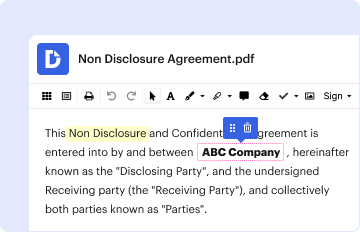
01. Edit your form online
Type text, add images, blackout confidential details, add comments, highlights and more.

Type text, add images, blackout confidential details, add comments, highlights and more.
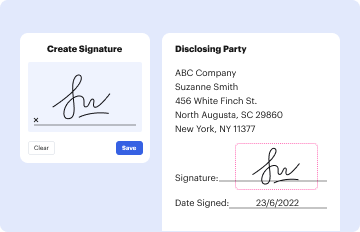
Draw your signature, type it, upload its image, or use your mobile device as a signature pad.

Send it via email, link, or fax. You can also download it, export it or print it out.
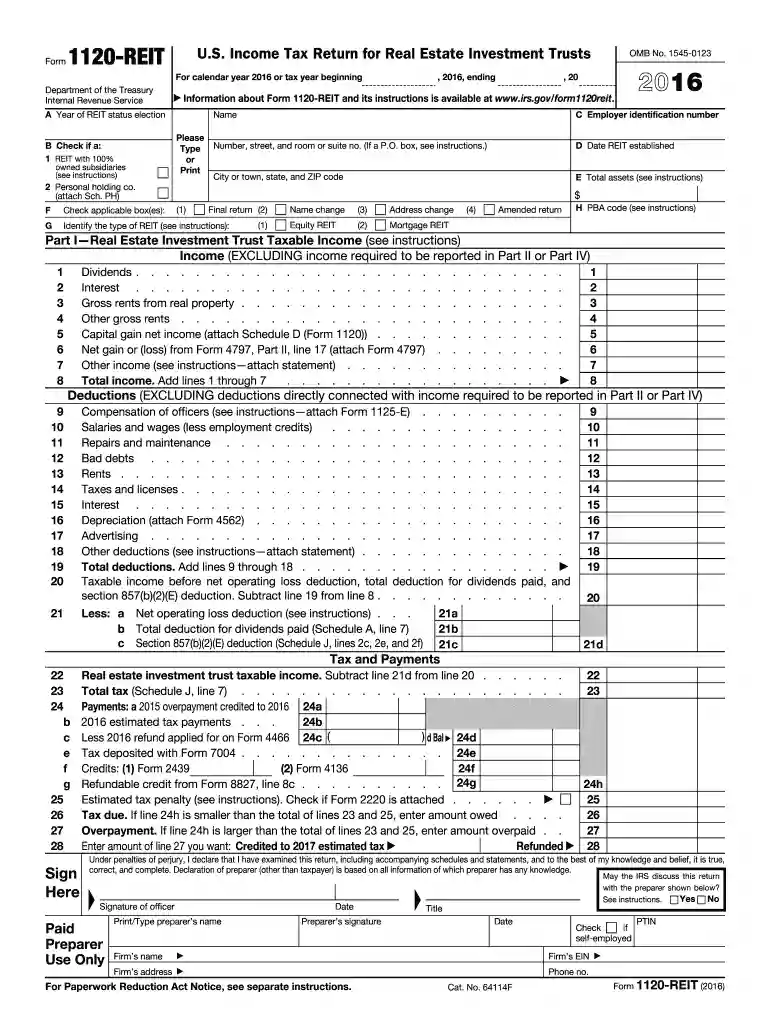
2016 Form 1120-REIT is used by Real Estate Investment Trusts (REITs) in the United States to report income, deductions, gains, losses, and tax liabilities to the Internal Revenue Service (IRS). This form is essential for complying with the federal tax regulations governing REITs. A REIT is an entity that owns, operates, or finances income-producing real estate, and leveraging this form allows them to avoid paying corporate income tax by meeting specific requirements, such as distributing most of their taxable income to shareholders.
Form 1120-REIT ensures transparency and compliance by detailing income sources like rents from real property, investment income, and capital gains. It also outlines allowable deductions related to real estate activities and other financial transactions pertinent to the REIT’s operations. The form assists in calculating taxes owed on net income derived from foreclosure property and any other income that might be subjected to taxation.
Tax laws demand that REITs use Form 1120-REIT to report earnings accurately to ensure they are compliant with IRS regulations. Failure to file this form can result in significant penalties and loss of REIT status, impacting their ability to distribute income tax-free to shareholders. Legal compliance includes ensuring all parts of the form are filled as per IRS instructions and maintaining records for auditing purposes.
This form is generally used by corporations structured as Real Estate Investment Trusts. It is applicable to entities managing real estate portfolios or engaged in mortgage investing. This form is less relevant for individuals or businesses in other non-real estate sectors. It caters primarily to corporations that are organized to meet the specific qualifications of a REIT under the IRS guidelines.


We've got more versions of the 2016 Form 1120-REIT - irs form. Select the right 2016 Form 1120-REIT - irs version from the list and start editing it straight away!
| Versions | Form popularity | Fillable & printable |
|---|---|---|
| 2025 | 4.5 Satisfied (52 Votes) | |
| 2024 | 4.4 Satisfied (24 Votes) | |
| 2023 | 4.6 Satisfied (20 Votes) | |
| 2022 | 4.1 Satisfied (57 Votes) | |
| 2021 | 4.8 Satisfied (246 Votes) | |
| 2020 | 4.3 Satisfied (199 Votes) | |
| 2019 | 4.3 Satisfied (223 Votes) | |
| 2018 | 4.4 Satisfied (117 Votes) | |
| 2017 | 4.3 Satisfied (50 Votes) | |
| 2016 | 4.4 Satisfied (280 Votes) | |
| 2015 | 4.3 Satisfied (163 Votes) |
At DocHub, your data security is our priority. We follow HIPAA, SOC2, GDPR, and other standards, so you can work on your documents with confidence.
For Paperwork Reduction Act Notice, see the Instructions for Form 1120. 17. 18. (3,048). Cat. No. 11460M. Schedule D (Form 1120) 2016. Page 8. Schedule D (Form
Use Form 1120-REIT, U.S. Income Tax Return for Real Estate. Investment Trusts, to report the income, gains, losses, deductions, credits, certain penalties, andRead more


