






Definition and Purpose of the 2016 Estimated Tax Forms 2017
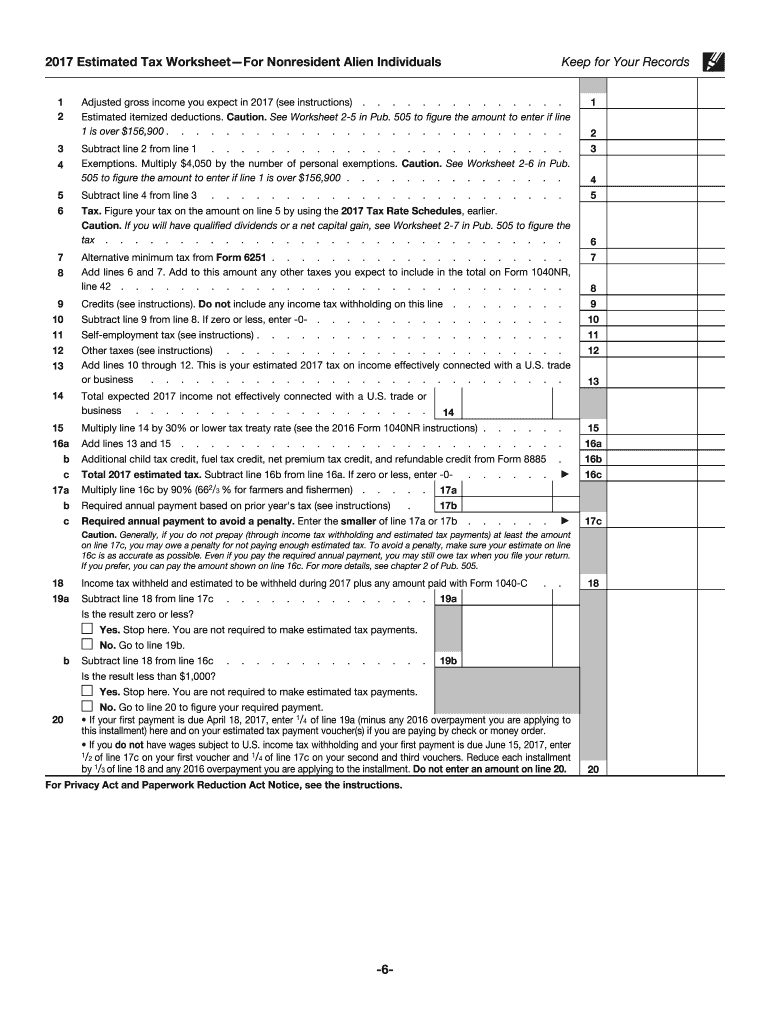
The 2016 estimated tax forms for 2017, particularly the Form 1040-ES (NR) for nonresident aliens, are essential for individuals to calculate and remit their estimated taxes for the upcoming tax year. This form is tailored for those whose income is not subject to withholding, such as self-employed individuals or those residing outside the U.S. The primary function of these forms is to help taxpayers determine if they need to make quarterly estimated tax payments and how much to pay. Estimated tax is the method used to pay tax on income that isn't subject to withholding, like earnings from self-employment, dividends, interest, rent, or capital gains.
Steps to Complete the 2016 Estimated Tax Forms 2017
-
Collect Financial Records: Gather all income sources, deductions, and credits. This can include bank statements, investment portfolios, and expense receipts.
-
Use IRS Worksheets: Utilize the worksheets provided in the form instructions to calculate your taxable income, deductions, and the estimated tax.
-
Calculate Estimated Payments: Determine the amount of estimated tax to be paid each quarter by applying your expected tax rate to your taxable income projection.
-
Verify Compliance with IRS Guidelines: Ensure that the calculations adhere to IRS requirements, avoiding common errors like misreporting income or failing to apply the correct tax rates.
-
Record Payment Schedule: Keep a record of payment deadlines to ensure timely payments, as these are usually due in four intervals throughout the year.
How to Obtain the 2016 Estimated Tax Forms 2017
You can acquire the 2016 estimated tax forms for 2017 through various channels:
- IRS Website: Downloadable forms are available directly on the IRS website, free of charge.
- Physical Copies: Request paper forms by calling the IRS hotline or visiting a local IRS office.
- Tax Software: Use tax preparation software, which typically includes the necessary forms as part of the package and offers guided completion assistance.
IRS Guidelines for Estimated Tax Forms
Accurate completion of the estimated tax forms is facilitated by following IRS guidelines:
- Qualification Criteria: Understand who must make estimated payments, typically individuals with substantial income not subject to withholding.
- Special Conditions: Recognize special rules for certain taxpayers, like farmers and fishers, who have different payment schedules and rates.
- Adjustment Capabilities: Utilize estimated payments to mitigate potential interest and penalties for underpayment of taxes.
Who Typically Uses the 2016 Estimated Tax Forms 2017
This form is most commonly used by:
- Self-Employed Individuals: People running their own businesses or working as freelance professionals.
- Investors and Landlords: Those earning through dividends, interest, or rental income.
- Nonresident Aliens: Individuals residing outside the U.S. who earn income from U.S. sources and do not have withholding applied.


Key Elements of the 2016 Estimated Tax Forms 2017
Understanding the core components of the form is crucial:
- Personal Information: Includes name, address, and taxpayer identification number.
- Income Details: Comprehensive declaration of estimated income sources for the tax year.
- Withholding and Credits: Deductible elements and credits anticipated for the year.
- Payment Coupons: Vouchers for each quarterly payment, facilitating accurate payment tracking.
Filing Deadlines and Important Dates
Timely compliance with filing deadlines is critical:
- Quarterly Payments: Payments for the tax year 2017 were generally due in April, June, September of 2016, and January of 2017.
- Annual Adjustments: Optionally adjusting the subsequent year's estimate based on any over- or underpayment from the previous year. If a fourth payment is necessary, it could be utilized to settle discrepancies.
Penalties for Non-Compliance
Failure to comply with estimated tax requirements can lead to:
- Underpayment Penalties: Financial penalties may apply if individuals underpay their estimated taxes during the year.
- Late Payment Penalties: Additional fees may be incurred for payments made after deadlines, further increasing the taxpayer's liability.
Software Compatibility
Taxpayers often rely on software to manage tax filings efficiently:
- TurboTax and QuickBooks: These offer robust features for calculating and tracking estimated payments.
- DocHub Integration: While not a tax calculation platform, DocHub can complement these tools by allowing document editing, signing, and sharing capabilities for related tax documentation.