







Definition & Meaning
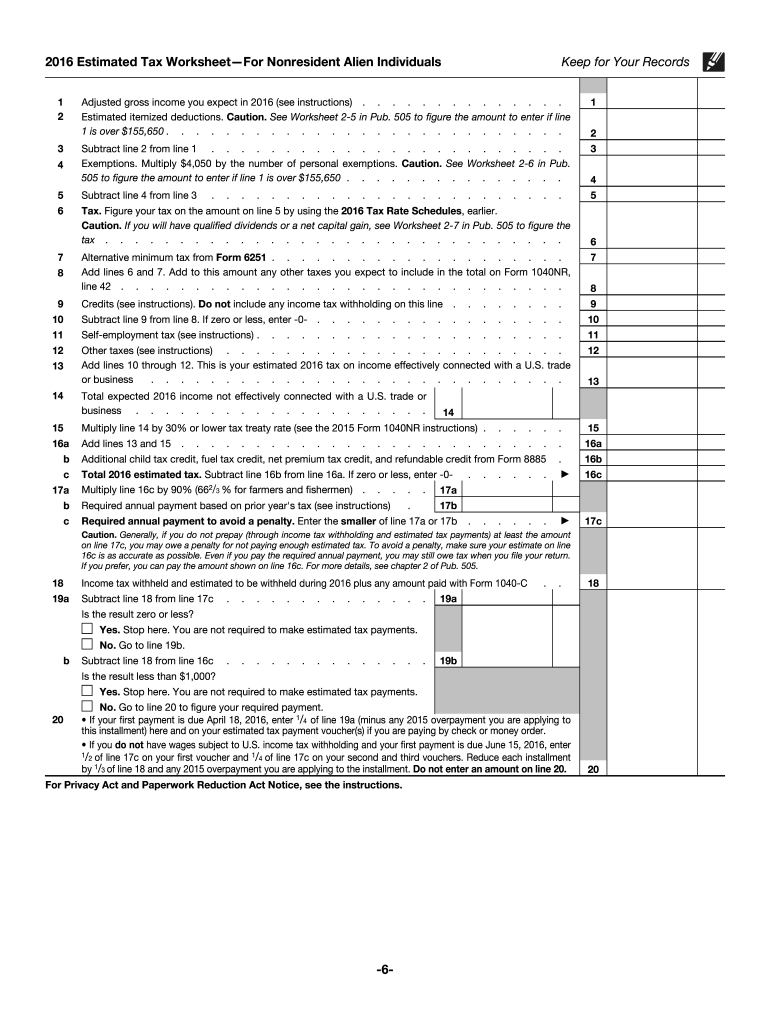
The "2016 estimated tax forms," specifically the IRS Form 1040-ES (NR), are designed for nonresident alien individuals to calculate and remit their estimated taxes. These forms are essential for individuals who earn income that is not subject to withholding tax, making it critical to ensure compliance with U.S. tax obligations.
Understanding the purpose and use of Form 1040-ES (NR) can prevent tax liabilities and potential penalties. This form is crucial for accurately predicting tax liabilities based on current income, deductions, and credits.
How to Use the 2016 Estimated Tax Forms
To use the 2016 estimated tax forms effectively, individuals must first determine if they are required to file based on income thresholds. The process involves calculating the estimated tax liability by considering adjusted gross income, taxable income, and applicable deductions.
- Gather Personal Financial Information: Collect details about income, deductions, and credits.
- Estimate Taxable Income: Use anticipated income and deductions to project taxable income.
- Calculate Estimated Tax: Apply current tax rates to estimate total tax liability.
- Deduct Tax Credits: Deduct any applicable tax credits to reduce the total estimated tax.
Steps to Complete the 2016 Estimated Tax Forms
Completing the 2016 estimated tax forms involves careful steps to ensure accuracy and compliance:
- Fill Out Personal Information: Include name, address, and taxpayer identification number.
- Project Annual Income: Estimate expected income for the year, considering all sources.
- Determine Deductions and Credits: Identify deductions and credits applicable to the tax year.
- Calculate Estimated Tax Payments: Use the worksheet included in the form to determine quarterly payments.
- Submit Payments: Make payments by the specified due dates to avoid penalties.
Important Considerations
- Payment Deadlines: Ensure payments are made quarterly and on time.
- Adjustments: Reassess taxable income throughout the year to adjust payments if necessary.
Filing Deadlines / Important Dates
The IRS sets specific deadlines for making estimated tax payments, typically on a quarterly basis:
- Payment 1: April 15
- Payment 2: June 15
- Payment 3: September 15
- Payment 4: January 15 of the following year
These deadlines help taxpayers avoid underpayment penalties and ensure that tax payments are timely and accurate.
Who Typically Uses the 2016 Estimated Tax Forms
The 2016 estimated tax forms are primarily used by nonresident aliens who have income from U.S. sources, including:
- Self-Employed Individuals: These taxpayers often do not have taxes withheld from their income.
- Investors and Freelancers: Those earning income from sources such as dividends, capital gains, and freelance work.
- Business Owners: Small business owners whose operations are not subject to employer withholding.
Understanding which taxpayers are required to use these forms is critical to ensuring proper tax compliance.


IRS Guidelines
The IRS provides guidelines that explain who must file estimated taxes and how to correctly estimate future tax liability. These guidelines help nonresident aliens understand the nuanced requirements of U.S. tax laws and promote compliance with federal tax obligations.
Required Documents
To accurately complete the 2016 estimated tax forms, collect and organize all necessary documents:
- Income statements: Wage and income statements from all sources.
- Expense records: Detailed records of deductible expenses.
- Prior-year tax returns: Useful for estimating current-year income and deductions.
- Tax credit documentation: Proof for any applicable tax credits claimed.
Having these documents on hand ensures completeness and accuracy in the tax filing process.
Penalties for Non-Compliance
Failure to submit estimated tax payments on time can result in penalties. Key penalties include:
- Underpayment Penalties: Charged if payments are insufficient compared to actual tax liability.
- Late Payment Penalties: Assessed for payments made after deadlines.
Understanding these penalties underscores the importance of accurate calculation and timely payment of estimated taxes.
Key Elements of the 2016 Estimated Tax Forms
The key elements of the 2016 estimated tax forms include sections that detail taxpayer information, payment calculation worksheets, and submission instructions. These sections guide individuals in estimating their tax liabilities and submitting payments according to IRS requirements.
Understanding these elements can simplify the filing process and ensure adherence to tax regulations.




