


Housing assessment template 2026

Get Form
housing assessment template Preview on Page 1

Here's how it works

01. Edit your housing assessment template online
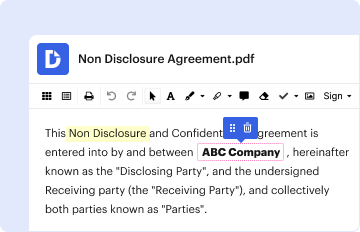
Type text, add images, blackout confidential details, add comments, highlights and more.
02. Sign it in a few clicks
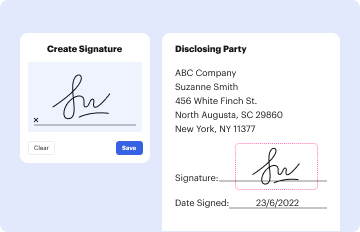
Draw your signature, type it, upload its image, or use your mobile device as a signature pad.
03. Share your form with others
Send housing assessment form via email, link, or fax. You can also download it, export it or print it out.

How to use or fill out housing assessment template with our platform

Form edit decoration
9.5
Ease of Setup
DocHub User Ratings on G2
9.0
Ease of Use
DocHub User Ratings on G2
  1. Click ‘Get Form’ to open the housing assessment template in the editor.
  2. Begin by entering the client’s name, intake date, and case number at the top of the form. This information is crucial for tracking and reference.
  3. In Part 1, review the list of housing barriers with the client. Check all applicable barriers that may affect their housing stability.
  4. Move to Part 2 and document the client's housing history. For each type of residence, include dates of residence and reasons for leaving.
  5. In Part 3, assess financial stability by checking all sources of income received in the last month and documenting amounts. Also, inquire about any debts and assets.
  6. Finally, in Part 4, gather information on housing needs and preferences. Record details such as preferred locations and special needs to ensure appropriate placements.

Start using our platform today to streamline your document editing and form completion process for free!

See more housing assessment template versions

We've got more versions of the housing assessment template form. Select the right housing assessment template version from the list and start editing it straight away!
Versions Form popularity Fillable & printable
2017 4.3 Satisfied (23 Votes)
be ready to get more

Complete this form in 5 minutes or less

Get form

Got questions?

We have answers to the most popular questions from our customers. If you can't find an answer to your question, please contact us.
Contact us
The housing first model is a simple concept: remove barriers to housing, and people will succeed. That can mean providing permanent housing without restrictions, such as sobriety requirements.
Five Principles of Housing First Immediate access to permanent housing with no housing readiness requirements. Participant/client choice and self-determination. Recovery orientation. Individual and participant/client-driven supports. Social and community integration.
The Study is a process for identifying housing needs, prioritizing goals and objectives, and reviewing and developing long-range housing policies and implementation strategies.
1) Define the Market area. 2) Analyze Demographic Characteristics. 3) Consider the Economic Factors Influencing the Demand for Housing. 4) Analyze the Housing Supply Side. 5) Analyze the Political-Legal Environment. 1) Define the Market Area. The availability of public transit can also enlarge the market area.
A four-year randomized controlled trial assessing a permanent supportive housing program in Santa Clara County, California, found similar outcomes. Out of the 199 people experiencing chronic homelessness assigned to the treatment group, 172 people, or 86 percent, were ever housed during the trial.

Security and compliance

At DocHub, your data security is our priority. We follow HIPAA, SOC2, GDPR, and other standards, so you can work on your documents with confidence.

Learn more
ccpa2
pci-dss
gdpr-compliance
hipaa
soc-compliance

People also ask

A property assessment is an evaluation conducted by local government authorities and banks to determine the value of a property for taxation purposes. Property assessments typically involve evaluating the propertys market value, which includes its land and any structures on it, to establish its worth.
Rather than moving homeless individuals through different levels of housing, whereby each level moves them closer to independent housing (for example: from the streets to a public shelter, and from a public shelter to a transitional housing program, and from there to their own apartment or house in the community),
It involves a structured interview to assess a homeless individual on 10 domains: survival skills, basic needs, indicated mortality risks, medical risks, organization/orientation, mental health, substance use, communication, social behaviours, and homelessness.

housing assessment history