Definition and Meaning of DHHS Form 3218 ME
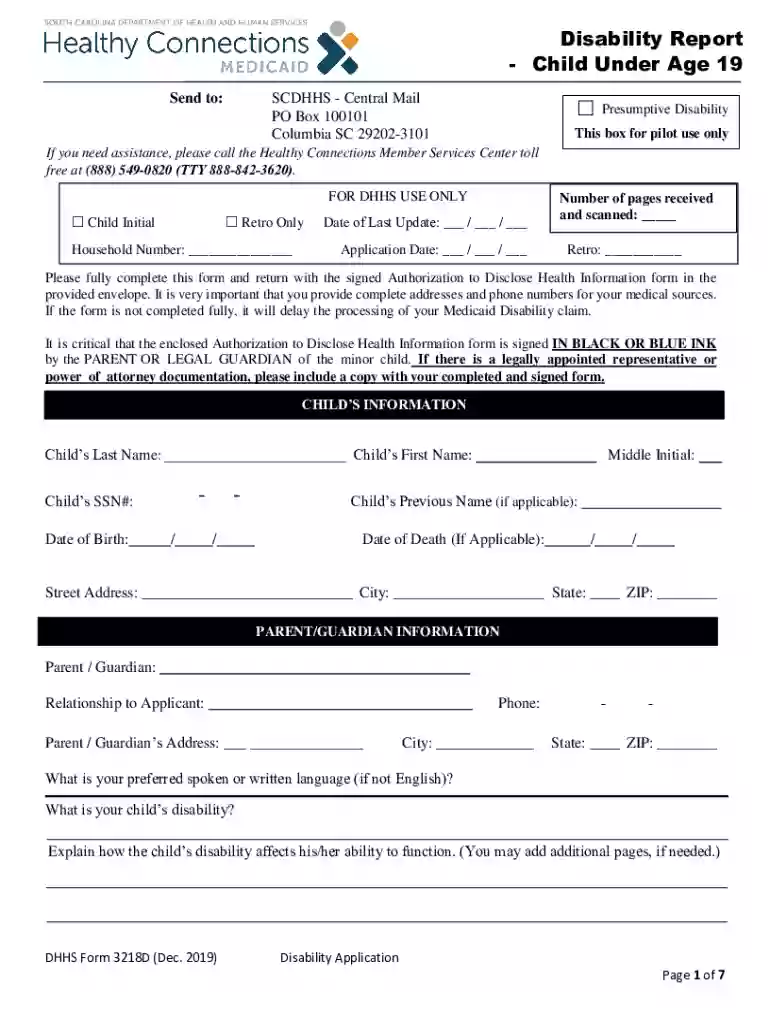
The DHHS Form 3218 ME is an essential document used primarily for Medicaid Disability claims in the state of Maine. It is classified as a Disability Report designed specifically for children under the age of 19. The form collects crucial information regarding the child's disability, including their medical history, therapy providers, and educational background. This information is vital for the Maine Department of Health and Human Services (DHHS) to assess the eligibility of the child for Medicaid benefits. A detailed understanding of the form's purpose is vital for accuracy and compliance in the application process.
- Purpose: The main objective of the form is to facilitate Medicaid Disability claims by collecting comprehensive information on the child’s condition and needs.
- Target Audience: This form is aimed at parents or guardians of children who are seeking Medicaid assistance based on a qualifying disability.
- Usage Context: The information provided enables the DHHS to determine if the child meets the necessary criteria for Medicaid benefits under federal and state guidelines.
How to Obtain the DHHS Form 3218 ME
Acquiring the DHHS Form 3218 ME is a straightforward process. Individuals can obtain the form from several sources, ensuring broad accessibility.
- Online Access: The form is typically available on the official Maine DHHS website. Users can download the document directly to their devices for completion.
- Local DHHS Office: Individuals may also visit local DHHS offices to request a physical copy of the form. This option may be beneficial for those who prefer to complete the form with assistance from staff.
- Healthcare Providers: Some healthcare providers or social service agencies may have copies of the form readily available for parents and guardians seeking to apply for Medicaid benefits for their children.
Having the form accessible through various channels ensures that individuals can conveniently engage with the Medicaid application process.
Steps to Complete the DHHS Form 3218 ME
Completing the DHHS Form 3218 ME requires careful attention to detail to ensure that all necessary information is accurately reported. The following steps outline the process:
- Gather Required Information: Start by collecting all pertinent documents, including the child’s medical records, provider details, and any previous documentation regarding the disability.
- Fill Out Personal Information: Clearly enter the child’s full name, date of birth, and contact information. Accuracy in this section is crucial for proper identification.
- Detail the Disability: Provide a thorough description of the child’s disability, including the diagnosis, onset date, and any specific symptoms or limitations experienced.
- Medical History: Include relevant medical history, including treatments received, names of healthcare providers, and therapies undertaken to manage the disability.
- Educational Background: Describe the child’s educational situation, including any special education services or accommodations in place at school.
- Review and Sign: Carefully review the completed form for accuracy and completeness. Make sure to sign and date the form, as unsigned submissions may be rejected.
Completing the form accurately will help minimize processing delays and ensure that the Medicaid application can be assessed swiftly.
Important Terms Related to DHHS Form 3218 ME
Understanding the terminology associated with the DHHS Form 3218 ME is crucial for accurately completing the form and navigating the Medicaid process. Here are some key terms:
- Disability: Refers to the impairment that limits a child's ability to function in daily activities. This may include physical, mental, or developmental disabilities.
- Medicaid: A state and federal program designed to provide healthcare coverage for low-income individuals and families, including children with disabilities.
- Eligibility Criteria: The specific requirements that must be met for an individual to qualify for Medicaid benefits, often based on income limits and medical necessity.
- Therapy Providers: Healthcare professionals and specialists who provide necessary treatment and support services for the child's disability.
Familiarity with these terms will aid in the correct completion of the form and understanding of the overall process.
Legal Use of the DHHS Form 3218 ME
The DHHS Form 3218 ME must be used in compliance with state and federal laws governing Medicaid applications. Understanding the legal framework surrounding this form is essential for applicants.
- Confidentiality: All information provided in the form is subject to privacy laws, ensuring that personal and medical information is handled securely and confidentially by the DHHS.
- Compliance with Guidelines: Applicants must adhere to any guidelines set forth by the DHHS, ensuring that submissions meet the criteria established for Medicaid eligibility.
- Legal Responsibility: Providing false information or omitting critical details on the form can lead to legal consequences, including denial of benefits or potential penalties.
Understanding these legal aspects is crucial to ensure that the form is used appropriately and to avoid any unintended consequences.
Key Elements of the DHHS Form 3218 ME
The DHHS Form 3218 ME includes several key elements designed to collect the necessary information for processing Medicaid Disability claims. The following components are essential for a complete application:
- Applicant Information: Personal details about the child and their guardian or parent, including names, contact information, and relationship to the child.
- Detailed Disability Description: A section requiring a comprehensive overview of the child's disability, including the nature of the condition and its impact on daily living activities.
- Medical Provider Information: A list of healthcare professionals involved in the child's care, including their contact information and type of services provided.
- Educational Information: A summary of the child’s educational status, including any special services received, which is crucial for understanding the disability's impact on learning.
Ensuring that all key elements are addressed will facilitate a smooth application process and reduce the likelihood of delays or requests for additional information.
Steps for Submission of the DHHS Form 3218 ME
Submitting the completed DHHS Form 3218 ME requires following specific steps to ensure proper processing.
- Verify Complete Information: Before submission, double-check that all required fields are completed accurately, avoiding any blank spaces that may cause delays.
- Select Submission Method: Determine whether to submit the form online, by mail, or in-person at a DHHS office. Each method may have different processing times.
- If Mailing:
- Use a secure envelope and ensure it is properly addressed to the relevant DHHS office.
- Consider using certified mail to track the delivery and ensure that the submission is received.
- If Submitting Online: Follow the instructions provided on the DHHS website for electronic submissions, ensuring adherence to any protocols for uploading documents.
- Track Submission Status: After submitting the form, keep a record of any confirmation or tracking numbers provided. This will be useful for checking the status of the application or responding to any inquiries.
Adhering to these steps will enhance the likelihood of a timely and successful application process.