




01. Edit your vtr 34 online
Type text, add images, blackout confidential details, add comments, highlights and more.

Type text, add images, blackout confidential details, add comments, highlights and more.

Draw your signature, type it, upload its image, or use your mobile device as a signature pad.

Send form vtr 34 via email, link, or fax. You can also download it, export it or print it out.
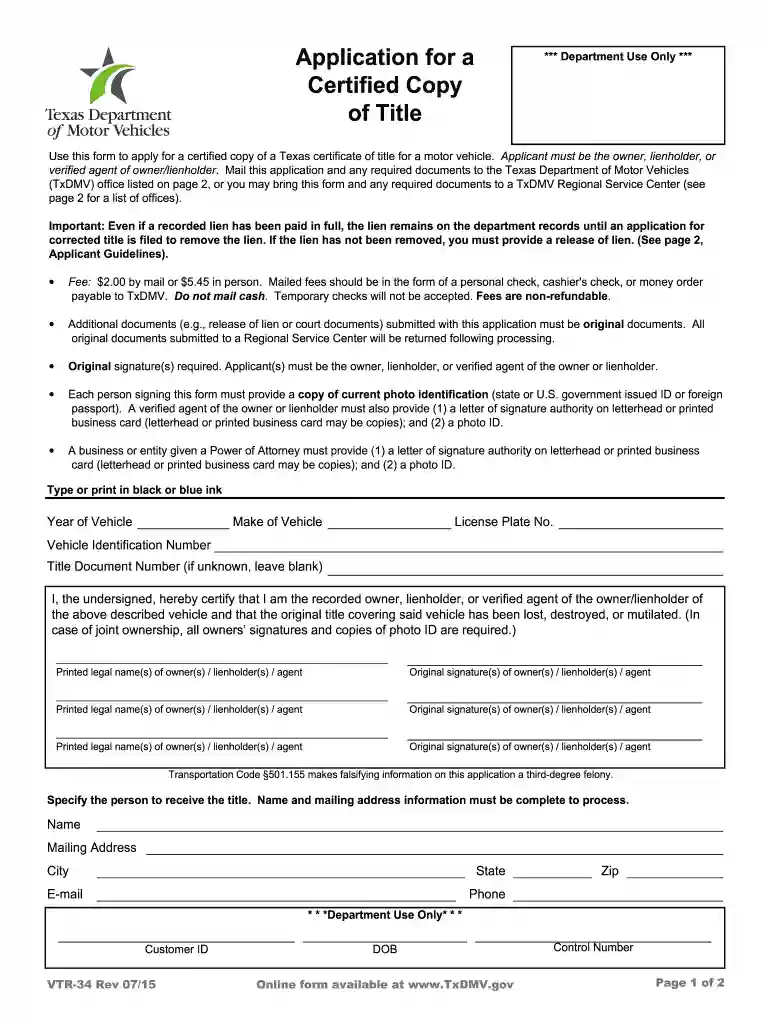
The form VTR 34 2015 is an essential document used in Texas for obtaining a certified copy of a motor vehicle title. This application is typically utilized when the original title has been lost, stolen, or damaged. It is pivotal for vehicle owners to understand the significance of this form, as it is the gateway to legally proving ownership of a vehicle. Missing or required vehicle titles can create complications when selling or transferring ownership, making this form a fundamental aspect of vehicle ownership in Texas.
The primary function of the VTR 34 is to facilitate a seamless process for individuals and entities seeking a duplicate title. The following points illustrate its significance:
Acquiring the VTR 34 form is straightforward. It can be accessed through multiple channels:
Filling out the VTR 34 form requires careful attention to detail to ensure accuracy. Key sections include:
Alongside the completed VTR 34 form, applicants must submit specific documents to support their request. These typically include:
The completed form and required documents can be submitted through several methods:
Form VTR 34 is legally recognized under Texas law, providing a structured process for requesting a duplicate title. Key legal considerations include:
Failing to properly fill out and submit the form can result in delays in receiving a duplicate title or denial of the application, potentially complicating vehicle transactions. Additionally, using an invalid title can have legal ramifications when selling or registering a vehicle.
Various individuals and entities utilize Form VTR 34 for different practical reasons. Common scenarios include:
Consider a scenario in which a vehicle owner sells their car but realizes the title is missing. Using Form VTR 34, they quickly apply for a duplicate title to complete the sale legally and without complications from the buyer’s side.
Utilizing Form VTR 34 efficiently ensures compliance and streamlined transactions regarding vehicle ownership. Emphasize the following:
Ultimately, understanding the nuances of the VTR 34 2015 form can save time and facilitate smoother vehicle transactions within Texas, solidifying rightful ownership and reducing potential legal issues.
We've got more versions of the vtr 34 form. Select the right vtr 34 version from the list and start editing it straight away!
| Versions | Form popularity | Fillable & printable |
|---|---|---|
| 2026 | 4.9 Satisfied (50 Votes) | |
| 2024 | 4.7 Satisfied (60 Votes) | |
| 2021 | 4.8 Satisfied (90 Votes) | |
| 2017 | 4.4 Satisfied (145 Votes) | |
| 2015 | 4.1 Satisfied (77 Votes) | |
| 2014 | 4.4 Satisfied (51 Votes) | |
| 2013 | 4 Satisfied (37 Votes) | |
| 2013 | 4.3 Satisfied (43 Votes) | |
| 2012 | 4.4 Satisfied (64 Votes) | |
| 2007 | 4 Satisfied (22 Votes) |
At DocHub, your data security is our priority. We follow HIPAA, SOC2, GDPR, and other standards, so you can work on your documents with confidence.
The Virtual Tissue Repository (VTR). FFPE tissue blocks from recently diagnosed cancers (
The Application for a Certified Copy of a Texas Nonrepairable or Salvage Vehicle Title. (Form VTR-34-S) must be completed by the ownerRead more


