






Definition and Meaning of the Bee Affidavit
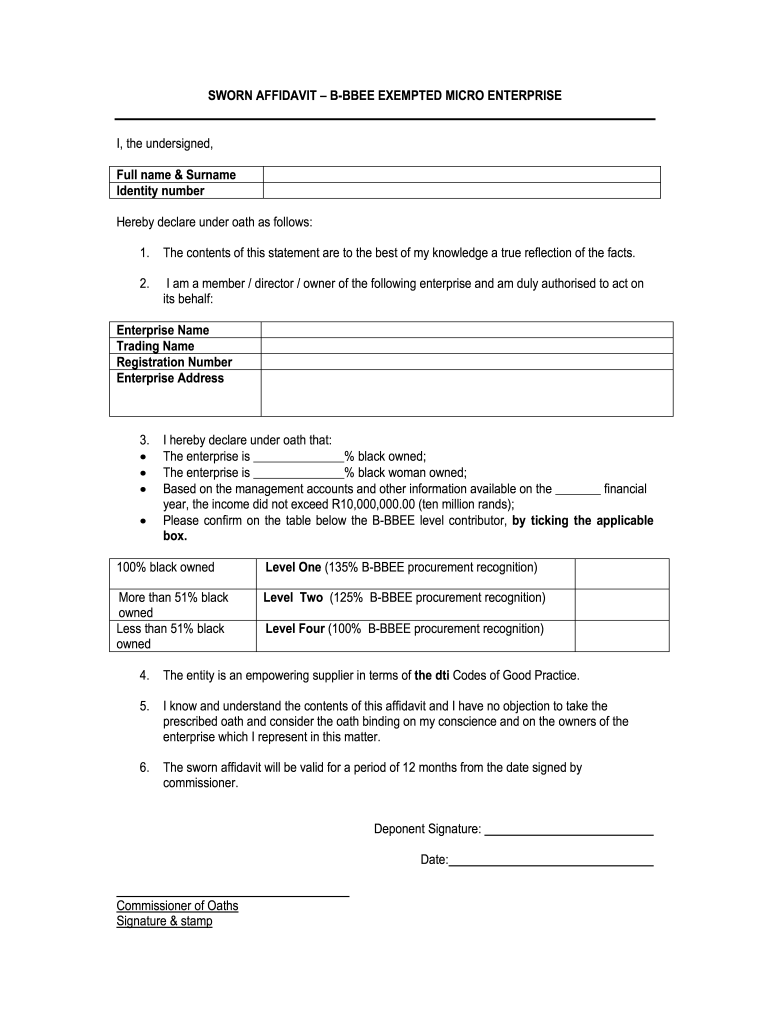
A bee affidavit serves as a legally sworn statement verifying the ownership, financial status, and Broad-Based Black Economic Empowerment (B-BBEE) levels of an enterprise in South Africa. This document is essential for businesses aiming to comply with the B-BBEE Act, which promotes economic participation among Black South Africans. The affidavit is typically required every twelve months and plays a crucial role in demonstrating a company's commitment to transformation and empowerment initiatives. The information provided within the affidavit aids companies in securing contracts, as many government and private sectors mandate a specific B-BBEE level for eligibility.
The bee affidavit outlines key facts such as the ownership structure, reflecting that the business is black owned, and financial details that meet the necessary criteria set by the Department of Trade and Industry (dti) Codes of Good Practice. This declaration ensures that enterprises claiming B-BBEE status are transparent and compliant, fostering a fair business environment.
Steps to Complete the Bee Affidavit
Completing a bee affidavit involves several key steps that require attention to detail and accuracy. It is crucial to gather all relevant business documentation before starting the process. Follow these steps to ensure accurate completion:
-
Gather Necessary Documentation: Collect relevant documents, including company registration proof, tax clearance certificates, and financial statements. These documents will support your claims within the affidavit.
-
Determine Ownership Structure: Clearly define and document the ownership structure of the business. It is often essential to outline percentages of ownership held by black individuals or groups.
-
Complete the Affidavit Form: Utilize a bee affidavit template that meets the legal criteria. Fill in the required information accurately, ensuring each section corresponds to the business documents collected earlier.
-
Affix Signatures: After completing the affidavit, all claiming parties must sign it in the presence of a Commissioner of Oaths or a similar authorized official. Their endorsement authenticates the document.
-
Submission: Review the completed affidavit for any errors and submit it according to the specified requirements, whether online, via mail, or in person, depending on the requesting authority's guidelines.
Completing a bee affidavit correctly is essential for maintaining compliance and benefiting from the associated economic advantages.
Important Terms Related to the Bee Affidavit
Understanding the essential terminology surrounding the bee affidavit is critical, as it helps in the accurate interpretation and completion of the document. Here are a few key terms:
-
Broad-Based Black Economic Empowerment (B-BBEE): A governmental policy aimed at enhancing the economic status of black individuals in South Africa through various means, including ownership, management, and skills development.
-
Commissioner of Oaths: An authorized individual who can witness the signing of affidavits and verify the identity of signatories, ensuring the document's legitimacy.
-
Exempted Micro Enterprise (EME): This term refers to businesses with a turnover below a certain threshold, which may qualify for simplified B-BBEE compliance processes and reduced reporting requirements.
Understanding these terms will facilitate a clearer, smoother process when dealing with the completion and submission of the bee affidavit.
Who Typically Uses the Bee Affidavit
Various entities utilize the bee affidavit to support their business standing and ensure compliance with B-BBEE requirements. Key users of the document include:
-
Small Business Owners: Owners of existing small and emerging enterprises use the bee affidavit to demonstrate their commitment to B-BBEE requirements, which can improve their competitiveness in securing contracts.
-
Government Vendors: Businesses aiming to supply goods or services to government entities must often provide a bee affidavit as proof of their B-BBEE status to qualify for tenders.
-
Corporate Entities: Larger companies may require evidence of their vendors and partners’ B-BBEE compliance through a bee affidavit to meet internal diversity policies and corporate responsibility objectives.
-
Consultants and Advisors: Professionals in the sector may assist clients in ensuring that their B-BBEE strategies are effective and compliant, using bee affidavits to substantiate claims made during audits.
This widespread use illustrates the importance of the bee affidavit across various sectors, reinforcing its role in promoting equitable economic empowerment.


Legal Use of the Bee Affidavit
The bee affidavit plays a pivotal role in legal and regulatory frameworks governing business practices in South Africa. Its primary uses can be categorized as follows:
-
Compliance Verification: The bee affidavit serves as a formal declaration within compliance audits. Companies may be required to present these affidavits to prove their B-BBEE levels during inspections or assessments.
-
Contract Eligibility: Many government contracts or tenders stipulate a minimum B-BBEE compliance level. Should a bee affidavit not be submitted or be deemed invalid, firms risk loss of potential revenue and contracting opportunities.
-
Fraud Prevention: By requiring affidavits, regulators create a system of checks that deter fraudulent claims of compliance. The affidavit’s sworn nature mitigates the risk of misrepresentation in ownership and status.
Ensuring the legal adequacy of a bee affidavit is essential for entities seeking to engage in markets that value or require adherence to B-BBEE guidelines. Proper completion and submission can enhance a business's legitimacy and sustainability.