01. Edit your form online
Type text, add images, blackout confidential details, add comments, highlights and more.

Type text, add images, blackout confidential details, add comments, highlights and more.

Draw your signature, type it, upload its image, or use your mobile device as a signature pad.

Send it via email, link, or fax. You can also download it, export it or print it out.
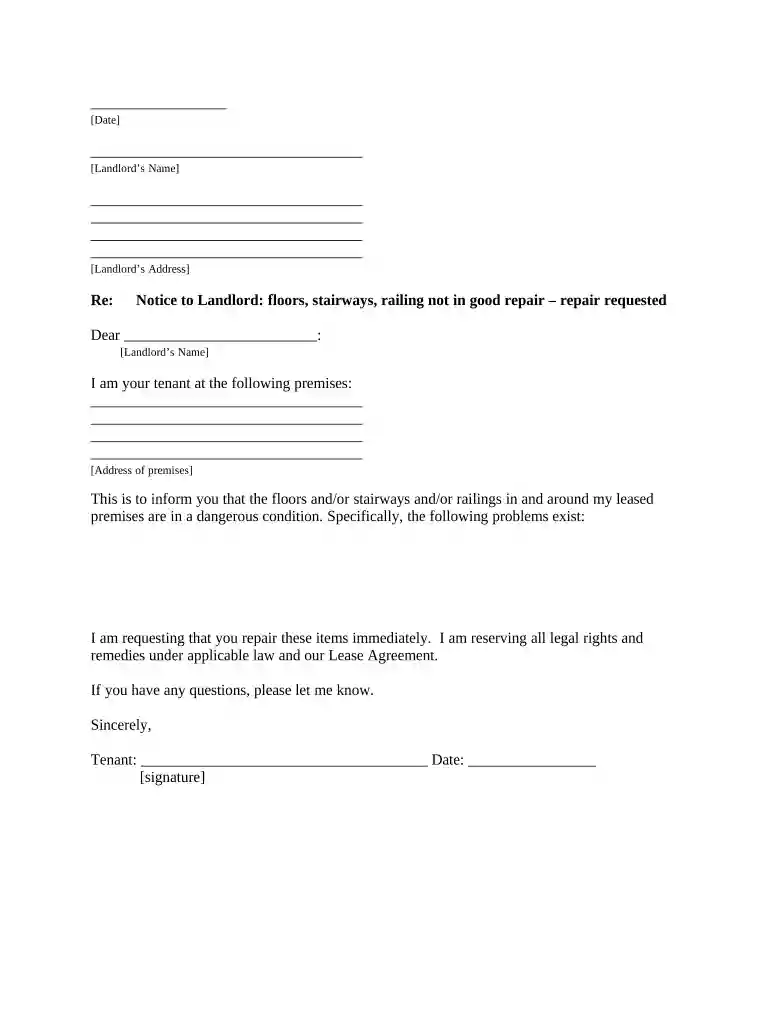
The "letter tenant with" is primarily used by tenants to communicate pertinent issues and requests to their landlords, especially concerning matters of property maintenance or repair. This document forms part of the essential dialogue between tenants and property owners, aimed at addressing concerns related to living conditions within a leased space. It enables tenants to formally request timely repairs and solutions to problems such as unsafe flooring, faulty stairways, or broken railings, thereby ensuring that leased premises remain habitable and comply with landlord obligations under a lease agreement.
Tenants can use the "letter tenant with" to address specific concerns about the condition of their rental property. It is crucial to clearly outline the issues and specify the required repairs. Use a formal tone and include all relevant details like the date of the incident, description of the problem, and photographic evidence if possible. Notify the landlord of legal obligations that require them to make necessary repairs, referencing any relevant sections of the lease agreement. Ensure that the letter is sent through a traceable method, like certified mail, to maintain a record of communication.
Obtaining a "letter tenant with" form is straightforward. Tenants can create their own or download a template suited to their needs. Many legal services websites and tenant rights organizations may offer downloadable forms that cater to specific state regulations. When crafting a custom version, ensure it includes key details such as the tenant's contact information, the property address, specifics of the complaint, desired outcomes, and a reasonable time frame for repairs.
Gather Information: Collect detailed information about the property and the specific issues encountered.
Draft the Letter: Use a template or draft from scratch. Begin with tenant and landlord contact details, followed by a concise description of the issues.
Detail the Complaint: Clearly describe the condition needing attention, providing evidence to support the claim if available.
Reference the Lease: Mention relevant sections of the lease agreement that obligate the landlord to maintain safe living conditions.
Request Action: Specify the desired resolution and a reasonable time frame for the landlord to respond and address the issues.
Review and Send: Double-check for accuracy and completeness. Send the completed letter via certified mail to provide proof of delivery.
Using the "letter tenant with" is an effective method for tenants to communicate formal complaints and requests to landlords. It ensures that the tenant’s concerns are documented, which can be essential for legal proceedings if disputes arise. It also emphasizes the tenant's rights under relevant housing laws, encouraging landlords to prioritize necessary repairs or risk legal consequences.
This document is typically used by tenants in residential rental agreements encountering issues with the maintenance of leased properties. It is also relevant for property management companies or legal representatives acting on behalf of tenants to ensure that the living conditions meet legal standards and lease agreements. The letter is vital for any tenant seeking to assert their rights and ensure proper living conditions are maintained.


Different states in the U.S. have varying regulations regarding tenant and landlord responsibilities. It is crucial for tenants to tailor their letters to reflect specific state laws regarding property maintenance and tenant rights. For instance, some states might have stricter rules on response times or different requirements for documenting complaints. Tenants should consult local tenant advocacy groups or legal counsel to ensure state compliance in their letters.
At DocHub, your data security is our priority. We follow HIPAA, SOC2, GDPR, and other standards, so you can work on your documents with confidence.