
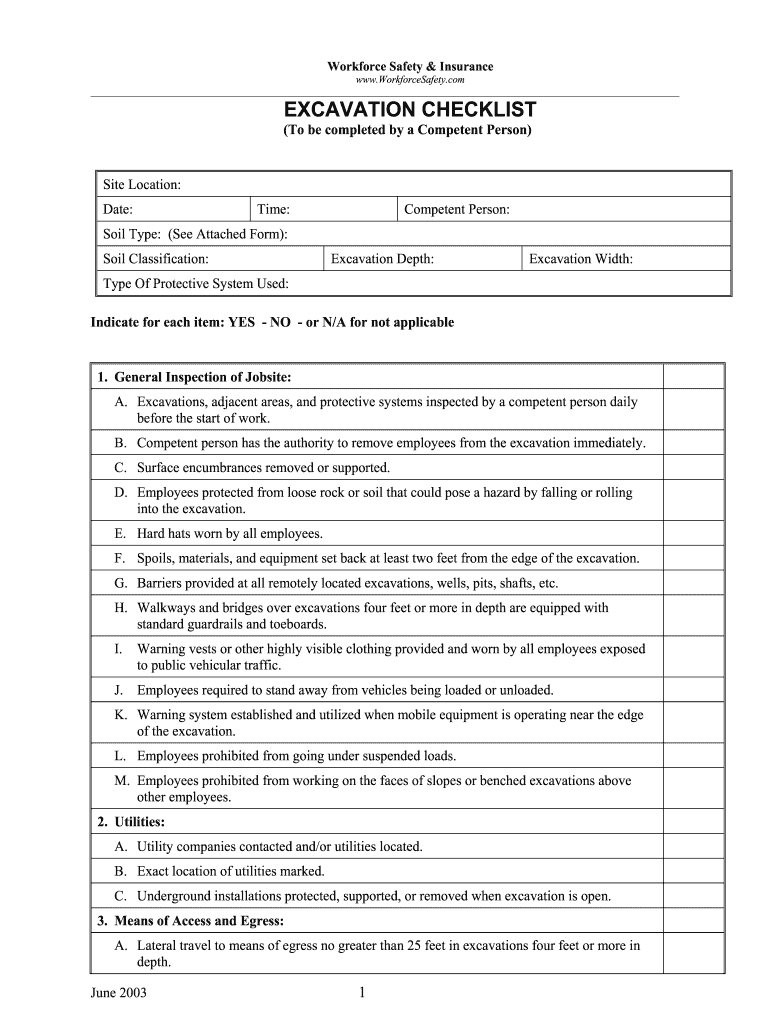







Definition and Importance of the Excavation Checklist Excel
An excavation checklist Excel is a vital tool used by construction professionals to ensure safety and compliance during excavation operations. This form encapsulates a comprehensive checklist designed to be utilized by a Competent Person—an individual who has the responsibility for ensuring that all safety regulations are met before and during excavation activities. The checklist covers critical safety measures, including general site inspections, utility management, and hazard assessments, to prevent accidents and ensure legal compliance.
Utilizing an excavation checklist Excel helps streamline the process of documenting necessary inspections and safety practices. It serves multiple purposes:
- Safety Compliance: Helps in adhering to OSHA regulations, minimizing workplace accidents.
- Documentation: Provides a clear record of the safety steps taken during excavation.
- Efficiency: Simplifies the process for use in office and field settings, enhancing productivity by allowing easy alterations to the checklist as project specifics change.
Steps to Complete the Excavation Checklist Excel
Completing an excavation checklist Excel involves several key steps that guide users through the process of ensuring safety and compliance. Here, we outline these steps for clarity.
-
Pre-Planning: Before excavating, assess the site to identify potential hazards.
- Conduct utility checks to locate buried lines.
- Review soil conditions and previous site usage.
-
Fill in the General Information: This includes the project name, location, and date of the excavation.
- Ensure details reflect any changes, such as weather conditions affecting the site.
-
Checklist Items Completion: Go through each item methodically, marking them as complete.
- Examples include checking for proper signage, ensuring protective equipment availability, and evaluating slope stability.
-
Document Documentation: Record findings, noting any issues or areas requiring immediate attention.
- Provide detailed notes on any identified hazards for future reference.
-
Obtain Necessary Signatures: Ensure that all relevant personnel review and sign off on the completed checklist.
- This confirms that all parties acknowledge the safety measures taken.
Following these steps ensures that all safety regulations are met and documented thoroughly, reducing risks associated with excavation work.
Key Elements of the Excavation Checklist Excel
The excavation checklist Excel contains several essential elements that help maintain safety and compliance during excavation activities. Understanding these components can enhance both safety and operational efficiency on job sites.
- Site Inspections: Document checks for potential hazards, including soil type and slope stability.
- Utility Management: Confirm the location of underground utilities and check for proper clearance during excavation.
- Personal Protective Equipment (PPE): Track the availability and use of necessary PPE such as helmets, gloves, and visibility vests.
- Access and Egress Plans: Ensure that safe entry and exit points are established for equipment and workers.
- Hazardous Atmosphere Monitoring: Evaluate for conditions that could produce hazardous atmospheres, such as toxic gases or insufficient oxygen levels.
These elements provide a holistic view of excavation safety, ensuring that critical factors are not overlooked.
Who Typically Uses the Excavation Checklist Excel?
The excavation checklist Excel is predominantly utilized by various professionals engaged in construction, engineering, and excavation projects. Some of the primary users include:
- Site Supervisors: Responsible for overseeing field operations and ensuring compliance with safety protocols.
- Contractors: Manage specific excavation contracts and are legally accountable for safety measures.
- Safety Officers: Ensure that all regulations are followed and that workforce safety is prioritized.
- Project Managers: Coordinate multiple teams and maintain documentation for safety compliance and quality assurance.
Additionally, this checklist can be benefitted by subcontractors and site-specific technicians who play a role in excavation procedures, thereby broadening its usability across the construction sector.


Legal Use of the Excavation Checklist Excel
The legal implications of using an excavation checklist Excel cannot be overstated. Compliance with OSHA guidelines and other federal and state regulations establishes a legal framework that protects both workers and employers. The checklist serves as a legal document that verifies safety measures:
- Documentation Compliance: Provides proof of safety checks performed, minimizing liability in case of accidents.
- Standards Adherence: Ensures compliance with OSHA's excavation standards and local regulations.
- Liability Protection: Helps defend against legal claims or fines related to unsafe work practices.
Organizations should retain completed checklists for a suitable period to facilitate inspections by regulatory bodies and support safety audits, ensuring transparent compliance history.
Examples of Using the Excavation Checklist Excel
Utilizing the excavation checklist Excel can lead to improved safety standards and operational efficiency. Here are a few practical scenarios illustrating its application.
-
New Construction Site: Before excavation begins, the site supervisor utilizes the checklist to inspect for potential utility conflicts, weather impacts, and required safety measures. This step prevents costly setbacks or injuries once excavation starts.
-
Remedial Excavation: In a project involving the removal of hazardous materials, contractors leverage the checklist to ensure compliance with mandatory regulations. Each item checked ensures all crew members are aware of safety protocols, enabling safe removal procedures.
-
Training New Staff: Supervisors can use the checklist to familiarize newcomers with safety expectations on site. This hands-on approach reinforces the importance of safety protocols, contributing to a safer work environment.
These examples illustrate how the excavation checklist excel can be integrated into various operational scenarios to enhance safety, compliance, and effectiveness on construction sites.




