







Definition and Purpose of a Hunter Permission Written Form
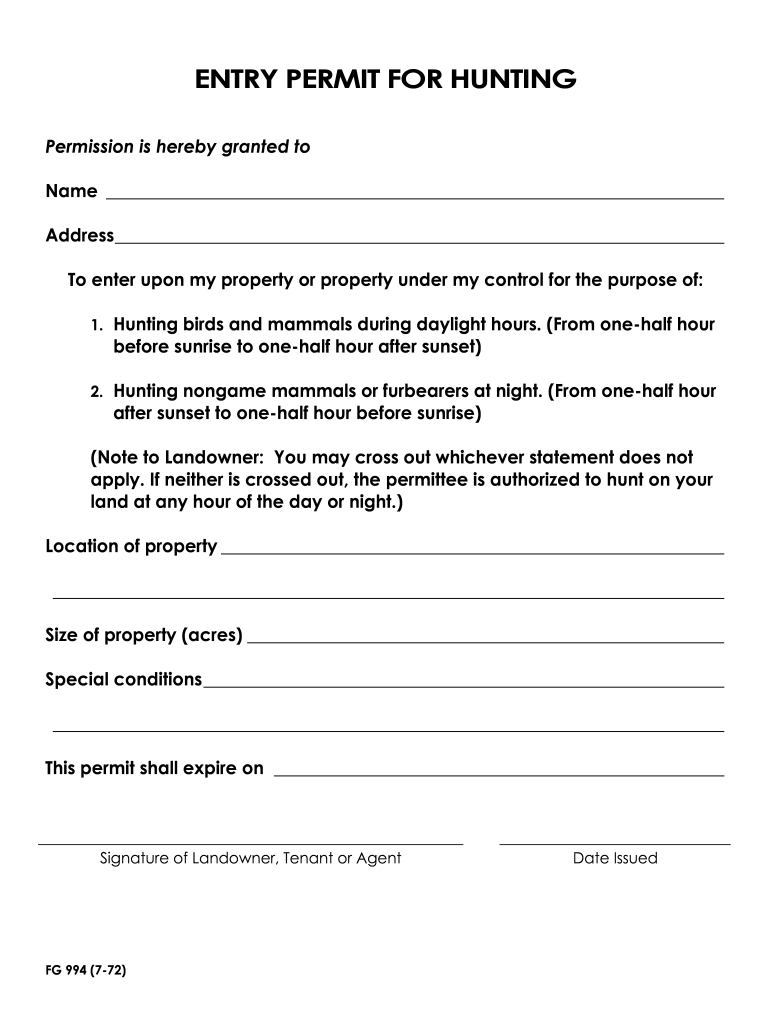
The hunter permission written form serves as a legal document granting permission for hunters to access and hunt on a landowner's property. This form is vital in ensuring that both the landowner and the hunter understand the boundaries and stipulations related to hunting activities. The primary purpose of this written authorization is to protect property rights while allowing hunters to pursue game legally.
- Key Elements: The form typically includes essential details such as:
- Name and address of the landowner
- Name and contact information of the permittee (the hunter)
- Description of the property (location, size)
- Specific dates and times when hunting is permitted
- Types of game that may be hunted
- Any special conditions (such as areas to avoid or restrictions)
Understanding these components is crucial for both parties to ensure compliance with local hunting laws and regulations.
How to Create a Hunter Permission Written Form
Creating a hunter permission written form involves several key steps to ensure clarity and legality. The process can vary slightly based on state regulations, but generally, it follows these steps:
-
Gather Relevant Information: Collect all necessary details about the land, the landowner, and the hunter. This includes names, addresses, and specific hunting details.
-
Draft the Document: Use a template or create a custom document that includes all required elements. This often involves:
- Using clear and concise language
- Ensuring all necessary sections (property details, permissions, and conditions) are included
-
Review Legal Requirements: Check state-specific hunting laws to ensure compliance. Some states may have specific requirements for written permission that must be included.
-
Sign the Document: Both the landowner and the hunter should sign the form. It is advisable to have witnesses or notary public involvement for additional validity.
-
Distribute Copies: Provide signed copies to both parties, ensuring that they have documented proof of the agreement.
Key Elements to Include in the Hunter Permission Form
A comprehensive hunter permission written form must include specific details to protect the rights of both the landowner and the hunter. The following key elements are essential:
-
Landowner Information:
- Full name
- Contact information (phone number, email)
-
Hunter Information:
- Full name
- Contact information
- Identification (such as a driver’s license number)
-
Property Description:
- Exact location including county and address
- Size of the property (acres)
-
Hunting Details:
- Types of game permitted to be hunted
- Duration of the permission (dates and times)
- Special conditions or restrictions (such as no hunting near livestock)
These elements are vital for ensuring there is no ambiguity regarding where and when hunting activities can take place.
Legal Considerations Surrounding Hunting Permissions
Using a hunter permission written form is not only best practice but it also serves legal purposes. It creates a binding agreement between the landowner and the hunter. Here are some critical legal considerations:
-
Liability Protection: The form can include clauses that limit the landowner’s liability in case of accidents or injuries during hunting activities.
-
State Laws: Many states have specific legislation regarding hunting permissions. Being aware of these laws is crucial.
-
Revocation Rights: Landowners should retain the right to revoke permission at any time, which should be stated clearly in the form.
-
Documentation of Permission: Written permission acts as evidence that the hunter had consent to be on the property, which is important in case of disputes.
Understanding these legal facets provides protection for both parties and helps avoid future conflicts.
Variations of the Hunter Permission Written Form
Hunter permission forms can vary significantly based on the specific needs of the landowner or the regulations of the state. Common variations include:
-
Specific Game Use Forms: Some forms may be tailored to specific types of hunting, like deer or bird hunting, with distinct permissions for each.
-
Seasonal Permissions: Forms may be adapted to reflect hunting seasons, ensuring that permissions are valid only during designated periods.
-
Group Hunting Permissions: These forms specify permissions for multiple hunters, outlining the rules and responsibilities for each participant.
Different forms ensure that all hunting activities are managed properly, reflecting the preferences and security needs of the landowner.
Importance of Written Documentation for Hunting
Documentation plays a pivotal role in hunting permissions. The importance of using a hunter permission written form is underscored by several factors:
-
Clarity: It provides clear expectations for both the landowner and the hunter, reducing misunderstandings.
-
Accountability: Written forms help hold both parties accountable for following the agreed terms regarding the property usage.
-
Evidence in Disputes: Having a signed document is critical for resolving any disputes should they arise later, as it serves as physical proof of permission granted.
-
Regulatory Compliance: It assists hunters in meeting regulatory requirements, thus avoiding legal penalties associated with unauthorized hunting.
Properly executed hunting permission written forms can help both hunters and landowners enjoy their respective rights safely and responsibly.




