




Here's how it works
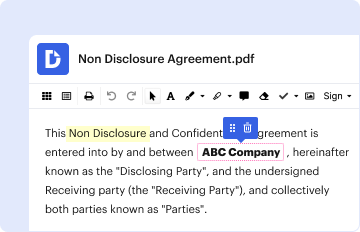
01. Edit your doh1013 online
Type text, add images, blackout confidential details, add comments, highlights and more.
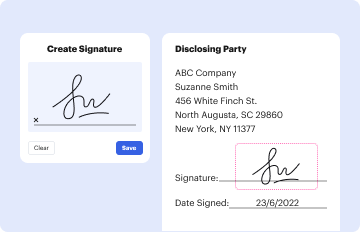
02. Sign it in a few clicks
Draw your signature, type it, upload its image, or use your mobile device as a signature pad.
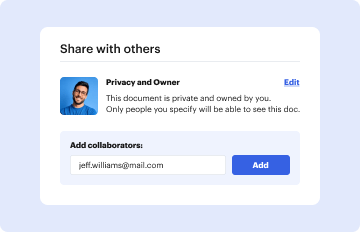
03. Share your form with others
Send doh 1013 via email, link, or fax. You can also download it, export it or print it out.
How to use or fill out doh 1013 with our platform

- Click ‘Get Form’ to open the doh 1013 in the editor.
- Begin by indicating the test year and whether this is an initial or annual test in Part A.
- Fill in the public water supply name, account number, and county. For New York City tests, include block and lot information.
- Provide the facility name, address, and specific location of the backflow prevention device.
- Complete the device information section with details such as manufacturer, type (RPZ or DCV), model, size, and serial number.
- In the 'Test Before Repair' section, indicate if check valve #1 and #2 leaked or closed tight. Record line pressure and test date.
- Describe any repairs made along with materials used and provide the name and license number of the repairer.
- Complete the final test section if repairs were made, including water meter number and type of service.
- Fill out remarks for any deficiencies observed during testing.
- Certify that all data is correct by printing your name, signing, and providing your certification number and expiration date.
Start using our platform today to easily fill out your doh 1013 form online for free!
Fill out doh 1013 online
It's free
It's free
See more doh 1013 versions
We've got more versions of the doh 1013 form. Select the right doh 1013 version from the list and start editing it straight away!
| Versions | Form popularity | Fillable & printable |
|---|---|---|
| 1991 | 4.9 Satisfied (43 Votes) |
Got questions?
We have answers to the most popular questions from our customers. If you can't find an answer to your question, please contact us.
Contact us
How often do backflow preventers need to be tested?
Under Section 64764 of the regulations, backflow prevention devices must be tested annually by certified testers.
What does backflow detected mean?
Backflow is the undesirable flow reversal of water, liquids, gases or other substances into the City of Raleigh Public Water Supply. Backflow can occur when water pressure in the distribution system drops relative to a service line.
What happens if a backflow test fails?
If your backflow preventer fails the test, it needs to be cleaned or repaired and in some cases it may need to be completely replaced and a successful re-test performed.
What does it mean to fail a backflow test?
If your backflow preventer fails the test, it needs to be cleaned or repaired and in some cases it may need to be completely replaced and a successful re-test performed. These backflow devices fail at a rate of 10-15% after one year.
What does backflow testing mean?
Backflow Preventer Your houses water supply can become contaminated if backflow isnt prevented. Replacement of the backflow preventer, which can cost between $280 and $1,550, is frequently the most expensive repair. This includes the price of labor, replacing the backflow preventer, and testing the system.
Security and compliance
At DocHub, your data security is our priority. We follow HIPAA, SOC2, GDPR, and other standards, so you can work on your documents with confidence.
Learn more


Related forms

CT-604 New York State Department of Taxation and Finance Claim for QEZE Credit for Real Property Tax
CT-604 New York State Department of Taxation and Finance Claim for QEZE Credit for Real Property Tax
The document CT-604 is a form from the New York State Department of Taxation and Finance for claiming the Qualified Empi ...

OF A PARTNERSHIP
The document provides detailed instructions for registering a partnership with the Texas State Board of Public Accountan ...

Until 1150 a - tsbpa state tx
The minutes from the Texas State Board of Public Accountancy meeting held on July 20, 2006, detail discussions and decis ...

DOCKET No 458-98-2137 TEXAS ALCOHOLIC BEFORE THE
The document is a proposal for decision regarding a case brought by the Texas Alcoholic Beverage Commission against Waco ...

Consumer Directed Services (CDS) Option Overview
The document provides an overview of the Consumer Directed Services (CDS) option offered by the Texas Department of Agin ...

1021 doc Information Letter 06-24 Medicare Rx -- "Extra help" not available to all individuals recei
1021 doc Information Letter 06-24 Medicare Rx -- "Extra help" not available to all individuals recei
The document is a catalog for the MIPPA Toolkit, providing various print materials and templates aimed at assisting indi ...

Form - REQUEST FOR ISSUANCE OF NEW LICENSE DUE - TALCB
The document is a request form addressed to the Texas Appraiser Licensing and Certification Board for the issuance of a ...

Proxy Authorization - Drr Aktiengesellschaft
The document is a proxy authorization form for shareholders of Dürr Aktiengesellschaft, allowing them to appoint a repre ...
People also ask
What happens if you dont get your backflow tested?
If you dont have your backflow tested annually, as required by the Department of Health, your water purveyor will eventually take action to protect the health of their water system. Each water purveyor has different policies, but typically they impose fees once the test is severely delinquent.
How much does it cost to repair a backflow valve?
There are two types of backflow: back pressure and back-siphonage. Back pressure occurs when water pressure from a non-potable source exceeds your water supply. This causes the flow to reverse. Back siphonage occurs when there is a loss of pressure in your supply line that causes contamination to be in.