
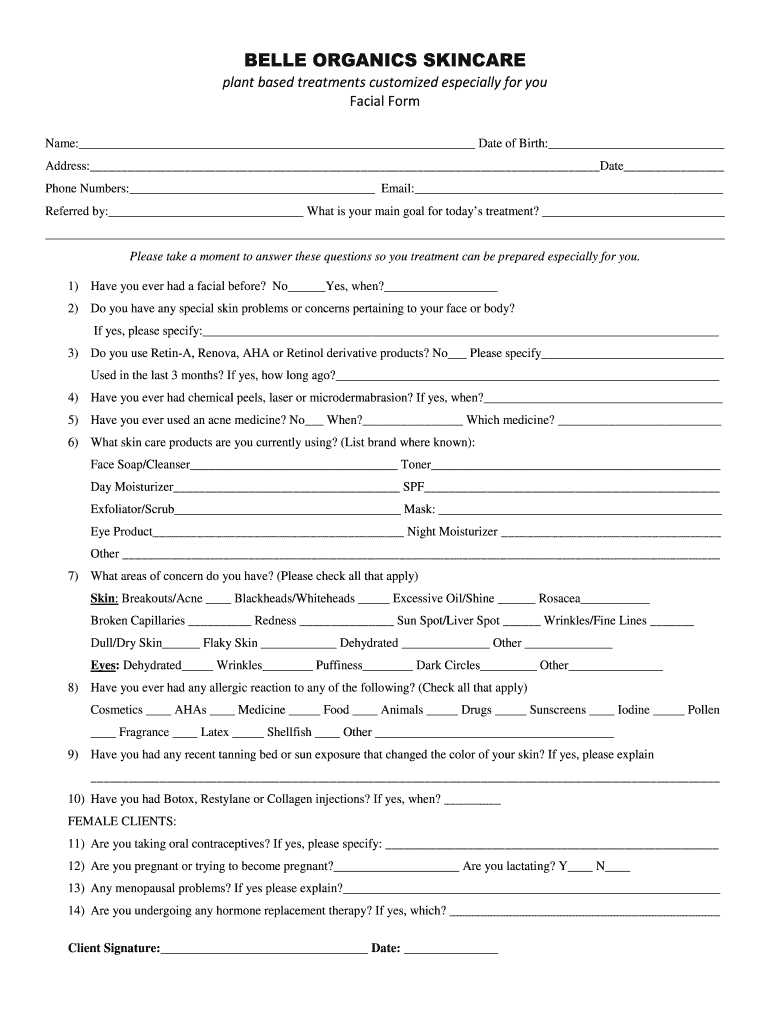







Definition and Meaning of the Facial Client Consultation Form
The Facial Client Consultation Form is an essential document used in skincare and esthetics to gather vital information from clients before treatment. It serves as a comprehensive record that helps skincare professionals understand the client's skin type, conditions, and specific treatment goals. This one-page form is designed to streamline the consultation process, ensuring both the client and the esthetician are aligned on the desired outcomes and any possible contraindications.
The form typically includes sections for personal information, skin history, treatment preferences, and allergies. This data aids practitioners in tailoring their services to meet individual needs effectively. For example, a client who identifies issues such as acne or dryness can receive treatments specifically designed to address those concerns, therefore optimizing the skincare regimen.
Understanding the definition of this form is crucial, as it sets the foundation for a well-organized and efficient skincare session. It is not merely a bureaucratic tool; rather, it is a means of fostering communication between the client and clinician that ultimately leads to more satisfying skincare experiences.
How to Use the Facial Client Consultation Form
Using the Facial Client Consultation Form effectively involves several key steps. The first step is to ensure that the form is easily accessible to clients, either as a physical copy at the clinic or as a downloadable PDF on your website, like the facial consultation form PDF free download option.
Once the client has the form, they should fill out their basic information, including name, contact details, and any medical history relevant to skin health. After providing personal details, clients should be guided to elaborate on their skin history, including existing conditions or concerns. This section is crucial, as the information will help practitioners make informed decisions regarding appropriate treatments.
Additionally, the form includes sections where clients can express their treatment goals and any specific preferences they may have regarding skincare products or services. This input allows practitioners to customize their approach based on individual preferences and concerns, promoting a more personalized experience.
In summary, using the Facial Client Consultation Form is about thorough communication from both the client and practitioner. A well-completed form can significantly reduce misunderstandings and enhance the effectiveness of skincare treatments.
Steps to Complete the Facial Client Consultation Form
Completing the Facial Client Consultation Form involves several straightforward yet critical steps:
-
Gather Basic Information: Clients should begin by entering their personal details, such as full name, phone number, and email address. This information is foundational for client records and further communication.
-
Provide Skin History: Clients need to fill out sections regarding their skin type, current conditions (like dryness or sensitivity), and any past treatments. Including details such as allergies to ingredients is fundamental, as it safeguards clients from adverse reactions.
-
Outline Treatment Goals: The form typically prompts clients to specify their skincare objectives. These may include wishes to treat acne, reduce wrinkles, or establish a more even skin tone. Clear goals allow practitioners to tailor sessions to the client's desires.
-
Review Possible Treatments: The form may include checkboxes or spaces for clients to express interest in specific services, allowing estheticians to prepare relevant recommendations beforehand.
-
Sign and Date the Form: Clients are usually required to sign the form, confirming that the information provided is accurate and acknowledging any potential risks associated with treatments. This step signifies that both parties understand the treatment plan.
Following these steps ensures the Facial Client Consultation Form is completed accurately and comprehensively, fostering effective communication and personalized care.
Important Terms Related to the Facial Client Consultation Form
Understanding essential terminology associated with the Facial Client Consultation Form enhances its usability and efficacy. Some critical terms include:
-
Skin Type: Refers to the classification of skin (normal, oily, dry, or combination) that is foundational to selecting appropriate treatments.
-
Contraindications: Specific conditions or factors that may disqualify a client from certain treatments or procedures, like active acne or recent chemical peels.
-
Treatment Goals: Objectives set by clients regarding what they hope to achieve through skincare services, such as improved texture or reduction of pigmentation.
-
Fillable Fields: Editable sections on the form that guide clients on what type of information they should provide, making it easier to complete.
-
Personal Health History: A crucial part of the form where clients disclose any medical conditions that may affect treatment efficacy or safety.
Familiarity with these terms promotes a better understanding of the form’s functions and enhances the interaction between estheticians and clients during consultations.
Legal Use of the Facial Client Consultation Form
The legal use of the Facial Client Consultation Form is vital in ensuring compliance with health regulations and protecting the interests of both clients and service providers. This form serves as a written agreement that confirms client consent to the treatments discussed and acknowledges any associated risks.
When practitioners collect personal and medical information, they must comply with laws governing privacy and confidentiality, such as the Health Insurance Portability and Accountability Act (HIPAA). Thus, it is crucial to store completed forms securely, ensuring that only authorized personnel have access to sensitive data.
Additionally, the form often serves as a legal record in case of disputes related to the services provided. By documenting clients' acknowledgment of treatment goals and potential risks, practitioners create a defensible position if issues arise later.
Estheticians should also remain aware of state-specific regulations governing the use of consultation forms, as different states may have varying requirements regarding consent and documentation for skincare services. Understanding these legalities not only protects their practice but also reinforces client trust.
Examples of Using the Facial Client Consultation Form
Real-life applications of the Facial Client Consultation Form illustrate its importance in fostering effective communication between clients and estheticians. For example:
-
A client comes in seeking to address premature aging signs. Upon filling out the consultation form, they indicate prior use of retinoids and a sensitivity to certain ingredients. The esthetician reviews this information and tailors a gentle, hydrating facial treatment that complements the client's skin history, leading to a successful outcome.
-
In another scenario, a client with cystic acne completes the form and expresses the desire for a clear complexion for an upcoming event. The information gathered from the consultation form helps the practitioner develop a targeted treatment plan that includes regular follow-ups and product recommendations to address the client’s specific needs.
Such examples underscore the direct correlation between comprehensive client information obtained through the Facial Client Consultation Form and the effectiveness of customized skincare treatments. By utilizing this form, practitioners can enhance client satisfaction and treatment results.




