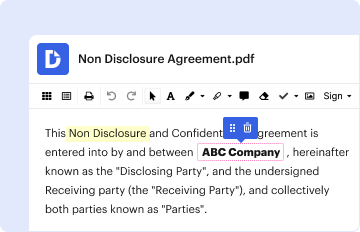
Type text, add images, blackout confidential details, add comments, highlights and more.
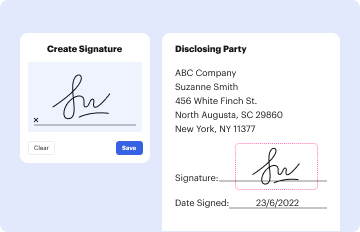
02. Sign it in a few clicks
Draw your signature, type it, upload its image, or use your mobile device as a signature pad.
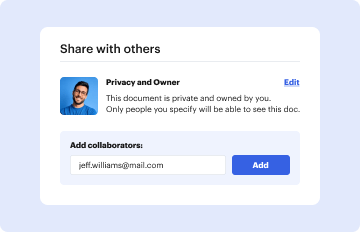
03. Share your form with others
Send formline style via email, link, or fax. You can also download it, export it or print it out.
How to use or fill out northwest coast formline design ACTIVITIES
Ease of Setup
DocHub User Ratings on G2
Ease of Use
DocHub User Ratings on G2
Click ‘Get Form’ to open it in the editor.
Begin with the 'Positive Space' section. Here, you will define the painted foreground aspects of your design. Use the provided guidelines to ensure clarity in your descriptions.
Move on to the 'Negative Space' section. This area requires you to identify and describe the unpainted background elements that complement your design.
In the 'Ovoid' section, detail how these shapes serve as foundational elements in your design. Be sure to note their characteristics and variations.
Continue with 'Finelines', where you will explain how these thin lines add depth and detail to your artwork.
Complete the form by filling out sections for 'U-shapes', 'Trigon', and any other relevant components, ensuring each part is well-defined according to traditional practices.
Start using our platform today for free and enhance your document editing experience!
Fill out northwest coast formline design ACTIVITIES online It's free
The term formline refers to the highly stylized use of lines common in Northwest Coast art characterized by constantly varying widths and a smooth,Read more
Official Website of the City of Ketchikan, Alaska - Native Arts Studies
Students will learn about the structural elements and layout of traditional clanhouses, then will use formline design skills to create the totem poles, house
Cookie consent notice
This site uses cookies to enhance site navigation and personalize your experience.
By using this site you agree to our use of cookies as described in our Privacy Notice.
You can modify your selections by visiting our Cookie and Advertising Notice.