Type text, add images, blackout confidential details, add comments, highlights and more.
02. Sign it in a few clicks
Draw your signature, type it, upload its image, or use your mobile device as a signature pad.
03. Share your form with others
Send it via email, link, or fax. You can also download it, export it or print it out.
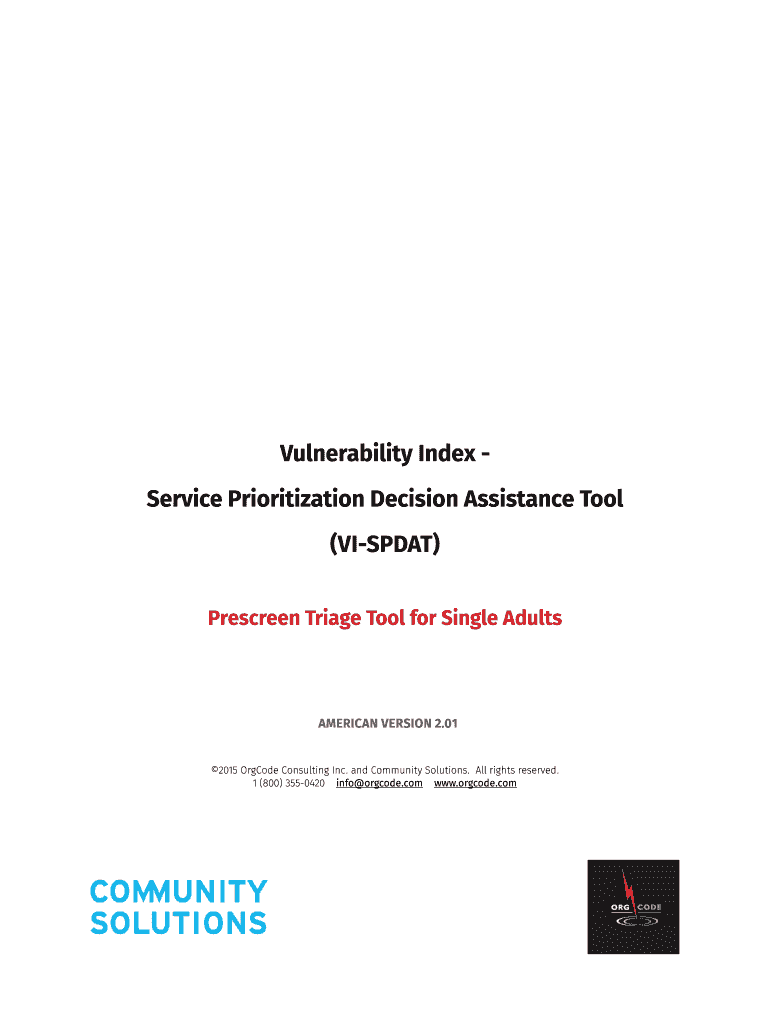
How to use or fill out VI-SPDAT - Strategies to End Homelessness - strategiestoendhomelessness with our platform
Ease of Setup
DocHub User Ratings on G2
Ease of Use
DocHub User Ratings on G2
Click ‘Get Form’ to open it in the editor.
Begin by filling out the 'Administration' section, including the agency name, survey date, and interviewer's name. This sets the context for your assessment.
Proceed to the 'Basic Information' section. Here, input the participant's first name, last four digits of their Social Security number, age, and consent to participate. Ensure accuracy as this information is crucial for follow-up.
Move on to 'History of Housing and Homelessness'. Answer questions regarding current living situations and past homelessness experiences. Each response will contribute to scoring that determines priority for assistance.
Continue with the 'Risks' section. Document any recent interactions with emergency services or legal issues. These factors are vital in assessing vulnerability.
Complete the 'Socialization & Daily Functioning' section by evaluating financial management and daily activities. This helps identify areas needing support.
Finally, address the 'Wellness' section focusing on physical health and mental well-being. Accurate responses here can significantly impact housing interventions recommended.
Start using our platform today to streamline your form completion process for free!
Fill out VI-SPDAT - Strategies to End Homelessness - strategiestoendhomelessness online It's free
The homelessness prevention framework is rooted in a human rights perspective that argues that all people have the right to housing that is safe, appropriate, affordable, and sustainable, and that allowing people to fall into, and remain, homeless because of structural, systemic, and/or individual factors is not
What are the strategies for preventing homelessness?
Strategies such as increasing availability of and access to affordable and accessible housing and housing assistance and addressing housing discrimination that perpetuate disparities are both critical to preventing homelessness and are addressed in the Scale Up Housing and Supports pillar.
What are the interventions for homeless people?
Five types of income assistance interventions were identified: housing subsidies, assistance finding housing and rental supplements, financial education, compensated work therapy, and individual placement and support.
What are 5 ways to help the homeless?
Top 7 Ways to Help People Experiencing Homelessness Be a good listener. Learn their names. Provide hope, not cash. Give out blessing bags Help them to the Mission. Get involved donate or volunteer. Love Bigger.
What is the best way to prevent homelessness?
Affordable Housing Development: Increasing the supply of affordable housing through public and private partnerships can help prevent homelessness. This includes building new units, preserving existing affordable housing, and providing rent subsidies.
Related Searches
VI-SPDAT assessment pdf free downloadSPDAT housing applicationSPDAT housing application onlineSPDAT housing assessmentSPDAT housing assessment questionsVi spdat questionsTAY-VI-SPDATStrategies to end homelessness Cincinnati
Security and compliance
At DocHub, your data security is our priority. We follow HIPAA, SOC2, GDPR, and other standards, so you can work on your documents with confidence.
What is the most effective solution to homelessness?
Housing-Based Solutions Countless peer-reviewed studies have consistently confirmed that long-term housing assistance not only successfully reduces homelessness, but it is also less expensive than shelter and other institutional and emergency care.
What can be done to improve the situation for the homeless?
Welfare and housing We need to reduce the pressure on peoples lives caused by high housing costs, insufficient benefits and a lack of available support. This means building enough homes, including social housing, for homeless people to live in, along with greater protection for those renting.
What are the anti homeless strategies?
Anti-homeless architecture Reducing the number of sitting areas in public spaces. Installing bolts and spikes in flat surfaces in order to make sleeping on them uncomfortable. Installing dividers on metal benches to prevent sleeping. Metal teeth and bars on ledges to prevent sitting.
Related links
INSTRUCTIONS - Joint Center for Housing Studies
➢ Strategies to End Homelessness, a nonprofit, led planning and implementation of the coordinated entry system in Cincinnati/Hamilton County, OH. ThatRead more
Apr 14, 2021 Strategies to End Homelessness is the Cincinnati and Hamilton. County Continuum of Care that provides guidance on homeless programs, includingRead more
Cookie consent notice
This site uses cookies to enhance site navigation and personalize your experience.
By using this site you agree to our use of cookies as described in our Privacy Notice.
You can modify your selections by visiting our Cookie and Advertising Notice.