Energy code compliance form 2026

Get Form
energy code compliance certificate Preview on Page 1

Here's how it works

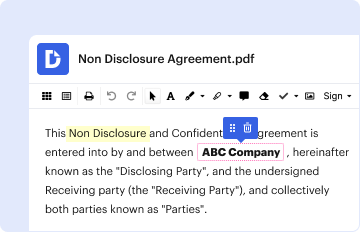
01. Edit your energy code compliance certificate online
Type text, add images, blackout confidential details, add comments, highlights and more.

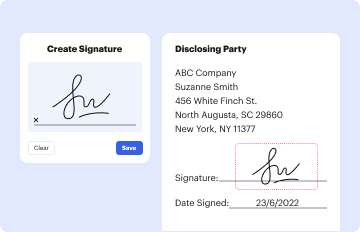
02. Sign it in a few clicks
Draw your signature, type it, upload its image, or use your mobile device as a signature pad.

03. Share your form with others
Send energy code compliance form via email, link, or fax. You can also download it, export it or print it out.

How to use or fill out energy code compliance form with our platform

Form edit decoration
9.5
Ease of Setup
DocHub User Ratings on G2
9.0
Ease of Use
DocHub User Ratings on G2
  1. Click ‘Get Form’ to open the energy code compliance form in the editor.
  2. Begin by entering the builder's name in the designated field at the top of the form. This identifies who is responsible for the project.
  3. Next, fill in the insulation company and heating & air company details. Ensure that all contact information fields are completed accurately for effective communication.
  4. Proceed to the Envelope Information section. Here, input R-Values for various components such as Flat Ceiling/Roof, Sloped/Vault Ceiling, and Exterior Walls. Refer to any notes provided for specific calculations.
  5. Continue filling out R-Values for basement walls, crawlspaces, and foundation slab edges as applicable. Make sure to list values covering the largest area when multiple values exist.
  6. Complete the Ducts Outside Conditioned Spaces and Window U-Factor sections with accurate data. This ensures compliance with energy efficiency standards.
  7. Finally, have the certificate completed by entering your name and date at the bottom of the form before saving or exporting it.

Start using our platform today to streamline your document editing and ensure your energy code compliance forms are filled out effortlessly!

See more energy code compliance form versions

We've got more versions of the energy code compliance form form. Select the right energy code compliance form version from the list and start editing it straight away!
Versions Form popularity Fillable & printable
2009 4.6 Satisfied (48 Votes)
be ready to get more

Complete this form in 5 minutes or less

Get form

Got questions?

We have answers to the most popular questions from our customers. If you can't find an answer to your question, please contact us.
Contact us
Energy codes are a subset of building codes, which establish baseline requirements and govern building construction. Code buildings are more comfortable and cost-effective to operate, assuring energy, economic and environmental benefits.
The International Energy Conservation Code (IECC) developed by the International Code Council (ICC) is a model building code that sets minimum efficiency standards in new construction for a structures walls, floors, ceilings, lighting, windows, doors, duct leakage, and air leakage.
The three methods of commercial compliance for the energy code are 1) the Prescriptive Building Envelope Option, 2) the Building Envelope Trade-Off Method, and 3) the Energy Cost Budget Method. Today we will explore the Building Envelope Trade-Off Method.
These inspections verify that the construction work aligns with approved energy code documents. Inspectors check various aspects of the building process, such as materials and systems installation, to ensure they meet energy efficiency standards.
The three methods of commercial compliance for the energy code are 1) the Prescriptive Building Envelope Option, 2) the Building Envelope Trade-Off Method, and 3) the Energy Cost Budget Method.

Security and compliance

At DocHub, your data security is our priority. We follow HIPAA, SOC2, GDPR, and other standards, so you can work on your documents with confidence.

Learn more
ccpa2
pci-dss
gdpr-compliance
hipaa
soc-compliance

People also ask

The compliance documentation enables the plans examiner to verify that the building design shown in the plans and specifications complies with the Energy Standards. It enables the field inspector to identify which building features are required for compliance and will be verified in the field.
The prescriptive path requires each element of a building to meet a minimum acceptable value listed out by the referred energy code. Generally, the prescriptive tables present a specific insulation value for different types of wall and roof construction across different climate zones.
The most widely adopted model energy codes are the International Energy Conservation Code (IECC) and ASHRAE 90.1. The IECC has chapters for residential and commercial building typologies; ASHRAE 90.1 is for buildings other than one or two family attached or detached and multifamily three stories or less.

energy compliance form