
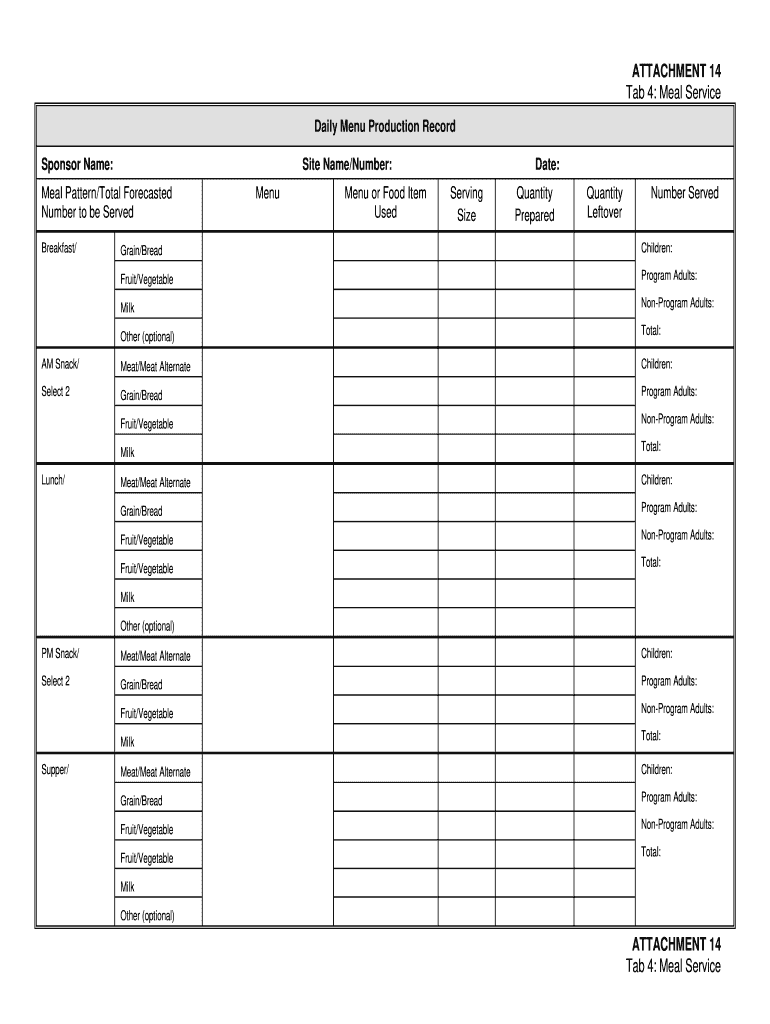







Definition and Meaning of Daily Menu Production Record
A Daily Menu Production Record is a crucial document used primarily in meal service settings, especially within institutions like schools and daycare centers. It serves the essential function of tracking the preparation and serving of meals, ensuring compliance with nutritional standards mandated by governing bodies. This record includes key details such as the sponsor name, site identification, meal patterns, and the quantities of food prepared, served, and leftover for specific meals, including breakfast, lunch, and snacks.
The Daily Menu Production Record categorizes food items by type, for example, grains, fruits and vegetables, and meat or meat alternates. Each category reflects the nutritional guidelines applicable to the demographic served, distinguishing between portions intended for children versus adults. This structured approach not only aids in inventory management but also in compliance with regulations set forth by programs such as the National School Lunch Program (NSLP) and the Child and Adult Care Food Program (CACFP).
Key Elements of the Daily Menu Production Record
The Daily Menu Production Record includes several key elements that facilitate effective documentation of food service activities:
- Sponsor Details: Identifies the organization or individual overseeing the meal service.
- Site Information: Includes site name or number where meals are served, which is vital for ensuring accountability.
- Meal Patterns: Specifies types of meals served according to program requirements, detailing breakfast, lunch, and snacks.
- Food Quantities: Records the quantities of each food item served, prepared, and leftover, providing essential data for future menu planning and inventory checks.
- Food Item Categories: Classifies items into groups such as grains, protein, and fruits/vegetables, aligning with nutritional standards.
Accurate completion of these elements is essential for compliance with federal and state nutritional programs, as it aids in tracking adherence to required meal components and portion sizes.
Steps to Complete the Daily Menu Production Record
Completing a Daily Menu Production Record involves a systematic approach to ensure accuracy and compliance:
- Gather Required Information: Collect data on the sponsor name, site name, meal patterns, and food inventory.
- Plan the Menu: Outline the daily menu, including all meals and snacks, and determine the quantities needed for each item.
- Document Food Preparation: As meals are prepared, record the exact amounts of each item made, served, and estimated leftovers.
- Categorize Food Items: Classify the documented food items into their respective categories (grains, fruits/vegetables, meats).
- Review for Accuracy: Carefully check all entries for accuracy, ensuring compliance with the relevant meal patterns and guidelines.
- Finalize the Record: Submit the completed Daily Menu Production Record to the appropriate oversight authority or save it for record-keeping purposes.
These steps provide a structured framework to ensure that meal services meet regulatory requirements and serve the intended nutritional needs.
Why You Should Use the Daily Menu Production Record
Utilizing the Daily Menu Production Record is vital for several reasons:
- Nutritional Compliance: It ensures that meal services follow federal and state nutritional guidelines, aiding in the proper distribution of food based on demographic dietary needs.
- Effective Inventory Management: By tracking prepared and leftover items, organizations can optimize food purchasing and reduce waste, which is especially important in school settings.
- Operational Accountability: The documented daily records can help organizations demonstrate compliance during audits or reviews by regulatory bodies, safeguarding against potential penalties.
- Meal Planning Improvement: Analyzing past records can inform future meal choices, leading to better dietary options that cater to the preferences of those being served.
These benefits underscore the significance of maintaining accurate records within food service programs.
Examples of Using the Daily Menu Production Record
Here are practical examples showcasing the use of the Daily Menu Production Record in real-world scenarios:
- School Cafeteria: A school utilizes the Daily Menu Production Record to document all meals served during lunch periods. By categorizing food into groups and tracking quantities, the cafeteria manager can analyze which meals are most popular, allowing for better planning in subsequent weeks.
- Daycare Center: A daycare center uses the record to ensure that meal patterns meet CACFP requirements. By meticulously documenting the food served, staff can demonstrate compliance during state inspections, ensuring continued funding and support.
- Food Bank Programs: A food distribution program employs the Daily Menu Production Record to track the types of food provided to families. By documenting the amounts of different food items, the organization can evaluate trends in demand and adjust food procurement strategies accordingly.
These examples illustrate the versatility and essential function of the Daily Menu Production Record in various food service contexts.




