
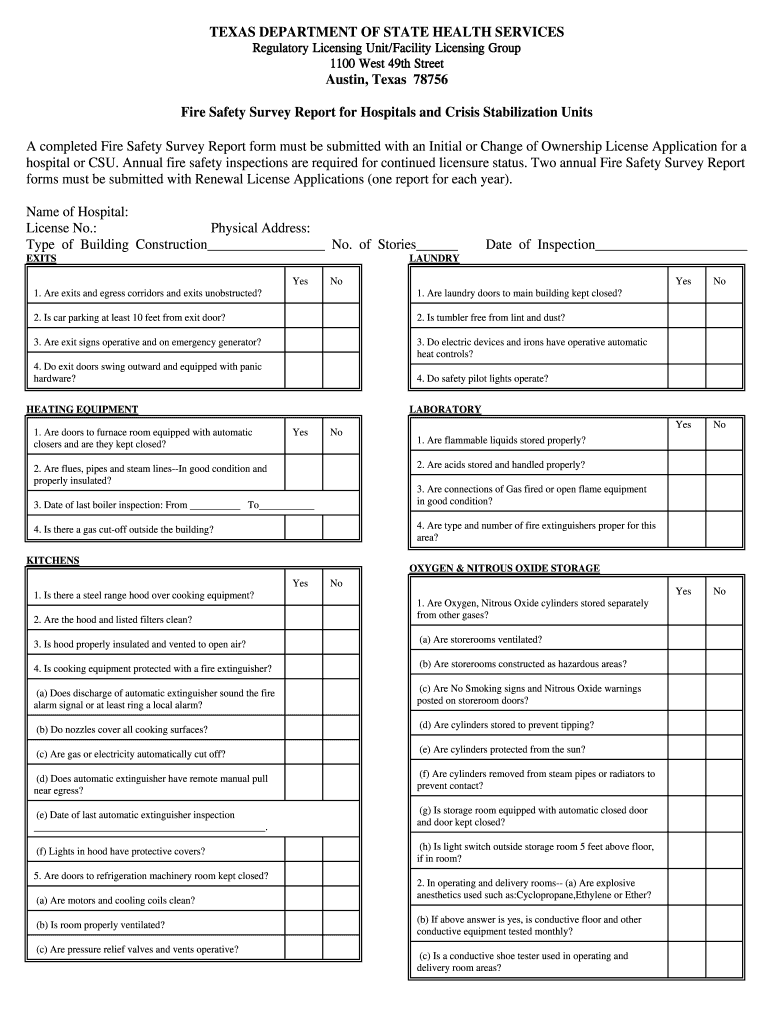







Understanding the Fire Safety Survey Form
The fire safety survey form serves as an essential tool for assessing the fire safety measures within various establishments. It is used by fire inspectors and safety officials to ensure compliance with fire safety codes, regulations, and best practices. This comprehensive document aids in identifying potential hazards and enforcing necessary improvements to safeguard lives and property.
Key Components of the Fire Safety Survey Form
A fire safety survey form typically includes various sections that cover critical safety aspects. The following are essential elements often included:
-
Basic Information:
- Details about the premises, including name, address, and type of occupation.
- Contact information of the responsible individual or organization for follow-ups.
-
Safety Equipment Checklist:
- Examination of smoke detectors, fire alarms, and extinguishers.
- Verification that fire exits are accessible and marked appropriately.
- Assessment of sprinkler systems and suppression equipment.
-
Building Layout:
- A sketch of the building layout indicating exits, fire equipment placement, and high-risk areas.
- Documentation of the location of hazardous materials, where applicable.
Utilizing the Fire Safety Survey Form
The form can be employed in several scenarios within various industries. For effective implementation:
-
Regular Inspections: Conduct periodic reviews of facilities using the survey form to ensure ongoing compliance and to address any identified concerns promptly.
-
Training and Awareness: Use the survey results to inform employees about fire safety protocols and the importance of maintaining a safe environment.
-
Emergency Planning: The data collected can help in developing or updating emergency response plans, ensuring every individual knows how to act in a fire emergency.
Common Users of the Fire Safety Survey Form
Several stakeholders utilize the fire safety survey form to enhance safety measures:
- Fire Marshals and Inspectors: They utilize these forms during mandatory inspections to ensure compliance with state and local fire codes.
- Facility Managers: Responsible for the upkeep of premises, they leverage these forms to identify and rectify safety deficiencies.
- Occupants and Employees: Understanding their environment's safety measures allows them to be better prepared in emergencies.


Variations of Fire Safety Surveys
Different types of fire safety surveys can be administratively refined based on the context:
- Private Dwelling Fire Safety Surveys: Especially relevant for residential areas, these surveys assess fire hazards specific to homes.
- Commercial Fire Surveys: Focused on larger buildings, these surveys consider industry-specific safety requirements and higher risk factors.
Compliance and Documentation
Proper documentation is vital for legal and safety reasons. Each completed survey form contributes to a historical record that can provide insights during inspections or investigations. Important processes include:
-
Submission Protocols: Completed forms may need to be submitted to local fire departments or regulatory agencies as part of compliance requirements.
-
Retention of Records: Organizations should maintain copies of completed forms for a specified duration as mandated by law or regulation, which aids in proving compliance during potential audits.
Example Questions Found in a Fire Safety Survey Form
The survey typically includes various questions aimed at capturing critical safety information. Examples include:
- Were all fire exits marked and easily accessible?
- Is there a working fire alarm system installed?
- Are all employees trained in fire safety procedures and equipment usage?
These questions facilitate a thorough evaluation that highlights areas requiring attention or remediation.
Importance of Fire Safety Awareness
The significance of conducting fire safety surveys cannot be overstated. By regularly updating and utilizing the fire safety survey form, facilities not only comply with regulations but also promote a culture of safety. This proactive approach ultimately helps to prevent fire incidents, protecting both people and property.
Summary of Legal Compliance and Best Practices
Adhering to fire safety laws and regulations is crucial for all establishments. Regular completion of the fire safety survey form is an effective strategy to ensure compliance and safeguard against potential liabilities. These surveys act as both a form of accountability and a foundational step in establishing robust fire safety practices.




