




01. Edit your ics 204 online
Type text, add images, blackout confidential details, add comments, highlights and more.

Type text, add images, blackout confidential details, add comments, highlights and more.

Draw your signature, type it, upload its image, or use your mobile device as a signature pad.

Send ics form 204 via email, link, or fax. You can also download it, export it or print it out.
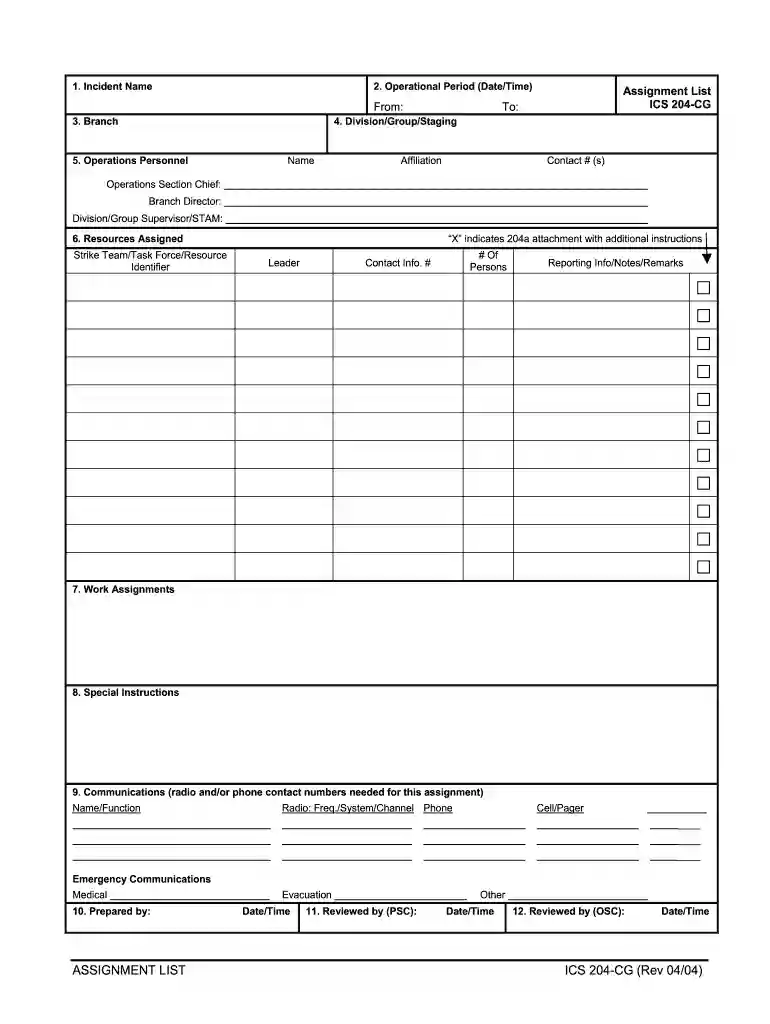
The ICS 204, formally known as the Assignment List, serves a critical role in incident management within the Incident Command System (ICS). This structured form details operational assignments for personnel and resources during an incident response, ensuring that every member of the response team understands their specific roles and responsibilities. The ICS 204 is crucial for the effective coordination of actions within the Incident Action Plan (IAP).
Understanding the importance of the ICS 204 is essential for a well-organized response, particularly in high-stakes situations where clear communication and task delegation can significantly impact the success of the operation.
Completing the ICS 204 requires attention to detail and a clear understanding of the incident’s operational requirements. Here are the essential steps to accurately fill out this form:
Gather Necessary Information: Before starting, collect relevant data about personnel, resources, and assignments related to the incident.
Identify Personnel: List all team members involved in the operation, including roles, certifications, and specific tasks they will perform.
Outline Resources: Document all equipment and resources assigned to each task, ensuring that nothing is overlooked.
Specify Communication Protocols: Clearly define how teams should communicate with each other, including radio channels, meeting times, and locations.
Review and Approval: Once completed, the form should be reviewed by a supervisor to ensure all information is accurate. It must then be signed to validate the assignments.
By following these steps, teams can ensure that everyone is aligned and informed, facilitating a smoother operational flow.
The ICS 204 is primarily utilized by personnel involved in emergency response and incident management. Key users include:
Understanding the diverse range of users helps in recognizing the form's significance in maximizing effective response efforts.


Real-world applications of the ICS 204 highlight its practicality in various incident scenarios. Here are two comprehensive examples:
Natural Disasters: During a hurricane response, the ICS 204 may include assignments for search and rescue teams, medical personnel, and logistics. Each section would detail which areas need immediate attention, define resource allocations, and establish communication lines to keep everyone informed of evolving situations.
Fire Response: In a wildfire scenario, the ICS 204 could outline various operational sections, such as fire suppression, logistics support, and public information. Each role would be clearly defined, detailing who handles evacuation duties, where equipment is staged, and how updates are communicated to the incident command.
These examples illustrate the versatility and importance of the ICS 204 across different types of emergencies, ensuring that operational readiness is maintained.
Understanding the key elements of the ICS 204 is essential for effective incident management. The form typically includes:
Operational Period: Specifies the timeframe during which the assignments are valid. This ensures clarity regarding the duration of tasks.
Assignments: Detailed descriptions of roles and tasks for personnel, which includes specific names where feasible to enhance personal accountability.
Location Designations: Clear indications of where each team or task should be positioned, aiding in logistical planning and execution.
Special Instructions: Any unique protocols or safety measures relevant to the operation, ensuring that specific considerations are communicated.
Each of these components plays a vital role in facilitating a coordinated and effective incident response, making the ICS 204 a cornerstone of incident management practices.
The ICS 204 adheres to certain legal frameworks, ensuring that its use is compliant with applicable guidelines. This legal standing is important for several reasons:
Adherence to Standards: Compliance with the National Incident Management System (NIMS) ensures that the form meets federal protocols, facilitating mutual aid agreements and standardizing operations across jurisdictions.
Documentation for Accountability: The ICS 204 serves as a formal record of assignments and actions taken, which can be crucial during post-incident reviews or legal assessments.
Training and Certification: Users of the ICS 204 often undergo training that emphasizes legal considerations in emergency response, ensuring that personnel are not only familiar with the form but also understand their obligations under the law.
By being aware of the legal implications surrounding its use, teams can promote accountability and transparency in incident management operations.
We've got more versions of the ics 204 form. Select the right ics 204 version from the list and start editing it straight away!
| Versions | Form popularity | Fillable & printable |
|---|---|---|
| 2004 | 4.9 Satisfied (59 Votes) |
At DocHub, your data security is our priority. We follow HIPAA, SOC2, GDPR, and other standards, so you can work on your documents with confidence.


