






Definition & Meaning
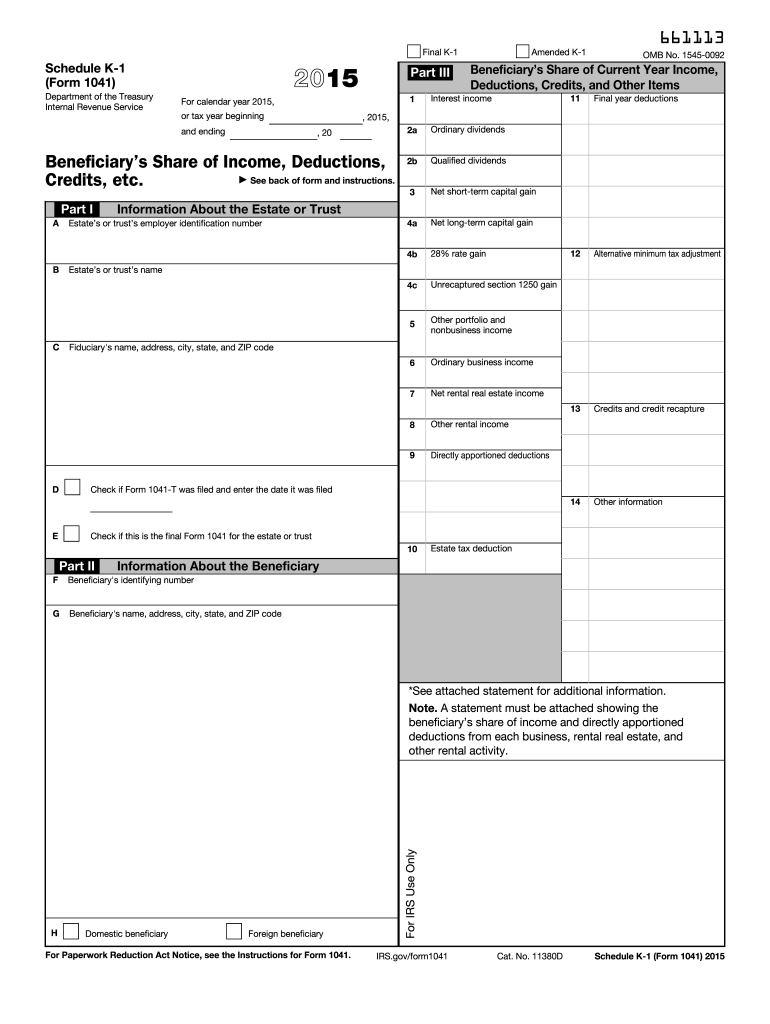
The 2015 Schedule K-1 (Form 1041) is used by estates and trusts to report a beneficiary’s share of income, deductions, and credits. This tax document plays a crucial role in ensuring beneficiaries are taxed correctly on the income earned from estate or trust assets. The form outlines specific income types, including interest, dividends, capital gains, and rental income, which beneficiaries must report on their individual tax returns. Additionally, it includes unique instructions on how these amounts should be entered into personal tax filings, ensuring clarity and correct processing according to IRS standards.
How to Use the 2015 Schedule K-1 Form
When completing the 2015 Schedule K-1 (Form 1041), beneficiaries need to understand how to interpret the sections detailing various types of income and deductions. Typically, each portion of income reported on the K-1 has a corresponding line on the individual tax return forms, such as Form 1040. For instance, interest income recorded on the K-1 should be included in the relevant line of Form 1040. Beneficiaries must also cross-check any deductions and credits they are entitled to claim, ensuring that these figures are accurately reflected in their tax returns.
Steps to Complete the 2015 Schedule K-1 Form
- Gather Relevant Documents: Collect related documents, such as individual tax returns and any prior K-1 forms.
- Identify Income Sources: Review each section of the K-1 form that specifies different income typologies.
- Allocate Income: Enter income amounts into the corresponding fields of your individual tax return.
- Review Deductions and Credits: Ensure all deductions and credits listed are appropriately applied to the tax return.
- Verify for Accuracy: Double-check all entered details for accuracy and compliance with IRS regulations.
- Submit Tax Returns: File your completed tax return along with the K-1 form, ensuring all sections are filled as required.
Who Typically Uses the 2015 Schedule K-1 Form
The Schedule K-1 (Form 1041) is generally utilized by beneficiaries of estates or trusts within the United States. This includes individuals who have inheritance income or are set to receive distributions from trusts. Typically, high-net-worth individuals who are part of estate or trust arrangements use this form. It is also vital for tax practitioners who manage the financial affairs for such trusts and estates to become familiar with the intricacies of the Schedule K-1.


Key Elements of the 2015 Schedule K-1 Form
- Income Types: Includes interest, dividends, and capital gains.
- Deductions and Credits: Captures various deductions available to beneficiaries.
- Beneficiary Information: Provides detailed identification of the beneficiary for clarity on who should claim tax obligations.
- Estate or Trust Information: Covers details about the income source to verify origin and proper allocation.
- Year-Specific Data: Due to varying tax rates and rules, each year’s form may require specific considerations.
Filing Deadlines / Important Dates
Typically, the Schedule K-1 should be prepared and sent to beneficiaries by the tax filing deadline each year, commonly April 15th, unless otherwise extended. Beneficiaries should include their K-1 information when filing their annual tax return, ensuring it is filed no later than the April deadline. Estates and trusts, however, have different deadlines based on their fiscal year, so it is crucial to check the specific due dates annually.
Required Documents
To accurately fill out the 2015 Schedule K-1, beneficiaries will need:
- Previous tax returns for reference.
- Any statements or forms from the estate or trust.
- Documents that reflect the investment or distributions reported.
- IRS instructions manual for interpretation as needed.
Software Compatibility
The Schedule K-1 (Form 1041) is compatible with several tax preparation software programs, such as TurboTax and QuickBooks. These platforms allow users to import data, ensuring accuracy and efficiency when completing tax returns. Users should confirm that their software is updated to handle the specific requirements of 2015 tax filings to prevent errors in processing or submission.