







Definition & Meaning
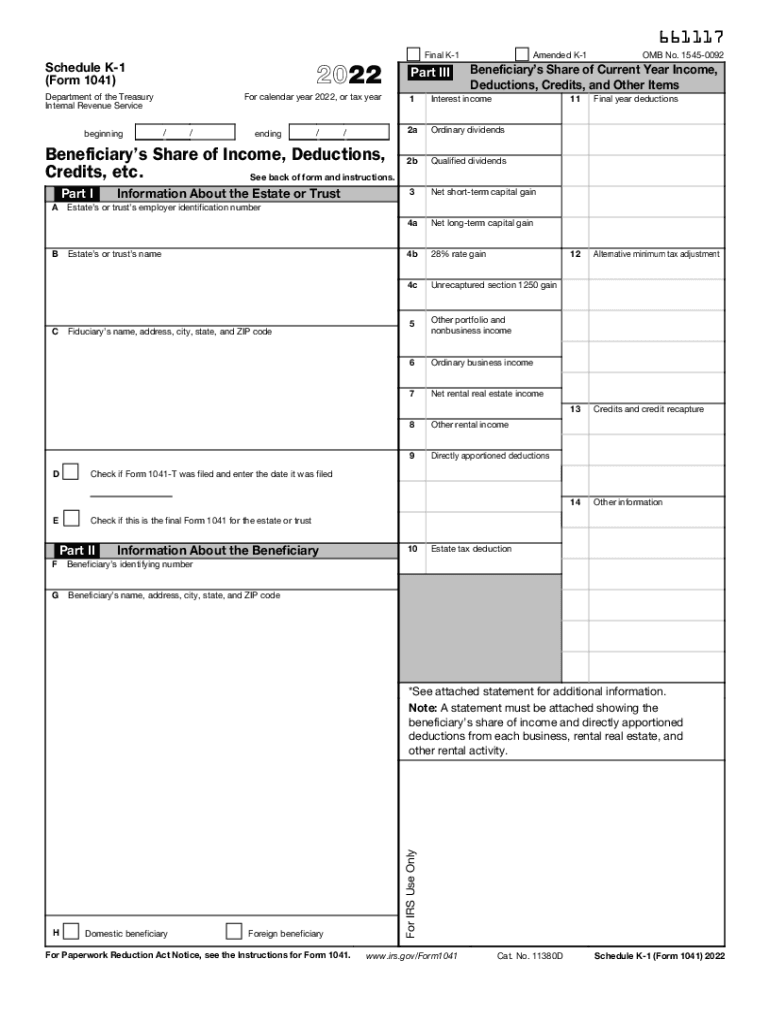
The Schedule K-1 (Form 1041) is a tax document used to report an individual beneficiary's share of income, deductions, and credits from an estate or trust. For the 2021 tax year, this form helps beneficiaries accurately include these amounts on their personal tax returns. The form details specific financial elements such as interest income, dividends, and capital gains, while also covering various deductions that might be applicable. It is essential for ensuring that beneficiaries meet IRS requirements and accurately reflect their financial circumstances when filing their taxes.
How to Use Schedule K-1 (Form 1041) Instructions
Using the instructions for Schedule K-1 (Form 1041) involves understanding how to transfer the details from the form to your individual tax return. Firstly, identify the income categories listed, like interest or capital gains, and match these to corresponding lines on your tax return. Examine any deductions or credits for potential applicability to your situation. The instructions provide specific guidance on navigating complex scenarios such as income from foreign sources or special distributions, ensuring compliance and accuracy in reporting.
Practical Scenarios
- Self-Employed Beneficiaries: If you are self-employed, ensure to distinguish between personal and business-related income.
- Multiple Beneficiaries: Estates or trusts with more than one beneficiary should allocate shared income or deductions based on each beneficiary's percentage share as detailed in the Schedule.
Key Elements of Schedule K-1 (Form 1041)
Understanding the key elements is crucial for correctly completing the form. These include:
- Income Details: Detailed categorization of the income types such as capital gains, dividends, and interest.
- Deductions and Credits: Applicable deductions or credits that reduce taxable income.
- Beneficiary Information: Detailed information regarding the beneficiary sharing in the trust or estate.
Detailed Breakdown
- Interest Income: This is crucial for calculating total taxable income.
- Capital Gains: Reported separately, often accompanied by additional supporting schedules.
Steps to Complete Schedule K-1 (Form 1041)
- Review Estate or Trust Financials: Examine all income and deduction statements provided by the estate or trust.
- Enter Beneficiary Details: Ensure accurate personal information is entered, including Social Security numbers.
- Record Income and Deductions: Precisely input each category item into the corresponding section of your tax return.
Considerations
- Change in Trust/Estate Structures: Verify any adjustments to the structure which may affect each beneficiary's share.
- Documentation: Keep all supporting documents that substantiate the amounts listed.
IRS Guidelines
The IRS provides specific guidelines on completing and submitting Schedule K-1 (Form 1041). It is imperative to adhere to these instructions to avoid penalties or incorrect tax liabilities. These guidelines detail how to manage nuances such as passive income and loss limitations and special allocations that may apply in complex estates or trusts.
Filing Deadlines / Important Dates
Filing deadlines for Schedule K-1 (Form 1041) typically align with the tax return filing deadline, which is April 15 for most beneficiaries, though extensions can apply under specific circumstances.
Important Considerations
- Extensions: If the estate or trust files a Form 7004, beneficiaries should adjust their timelines accordingly.
- State Differences: Keep in mind that state tax deadlines may vary and require additional forms.
Required Documents
To complete the Schedule K-1 (Form 1041), several documents are necessary. These include:
- Estate or Trust Financial Statements: To verify reported income and deductions.
- Previous Year K-1 Forms: If applicable, for consistency and comparison.
- Personal Financial Records: To correlate reported figures with personal financial documentation for accuracy.
Examples of Required Documentation
- 1099 Forms: To verify interest or dividend income.
- Receipts: For deductible expenses listed on the form.
Legal Use and Compliance
Schedule K-1 (Form 1041) must be accurately used to legally report income from trusts and estates. Compliance with IRS regulations ensures that all declared financial activities adhere to tax laws in order to avoid legal complications and potential audits.
Penalties for Non-Compliance
Failing to comply with correctly reporting the information on Schedule K-1 (Form 1041) can lead to penalties, including additional fines, interest on unpaid taxes, and even legal proceedings for continual non-compliance.
Business Entity Types and Schedule K-1 (Form 1041)
Different business entities interact with Schedule K-1 (Form 1041) uniquely. For example, S-corporations and partnerships may also require beneficiaries to receive Schedule K-1s, but with different forms designated for those structures (Form 1120S for S-Corps and Form 1065 for partnerships).
Specific Entity Considerations
- LLCs and Partnerships: Need to adequately allocate reported income to each partner or member.
- Corporate Entities: Shareholder distributions are covered under different tax forms and parameters.




