
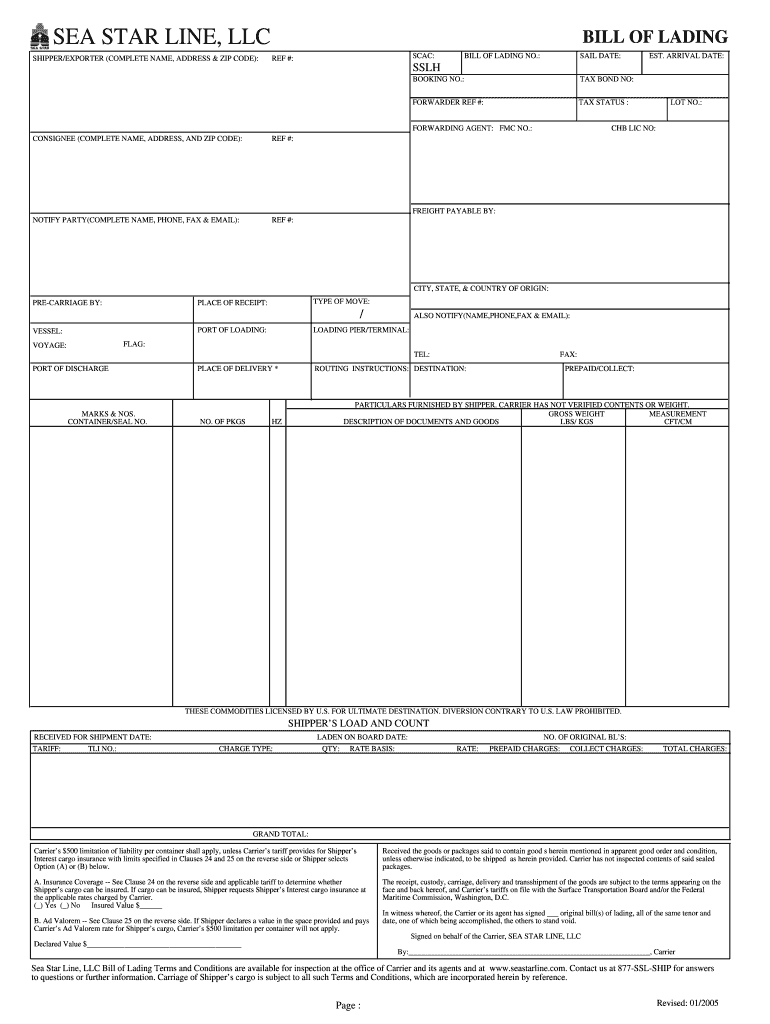







Definition and Meaning of the Plantilla de BL
The "plantilla de BL" refers to a Bill of Lading (BL) template, an essential shipping document that contains crucial information about the transportation of goods. It serves as a legally binding contract between the shipper and the carrier and includes details such as the sender's and receiver's information, a description of the cargo, and terms of transportation. This document is essential for ensuring the smooth movement of goods and facilitates various logistics operations.
Understanding the definition of the plantilla de BL is vital for businesses involved in shipping and logistics as it influences the documentation process and compliance requirements. It not only acts as a receipt for the cargo but also defines the rights and obligations of all parties involved.
Key Components of a Plantilla de BL
- Shipper and Consignee Information: Names, addresses, and contact details of the shipper and recipient.
- Cargo Description: Includes a thorough explanation of the goods being shipped, including quantity and weight.
- Transportation Terms: Specifies the conditions under which the goods will be transported.
- Freight Charges: Details about the costs associated with shipping, including prepaid or collect charges.
How to Use the Plantilla de BL Effectively
Using the plantilla de BL effectively requires careful consideration of several factors to ensure accuracy and regulatory compliance.
Steps for Using the Plantilla de BL
- Select the Appropriate Template: Depending on the type and nature of the goods, choose a suitable Bill of Lading template.
- Gather Necessary Information: Collect all pertinent details about the shipment, including descriptions, quantities, and related services.
- Fill in Required Fields: Complete the plantilla de BL, ensuring all sections are accurately filled out.
- Review for Accuracy: Double-check all information to minimize errors that could lead to issues during transport.
- Distribute Copies: Share the completed document with involved parties such as the carrier, shipper, and consignee.
By following these steps, businesses can minimize risks associated with shipping and ensure compliance with both national and international regulations.
How to Obtain the Plantilla de BL
Acquiring a plantilla de BL is a straightforward process, primarily done through online or physical resources.
Methods to Obtain the Template
- Download from Trusted Websites: Many logistics websites provide free or paid downloadable templates in various formats (e.g., Word, PDF, Excel).
- Software Solutions: Utilize shipping and logistics software that offers built-in templates for creating Bills of Lading.
- Consult a Freight Forwarder: Many freight forwarders offer templates as part of their services, ensuring compliance with industry standards.
Steps to Complete the Plantilla de BL
Completing the plantilla de BL involves systematically filling out all the necessary information to ensure the document serves its intended purpose effectively.
Detailed Steps for Completion
- Header Information: Include the date of shipment and a unique Bill of Lading number for tracking purposes.
- Shipper Details: Input the full name and contact information of the shipper and any third-party logistics providers involved.
- Consignee Details: Add all necessary details of the consignee, ensuring accuracy to prevent delivery issues.
- Cargo Details: Provide a detailed description of the goods, including dimensions, weight, and special handling instructions if applicable.
- Terms of Service: Review and clearly outline the terms under which the goods are being transported, including responsibilities regarding damage or loss.
- Signatures: Ensure that all relevant parties sign the document to validate it legally.
Ensuring accuracy at each step is crucial to prevent delays or complications during transportation.
Important Terms Related to Plantilla de BL
Familiarizing oneself with key terms associated with the plantilla de BL can improve understanding and efficiency in dealing with shipping documents.
Common Terms Defined
- Consignment: The quantity of goods sent to the consignee.
- Carrier: The service provider responsible for transporting goods.
- Temperature-Controlled Cargo: Goods that require specific temperature conditions during transportation.
- Freight Forwarder: A third-party service that arranges the logistics of shipping goods.
Understanding these terms aids in navigating the shipping process and ensures compliance with industry practices.
Legal Use of the Plantilla de BL
The plantilla de BL is not just a formality; it complies with numerous legal requirements governing the transportation of goods, particularly in interstate and international trade.
Legal Considerations
- Enforceability: A properly completed Bill of Lading serves as a legally binding contract.
- Compliance with Regulations: Must comply with the Uniform Commercial Code and specific state or federal laws, especially for interstate shipping.
- Liability Terms: Outlines the responsibilities of the carrier concerning loss or damage to goods, establishing legal standings for claims.
Following legal guidelines ensures that businesses operate within the law, protecting them from potential liabilities.
Key Elements of the Plantilla de BL
In order to be effective, the plantilla de BL must include specific elements that make it a comprehensive shipping document.
Essential Elements to Incorporate
- Description of Goods: Clear and accurate description that matches the contents of the shipment.
- Shipping Instructions: Detailed directions for the handling and processing of the shipment.
- Payment Terms: Stipulations on whether freight charges are prepaid or will be collected upon delivery.
- Notations for Special Handling: Any requirements for fragile or hazardous materials must be clearly indicated.
Including these key elements enhances the effectiveness of the Bill of Lading, reducing the chances of misunderstandings or disputes.
Examples of Using the Plantilla de BL in Practice
Real-world scenarios exemplify the utility of the plantilla de BL in various industries, showcasing its practicality and importance.
Industry Use Cases
- Manufacturing: A manufacturer shipping products to retailers will prepare a plantilla de BL to document the specifications and ensure proper delivery.
- E-Commerce: Online retailers often use this document to assure customers of shipment details and to outline delivery expectations.
- Exporting Goods: Companies exporting goods internationally rely on the plantilla de BL to comply with customs regulations and provide necessary shipping details.
These examples illustrate how various sectors can utilize the plantilla de BL to streamline shipping operations and ensure compliance across borders.




