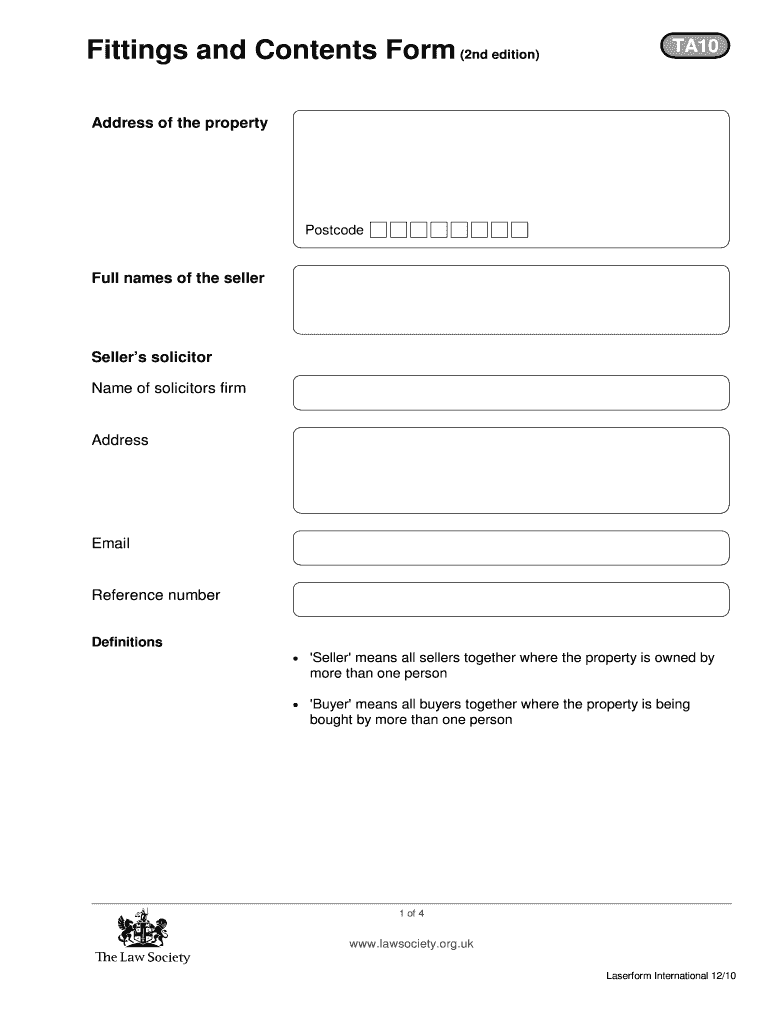







Definition and Meaning of the TA10 Form
The TA10 form, commonly known as the Transfer of Title by Deed form, is a legal document used in real estate transactions within the United States. It is specifically designed to facilitate the transfer of ownership of a property from one party to another. This form captures essential details about the property, including the names of the sellers and buyers, a description of the property, and any existing obligations or encumbrances tied to the title.
The TA10 form ensures that the transfer of title adheres to state-specific property laws, making it crucial for legal compliance during real estate transactions. By documenting the change in ownership, it provides a legal record that protects the rights of both parties involved. Understanding the purpose and details included in the TA10 form is essential for both sellers and buyers to ensure a smooth transaction.
Key Elements of the TA10 Form
Several critical components make up the TA10 form. Each section plays a vital role in ensuring all relevant information is captured accurately:
-
Property Description: This portion includes the legal description of the property, identifying its location and boundaries. Accurate details are necessary to avoid disputes over property lines.
-
Transferor and Transferee Information: The full legal names and mailing addresses of the parties involved in the transaction must be detailed. This information is crucial for record-keeping and future correspondences.
-
Consideration: This section reports the price or value exchanged for the property. It can also outline any potential seller financing or trade agreements included in the transaction.
-
Conditions of Transfer: Any specific terms or conditions, such as contingencies or covenants, should be cited. These might relate to issues like repairs needed before closing or stipulations about using the property post-transfer.
-
Signatures: Both the transferor and transferee must sign and date the form to validate the transfer. Witness signatures may also be required, depending on state regulations.
By thoroughly understanding these elements, parties involved in a real estate transaction can better prepare their documentation, facilitating a smoother transfer process.
Steps to Complete the TA10 Form
Completing the TA10 form requires attention to detail and an understanding of the information needed. Follow these steps to ensure you fill out the form correctly:
-
Gather Required Documents: Before starting, have all necessary documentation on hand, such as prior title deeds, tax assessments, and identification for the involved parties.
-
Fill Out Property Details: Start by entering the legal description of the property accurately. Include street addresses, parcel numbers, and any information defining the boundaries.
-
Input Transferor and Transferee Information: Clearly state the full legal names and current mailing addresses of both the seller and buyer.
-
Declare Consideration Amount: Indicate the purchase price or any other forms of consideration exchanged. If the transfer involves something other than cash, specify the terms.
-
Describe Conditions of Transfer: List any conditions or agreements pertinent to the transaction to clarify expectations for both parties.
-
Review and Sign: Once all information is filled in, review the details for accuracy. Secure the necessary signatures to finalize the document.
Careful completion of the TA10 form helps prevent legal complications in the property transfer process.
How to Obtain the TA10 Form
Accessing the TA10 form is relatively straightforward. Here are a few common methods:
-
State Government Websites: Most states provide downloadable versions of the TA10 form on their official land or property management websites. Ensure you obtain the form relevant to your state’s regulations.
-
Real Estate Offices: Local real estate agents or offices often have copies of the TA10 form available for clients. They can also provide guidance on completing it correctly.
-
Legal Professionals: Attorneys specializing in real estate transactions can assist clients in obtaining the TA10 form and advising on its proper use in specific cases.
The availability of the form in multiple locations ensures that sellers and buyers can access the document promptly, facilitating timely transactions.
Why You Should Use the TA10 Form
Using the TA10 form is necessary for several reasons:
-
Legal Compliance: Many states require the use of this form to document the transfer of property ownership legally. Utilizing it helps avoid potential legal disputes.
-
Clear Documentation: This form provides formal, documented evidence of the transaction, detailing the agreement between parties. This clarity can help mitigate misunderstandings or future claims.
-
Protection of Parties’ Rights: By using the TA10 form, both buyers and sellers equip themselves with a safeguard for their rights regarding the property transfer. This includes an established chain of title that may be vital for future property transactions.
-
Facilitates Smooth Transactions: Having a standardized form streamlines the process for both parties and any intermediaries involved, ensuring an efficient transfer without unnecessary delays or complications.
In essence, the TA10 form is crucial not just for compliance, but also for enhancing the overall security and clarity of real estate transactions.