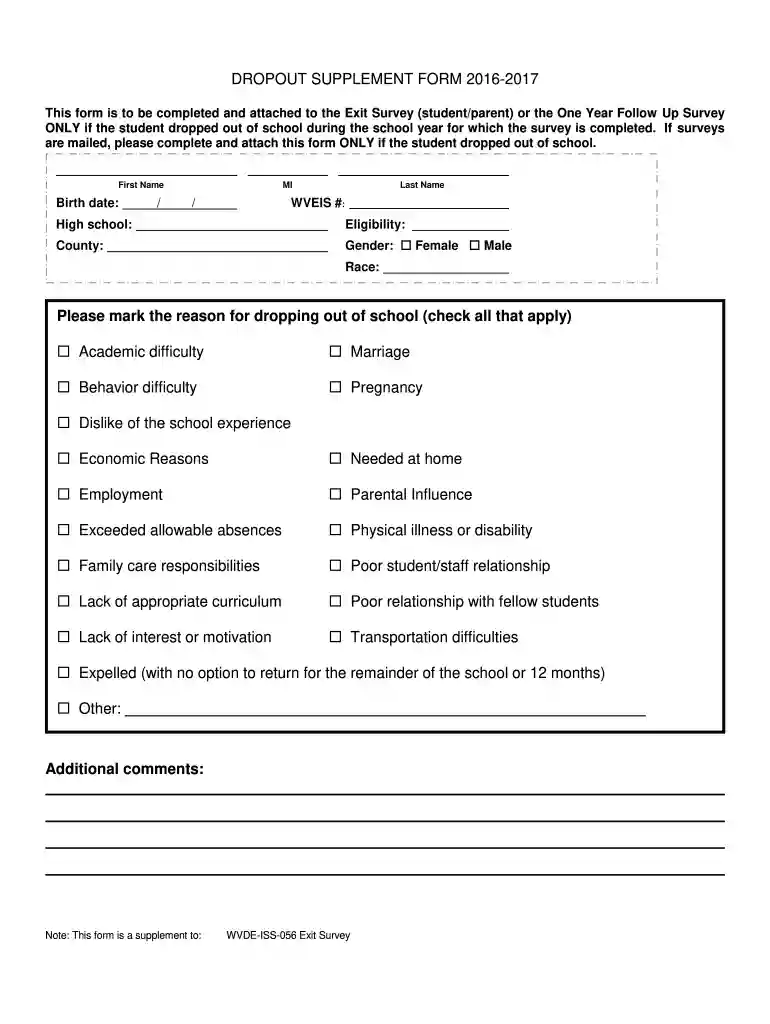
Definition & Meaning of the High School Drop Out Form
The high school drop out form is an official document that students must submit when they decide to leave high school before graduation. This form serves as a formal declaration of the student's intent to discontinue their education and may require additional information regarding their reasons for dropping out. Understanding this form's nuances is essential for students, parents, and educational institutions to ensure compliance with state educational regulations.
Purpose of the High School Drop Out Form
- Documentation: The form provides a record of the student's decision to drop out, which is necessary for school administrative purposes.
- Statistical Tracking: Schools and state education departments use this data to assess dropout rates and develop intervention programs.
- Legal Compliance: States require that students formally report their intention to drop out to ensure adherence to compulsory education laws.
Key Components of the Form
- Personal Information: The student's name, age, and contact details are typically required.
- Reason for Dropping Out: Students may need to specify their reasons, such as academic challenges, personal circumstances, or employment opportunities.
- Parent or Guardian Consent: In many states, minors must have consent from a parent or guardian to drop out officially.
How to Use the High School Drop Out Form
Using the high school drop out form involves several essential steps that ensure accurate completion and submission.
- Obtain the Form: Access the form through your school's administration office or their official website.
- Complete the Required Information: Fill out all necessary fields, including personal information and reasons for leaving. Be thorough but clear to avoid misinterpretation.
- Review the Form: Ensure that all sections are accurately completed and free of errors. This is crucial for a timely processing of your application.
- Submit the Form: Follow your school's specified method for submission, whether it be online, via mail, or in person.
Helpful Tips for Submission
- Check Deadlines: Be aware of submission deadlines to avoid complications.
- Keep Copies: Make copies of your completed form for personal records before submission.
- Follow Up: Contact your school after submission to confirm receipt and check on the subsequent process.
Steps to Complete the High School Drop Out Form
Completing the high school drop out form involves a systematic approach to ensure accuracy and compliance with legal requirements.
- Gather Necessary Documents: Before filling out the form, collect relevant documents, such as identification and proof of residence.
- Fill Out Personal Details:
- Name
- Date of birth
- Contact information
- Student identification number (if applicable)
- State Your Reasons for Dropping Out: Be specific about your reasons. Common responses include:
- Academic struggles
- Family issues
- Financial constraints
- Include Parent or Guardian Information: If you are a minor, provide your parent or guardian’s contact information. Their signature may be required.
- Check for Required Signatures: Ensure that the necessary parties have signed the form, as some jurisdictions may not accept unsigned forms.
Best Practices for Completing the Form
- Be Honest: Accurate representation of your reasons can help schools provide necessary support to students.
- Seek Assistance if Needed: Discuss your concerns with a school counselor or trusted adult if you’re unsure how to fill it out.
Legally Binding Aspects of the High School Drop Out Form
The high school drop out form carries legal implications for students and their families. Submitting this form implies that the signatories acknowledge the student's decision to leave school, which can affect various aspects of their future education and employment prospects.
Legal Considerations
- Compulsory Education Laws: In the United States, many states have laws mandating school attendance up to a certain age. It's important to be aware of these laws when considering dropping out.
- Consequences of Not Submitting: Failing to complete and submit the appropriate drop out paperwork can have legal ramifications, including truancy charges.
Rights of the Student
- Right to Education: Students have the right to return to school or pursue alternative educational options after dropping out.
- Right to Privacy: Information shared on the drop out form is typically kept confidential, subject to applicable legal regulations.
Important Terms Related to the High School Drop Out Form
Familiarity with key terms related to the high school drop out form can help clarify the process and implications of dropping out.
- Drop Out: A student who leaves school before completing their education.
- Compulsory Education: Laws that require children to attend school up to a certain age.
- Exit Survey: A questionnaire that may be administered alongside the drop out form to collect data on reasons for leaving.
- Educational Alternatives: Options such as GED programs or vocational training available for students who choose to drop out.
Contextual Usage Scenarios
- Economic Hardship: A student may need to prioritize work over school to support themselves or their family.
- Academic Challenges: A student struggling significantly with coursework may decide to pursue alternative educational routes.
- Personal Circumstances: Issues such as health problems or family situations might lead a student to leave their current program.