




01. Edit your irs forgiveness form online
Type text, add images, blackout confidential details, add comments, highlights and more.

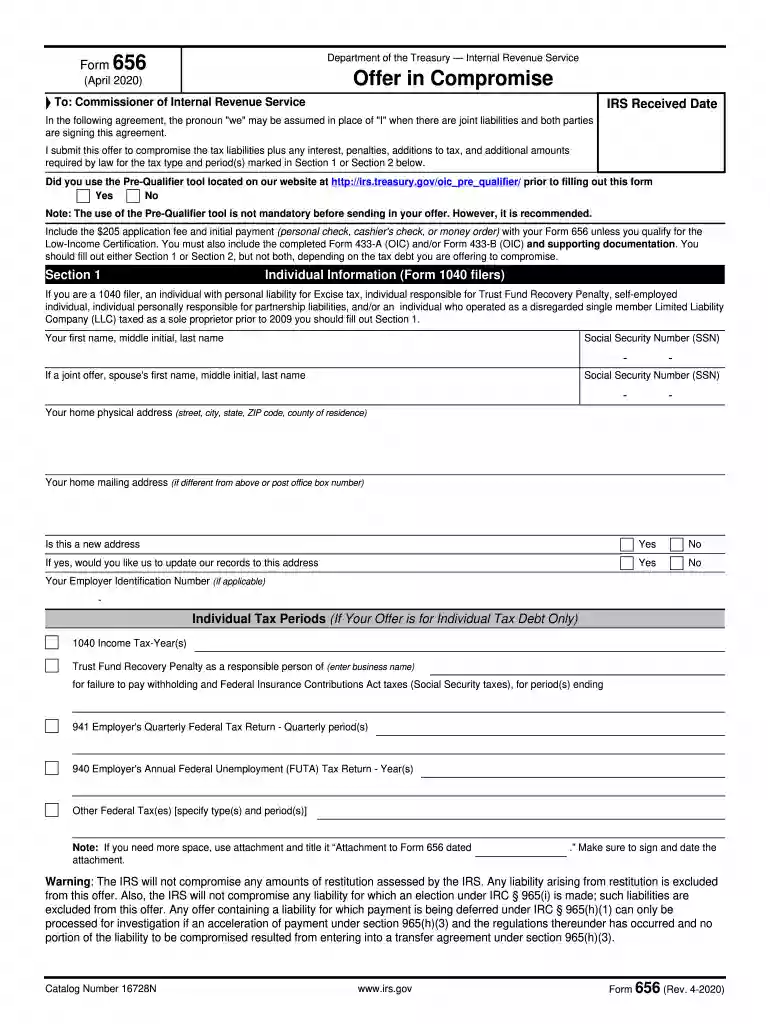
Type text, add images, blackout confidential details, add comments, highlights and more.

Draw your signature, type it, upload its image, or use your mobile device as a signature pad.

Send 656 2020 via email, link, or fax. You can also download it, export it or print it out.
Form 656, also known as the Offer in Compromise (OIC), is a critical document used by both individuals and businesses in the United States to present an offer to the IRS to settle outstanding tax debts for less than the full amount owed. This form signifies an understanding between the taxpayer and the IRS where the taxpayer can negotiate a reduced tax burden under specific conditions. By submitting Form 656, taxpayers aim to establish a payment that they can reasonably handle based on their financial circumstances. The form is part of an administrative process and not a legal right, meaning approval depends on a thorough evaluation of the taxpayer’s situation by the IRS.
Using Form 656 requires a clear understanding of one's financial standing and an honest presentation of this information to the IRS. The form enables taxpayers to propose a compromise amount that reflects their ability to pay, calculated from their income, assets, and overall financial situation. It is essential to support your offer with comprehensive documentation, including income verification, asset valuations, and existing liabilities. The IRS will assess these documents to ensure the offer is fair and in line with what the taxpayer can afford. Users of this form should also be prepared to justify their offer convincingly, often with the help of a tax professional.
Completing Form 656 involves several vital steps to ensure accuracy and completeness:
Eligibility for filing Form 656 is a critical aspect that determines whether the IRS will consider your offer. The primary criteria include:


Comprehensive documentation is required to support Form 656, aiming to verify your financial claims and argue your case effectively. These documents include:
Different financial situations might necessitate additional documentation, such as loan agreements, lease contracts, or divorce decrees, when applicable to the financial profile presented.
The IRS provides specific guidelines to assess Offer in Compromise applications submitted via Form 656. According to these rules:
Form 656 encompasses crucial sections that the taxpayer must navigate:
Understanding the terminology associated with Form 656 is vital for accurately navigating and completing the form:
We've got more versions of the irs forgiveness form form. Select the right irs forgiveness form version from the list and start editing it straight away!
| Versions | Form popularity | Fillable & printable |
|---|---|---|
| 2024 | 4.4 Satisfied (43 Votes) | |
| 2023 | 4.6 Satisfied (44 Votes) | |
| 2022 | 4.4 Satisfied (51 Votes) | |
| 2021 | 4.8 Satisfied (103 Votes) | |
| 2020 | 4.4 Satisfied (171 Votes) | |
| 2019 | 4.3 Satisfied (48 Votes) | |
| 2018 | 4.1 Satisfied (40 Votes) | |
| 2017 | 4.3 Satisfied (121 Votes) | |
| 2016 | 4.4 Satisfied (815 Votes) | |
| 2015 | 4.4 Satisfied (321 Votes) | |
| 2012 | 4.3 Satisfied (38 Votes) | |
| 2011 | 4.2 Satisfied (37 Votes) |
At DocHub, your data security is our priority. We follow HIPAA, SOC2, GDPR, and other standards, so you can work on your documents with confidence.
Each Form 656 will require the $205 application fee and initial payment unless you are an individual and meet the Low-Income Certification guidelines. If YouRead more
If you have a legitimate doubt that you owe part or all of the tax debt, complete and submit a Form 656-L, Offer in Compromise (Doubt as to Liability). The Form.Read more


