






Definition and Meaning
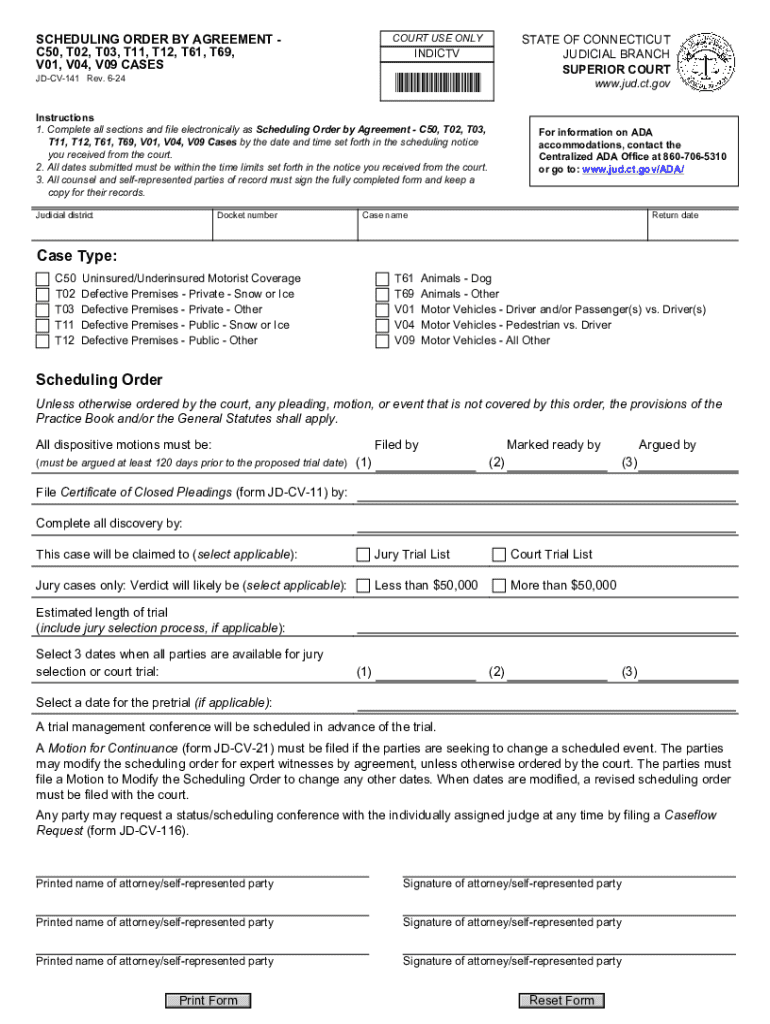
A Scheduling Order by Agreement is a legal document used in various case types, primarily within the Connecticut Superior Court, to formalize the procedural timeline in a legal case. It plays a crucial role in outlining deadlines for significant activities such as filing motions, completing discovery, and scheduling trials. The agreement ensures all parties involved, including counsel and self-represented litigants, are aware of and agree on the timelines for each procedural step, thereby promoting efficient case management.
How to Use the Scheduling Order by Agreement
To use a Scheduling Order by Agreement, parties in a case must first identify the procedural requirements and deadlines pertinent to their specific case. The document should be carefully reviewed to ensure that all obligations and timelines are clearly understood and feasible. Once consensus is reached, parties should sign the agreement to indicate their commitment to adhere to the outlined schedule. It is often advisable to consult with legal counsel when drafting or agreeing to such an order to prevent any inadvertent non-compliance.
Steps to Complete the Scheduling Order by Agreement
-
Review Existing Rules:
- Understand the procedural rules applicable to your case type within the Connecticut Superior Court system.
-
Draft the Order:
- Use legal templates or seek assistance from legal counsel to draft the order with specific deadlines for each procedural step.
-
Agreement between Parties:
- Communicate with opposing parties to negotiate and agree upon realistic timelines.
-
Sign the Document:
- All participating parties, including counsel, must sign the document to validate the agreement.
-
Submit to Court:
- The signed order should be submitted to the court for approval and entry into the official court record.
-
Follow the Timelines:
- Ensure compliance with the agreed timelines by planning and executing required actions efficiently.
Important Terms Related to Scheduling Order by Agreement
- Discovery: The pre-trial phase where parties exchange information relevant to the case.
- Motion: A formal request to the court for a specific ruling or order.
- Counsel: Legal professionals representing a party in a case.
- Litigants: Individuals or parties involved in a legal proceeding.
These terms are integral to understanding the scheduling order's context and execution, ensuring clear communication and adherence to legal standards.
Legal Use of the Scheduling Order by Agreement
A Scheduling Order by Agreement is legally binding once executed and approved by a court. It serves as a court-sanctioned schedule which, if deviated from by any party, can lead to legal implications such as delays in trial dates or other judicial sanctions. Compliance with the order is crucial for the smooth progression of legal proceedings and may impact the resolution of the case.
Key Elements of the Scheduling Order by Agreement
- Deadlines for Motions and Discovery: Specifications on when motions must be filed and discovery completed.
- Trial Date Scheduling: Tentative or fixed dates for trial commencement.
- Responsibility Assignments: Specific tasks assigned to parties or legal counsel.
- Signatures of Approval: Authentication of agreement by all parties involved.
These foundational elements ensure the document provides clear guidance on the case proceedings and fulfills its purpose of streamlining the legal process.
State-Specific Rules for the Scheduling Order by Agreement
Connecticut-specific regulations govern the structure and requirements of a Scheduling Order by Agreement. Familiarity with these state-specific rules is essential for the successful preparation and approval of the document. Differences may exist compared to other jurisdictions, including variations in deadlines and procedural steps.
Examples of Using the Scheduling Order by Agreement
In practice, a Scheduling Order by Agreement can be used in civil litigation cases where parties, such as businesses or individuals, agree on a schedule to resolve disputes efficiently. For instance, in a contractual dispute, the parties might use the agreement to outline deadlines for document exchanges and motions, paving the way for a timely court ruling. Using the order in this way avoids unnecessary delays and streamlines the resolution process.