

Get and handle Warranty Deeds online

Boost your file management using our Warranty Deeds collection with ready-made document templates that meet your requirements. Access the form, alter it, fill it, and share it with your contributors without breaking a sweat. Begin working more effectively together with your forms.

The best way to manage our Warranty Deeds:

  1. Open our Warranty Deeds and search for the form you want.
  2. Preview your form to ensure it’s what you want, and click on Get Form to begin working on it.
  3. Alter, add new text, or point out important information with DocHub tools.
  4. Fill out your form and save the adjustments.
  5. Download or share your form template with other people.

Discover all of the possibilities for your online document administration using our Warranty Deeds. Get your free free DocHub account today!


Video Guide on Warranty Deeds management

video background

Commonly Asked Questions about Warranty Deeds

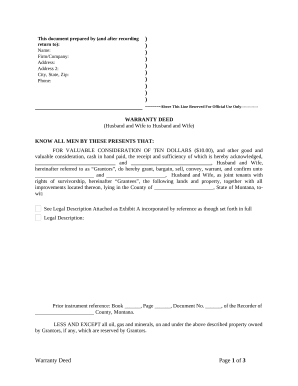
Warranty deeds protect the buyer by guaranteeing a clear title and give the current owner the legal right to sell the house. For sellers, warranty deeds can delay the home selling process and come at an extra cost.
A general warranty deed is a legal agreement that protects a property buyer from any debts held against the property theyre purchasing. If such a debt emerges after the sale, the seller, not the buyer, is financially responsible for that debt.
A warranty deed or quit claim deed TRANSFERS TITLE or OWNERSHIP of real property. When you purchase property, you usually receive a warranty deed from the seller to you to show that you now own the property.
Both a warranty deed and deed of trust are used to transfer the title of a property from one person to another. However, the difference between these two contracts is who is protected. As you now know, a deed of trust protects the beneficiary (lender). A warranty deed, on the other hand, protects the property owner.
A traditional deed simply transfers the ownership of a property from one party to another (in other words, the seller to the buyer.) Whoever legally holds the deed is the rightful owner of the property. A warranty deed, on the other hand, contains special assurances that the seller makes to the buyer.
A warranty deed is a legal document guaranteeing that a propertys seller has the legal right to sell the property and that there are no outstanding debts or legal claims against it.
