
Utility Easement Legal Documents


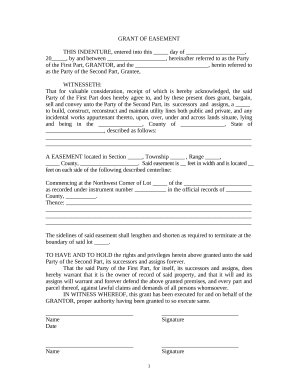
Enhance your efficiency with Utility Easement Legal Documents
Record managing consumes to half of your business hours. With DocHub, it is easy to reclaim your time and enhance your team's efficiency. Access Utility Easement Legal Documents online library and discover all form templates related to your everyday workflows.
Effortlessly use Utility Easement Legal Documents:
- Open Utility Easement Legal Documents and apply Preview to find the relevant form.
- Click Get Form to start working on it.
- Wait for your form to upload in the online editor and start editing it.
- Add new fillable fields, symbols, and images, change pages order, and many more.
- Fill your template or set it for other contributors.
- Download or share the form by link, email attachment, or invite.
Improve your everyday document managing with the Utility Easement Legal Documents. Get your free DocHub profile today to discover all forms.
Video Guide on Utility Easement Legal Documents management

Commonly Asked Questions about Utility Easement Legal Documents
Can I refuse a utility easement in Tennessee?
The agreements that create these easements are generally included in the deed of the property. Most of these easements already exist and simply need to be tolerated by the property owners. Tennessee utility easement laws dont open the utility companies to use the property in any way they like.
Who is responsible for easement maintenance in Indiana?
Right-of-way maintenance responsibilities may be specified in the express creation of an easement. When not specified, the responsibility is generally upon the easement holder and the owner of the servient estate has no obligations.
What is a utility easement in Indiana?
Utility easements are used to construct and maintain utilities. Drainage easements are used to construct and maintain storm water utilities, surface water flow and detention.
Can I refuse a utility easement in California?
Negotiate: While you cant necessarily refuse the easement outright, you can try to negotiate the terms. This could involve things like the placement of the easement, compensation for any loss of property value, or restrictions on how the utility company can use the easement.
How wide is a utility easement in Indiana?
The easements shall be at least 15 feet in width and may be coincident with utility easements. Where a subdivision is traversed by a legal drain, the easement for the drain shall be in ance with the Indiana Code requirements for legal drains.
How wide are most easements?
Private road easements shall be at least sixty feet (60) in width. Common driveway easements shall be at least forty feet (40) in width. Cut and fill slopes and stormwater systems adjacent to roads and driveways must either be shown as easements or rights of way in favor of the maintenance entity.
What type of easement is commonly used by utility companies?
When termed as a utility easement, it means a utility companys right to access and control the portion of another persons land that is located near utility facilities and structures (i.e. utility poles, transformers, overhead or underground electrical lines).
Can a property owner block an easement in Indiana?
An easement holder is deemed to have all rights necessarily incident to the enjoyment of the easement and its servitude, and the owner of the servient estate may not obstruct, interfere, or otherwise encroach upon the easement holders use and enjoyment.


