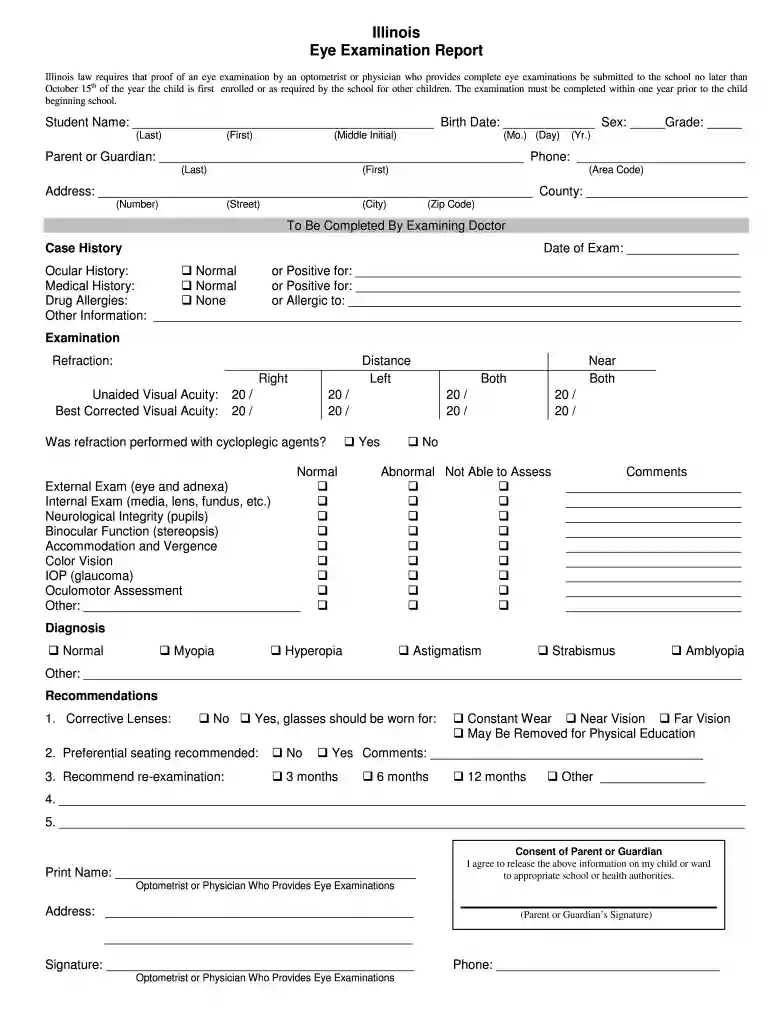
Definition and Meaning of the Eye Exam Form
The eye exam form is a specific document used to record the findings of an eye examination conducted by an optometrist or ophthalmologist. This form serves multiple purposes, including providing essential information about a patient’s visual acuity, eye health, and any necessary corrective actions. Understanding the structure and intent of this form is crucial for both medical professionals and patients, especially in contexts like school enrollment or corporate health evaluations.
Purpose of the Eye Exam Form
- Patient Record: The eye exam form captures detailed patient data, including personal information, medical history, and specifics about the eye examination. This information is important for ongoing care and treatment.
- Compliance and Documentation: For children enrolling in school or individuals applying for certain jobs, an eye exam form is often legally required to confirm that an appropriate eye examination has been conducted.
- Action Recommendations: The form typically includes recommendations for corrective lenses, referrals to specialists, or suggestions for follow-up visits and treatments based on the findings.
Key Elements of the Eye Exam Form
Understanding the key elements included in an eye exam form can help patients know what to expect during their examination. These elements provide a comprehensive overview of the patient’s eye health and any prescribed actions.
Components of the Eye Exam Form
- Personal Information: Includes the patient’s name, age, contact information, and medical history.
- Vision Assessment: Records results from vision tests that measure acuity for distance and near vision, often using standardized charts.
- Ocular Health Evaluation: A section for documenting the health of the eyes, including checks for conditions such as glaucoma or cataracts.
- Findings and Diagnosis: Summarizes the outcomes of the eye examination and any diagnosed conditions, as well as recommendations for management or treatment.
- Consent and Signature: A place for signatures of the patient and potentially a guardian, confirming that the information provided is accurate and acknowledging understanding of the exam results.
Steps to Complete the Eye Exam Form
Completing the eye exam form accurately and thoroughly is critical for effective communication between the patient and the healthcare provider.
- Gather Required Information: Ensure personal information, such as your full name, date of birth, and medical history, are readily available.
- Fill Out the Examination Details: Complete sections detailing your visual acuity results. This may involve filling out measurements obtained during the exam.
- Indicate Further Recommendations: If corrective lenses or additional testing is advised, be sure to note these recommendations clearly on the form.
- Review and Sign: After all sections have been completed, review the information for accuracy, and then sign the document. For minors, ensure a guardian also signs where indicated.
Important Considerations
- Clarity and Accuracy: Ensure that entries are clear and legible to avoid misinterpretation.
- Privacy and Security: Since the eye exam form contains sensitive health information, take precautions when storing or sharing it.
How to Obtain the Eye Exam Form
Accessing the eye exam form can vary depending on the provider or context. Here are common methods to obtain the form.
- Optometrist or Ophthalmologist Office: Most eye care facilities have the eye exam form readily available for patients. You can request it as part of the appointment setup.
- Educational Institutions: Schools often provide access to the necessary forms through their administration office or website to facilitate compliance with health requirements.
- Online Resources: Many healthcare providers and educational institutions offer downloadable and printable PDF versions of the eye exam form from their websites.
Who Typically Uses the Eye Exam Form
The eye exam form is utilized by various parties, including but not limited to:

- Parents or Guardians: For minor children enrolling in school, where proof of a recent eye exam is needed.
- Healthcare Providers: Optometrists and ophthalmologists use the form in their practice for recording and documenting patient evaluations.
- Employers: Some workplaces may require an eye exam as part of health screenings, using this form to document results.
Additional Users
- Schools: To assess whether students meet vision requirements for participation in certain activities or sports.
- Insurance Providers: The form can be used to support claims related to eye examinations and treatments.
Legal Use of the Eye Exam Form
Understanding the legal implications surrounding the eye exam form is essential, particularly in the context of healthcare compliance.
Compliance Requirements
- State Regulations: Many states require specific documentation for pediatric eye exams as part of health assessments for school entry, including temporal requirements for when the exam must be conducted.
- Health Privacy Laws: The form must be handled in accordance with HIPAA regulations to protect patient privacy and safeguard sensitive health information.
Consequences of Non-Compliance
- Enrollment Issues: Failure to provide the appropriate eye exam form can lead to complications with school enrollments or participation in required activities.
- Legal Repercussions: There can be fines or legal action against healthcare providers who fail to adhere to state and federal regulations regarding eye examination documentation.
Examples of Using the Eye Exam Form
Utilizing the eye exam form effectively can ensure that all necessary visual health information is documented and communicated properly.
- School Enrollment: A first-grade student may be required to submit an eye exam form to confirm that they received a comprehensive eye exam no earlier than one year before enrollment.
- Corporate Health Screenings: An employer may request an eye exam form as part of their onboarding process, requiring new hires to present a completed form verifying that they meet vision standards necessary for their job functions.
Practical Scenarios
- A parent completes an eye exam form for their child after a visit to an optometrist, including details on any prescribed glasses to ensure visibility during classroom activities.
- An individual may provide their recent eye exam form to an employer to comply with job-related visual acuity requirements, ensuring they meet standards for safety in their position.