
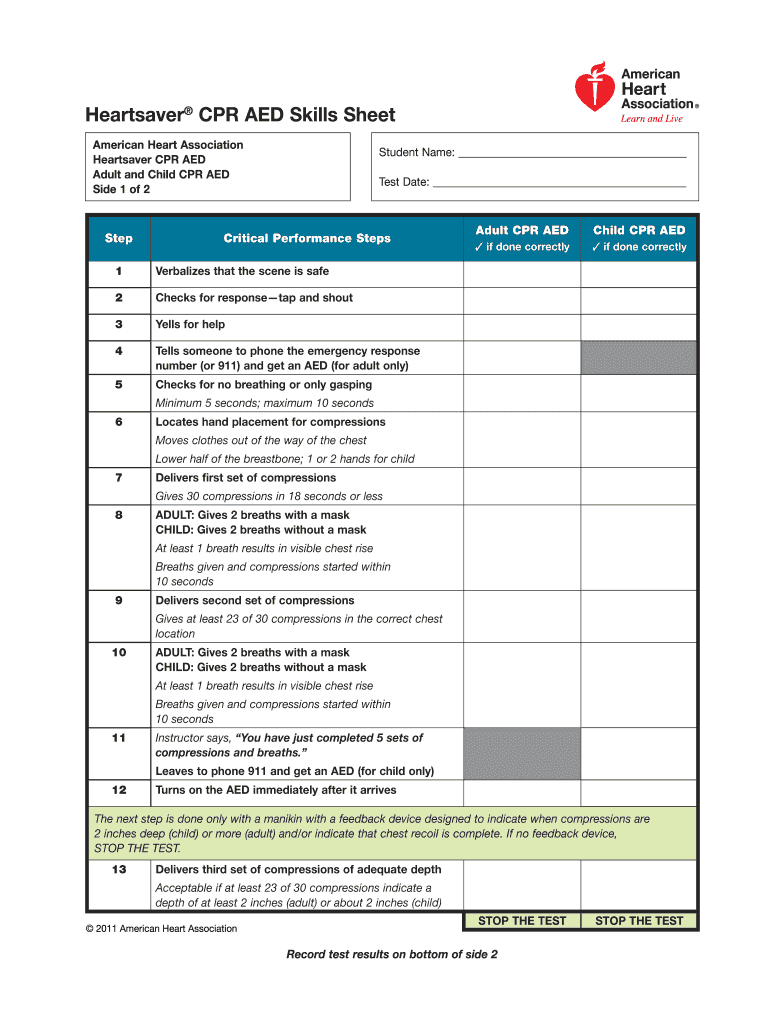







Overview of the Heartsaver CPR AED Skills Sheet
The Heartsaver CPR AED Skills Sheet from the American Heart Association serves as a vital reference for those trained in CPR and AED use. It outlines critical performance steps necessary for responding effectively in emergencies involving adults, children, and infants. Each section provides precise instructions for checking responsiveness, delivering compressions and breaths, and operating an AED.
Key Components of the Skills Sheet
- Performance Steps: The sheet systematically details the sequence of actions required when administering CPR, which includes assessing the situation, performing chest compressions, and ensuring the use of an AED when available.
- Age-Specific Guidelines: Instructions are tailored for different age groups, recognizing the variations in technique between adults, children, and infants. For instance, the compression depth and rate differ across these categories, reflecting anatomical and physiological differences.
- Assessment and Testing Format: Included in the skills sheet is a format designed to evaluate the proficiency of skills learned. This may involve practical testing scenarios that replicate real-life situations, ensuring readiness for emergencies.
Utilizing the Heartsaver CPR AED Skills Sheet
The Heartsaver CPR AED Skills Sheet should be utilized alongside hands-on training to reinforce the knowledge and skills required for effective CPR and AED application. Individuals are encouraged to familiarize themselves with the following components:
-
Responding to an Emergency:
- Assess the scene for safety.
- Check for responsiveness by tapping the person and shouting.
-
Initiating CPR:
- If unresponsive and not breathing, activate emergency services.
- Start with chest compressions at a rate of 100 to 120 compressions per minute, ensuring a depth of at least two inches for adults.
-
Using an AED:
- Turn on the AED and follow voice prompts.
- Attach pads correctly on the bare chest, ensuring not to touch the individual while the AED analyzes the rhythm.
Training and Evaluation
Training for the Heartsaver CPR AED includes both practical and theoretical components. Instructors often incorporate the skills sheet in lessons to provide a structured approach to learning CPR techniques. Evaluation typically includes:
- Practical Skills Testing: Participants demonstrate their ability to perform CPR and use an AED under instructor supervision.
- Feedback Mechanisms: Constructive feedback helps participants refine their skills and correct techniques before facing real-life situations.
Related Resources and Tools
For those looking to enhance their training, additional resources include:
- CPR Drill Checklist: A comprehensive guide to practice scenarios and skill performance.
- CPR Checklist PDF: A printable version for easy reference during practice sessions.
- Heartsaver First Aid Skills Testing Checklist Answers: Answers for self-evaluation regarding first aid skills.
Importance of Compliance and Certification
Using the Heartsaver CPR AED Skills Sheet effectively ensures that individuals are prepared to respond competently in emergencies. It is also crucial for maintaining certification through regular refreshers and practical assessments, aligning with current AHA guidelines to ensure both knowledge retention and skill proficiency. Regular practice and adherence to the sheet guidelines can significantly increase survival rates in cardiac emergencies.




