



Form 1065 2011-2026

Get Form
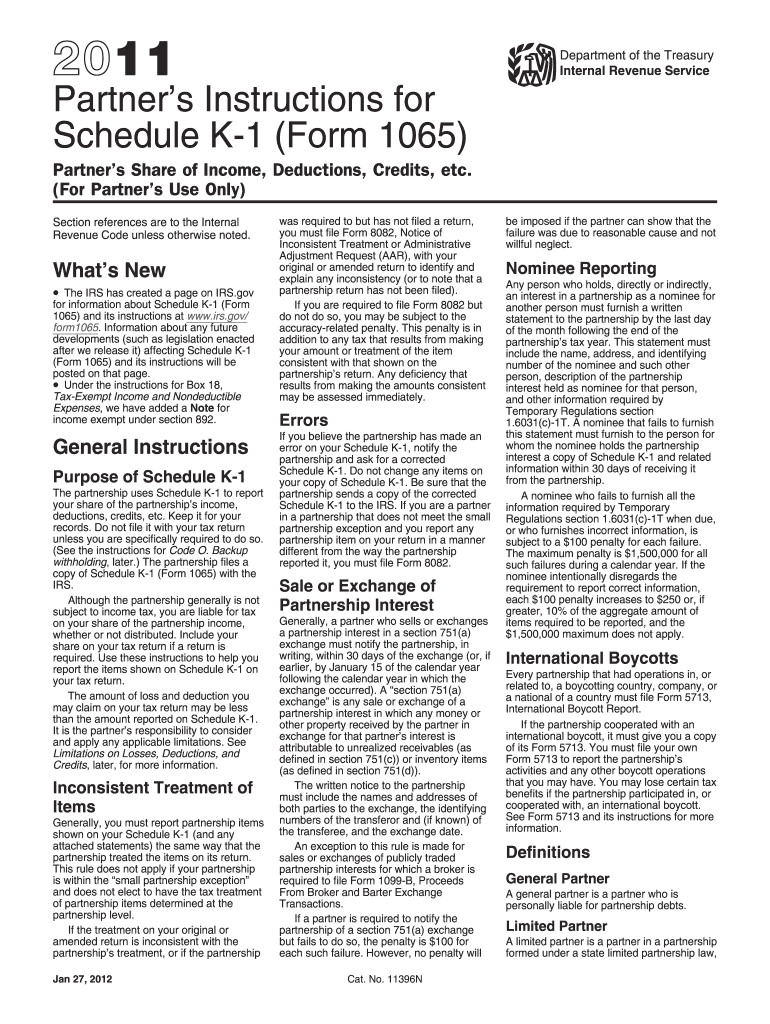
form 1065 Preview on Page 1

Here's how it works

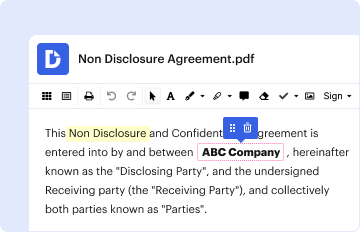
01. Edit your form 1065 online
Type text, add images, blackout confidential details, add comments, highlights and more.
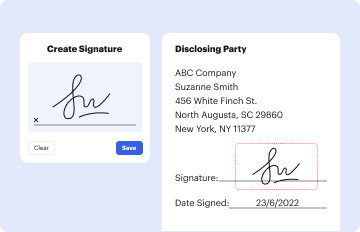
02. Sign it in a few clicks
Draw your signature, type it, upload its image, or use your mobile device as a signature pad.
03. Share your form with others
Send it via email, link, or fax. You can also download it, export it or print it out.

Definition and Meaning of Form 1065 (2011)

Form 1065 is a United States Internal Revenue Service (IRS) tax document used by partnerships to report their income, deductions, and credits for a tax year. Created specifically for partnerships, this form does not impose tax liability on the business entity itself; instead, it provides a detailed overview of each partner's share of profit or loss, which is then reported on their individual tax returns. The 2011 version of Form 1065 includes various sections that offer insights into each partner's contributions, including capital accounts and distributions made throughout the year.

Key Features of Form 1065

  • Informational Return: Serves as an informational return rather than a tax return, as partnerships are pass-through entities.
  • Share of Income: Each partner receives a Schedule K-1 (Form 1065), summarizing their individual share of the partnership’s income.
  • Deductions and Credits: Must accurately report deductions and credits to ensure compliance with IRS regulations.

Understanding the purpose of Form 1065 is crucial for businesses operating as partnerships, as it aligns with tax obligations for both the entity and its individual partners.

How to Use Form 1065 (2011)

Utilizing Form 1065 involves multiple steps that direct partnerships in reporting their financial activities. Each partnership must accurately gather financial data from the preceding year before filling out the form.

Step-by-Step Process

  1. Collect Financial Information: Partner contributions, income earned, and any deductions must be gathered.
  2. Complete Basic Information: Fill in details such as partnership name, address, and Employer Identification Number (EIN).
  3. Report Income and Deductions: Provide comprehensive figures for total income and individual expenses.
  4. Calculate Partner Shares: Each partner's allocated share of profit or loss is to be carefully calculated and reported.
  5. Generate Schedule K-1s: Prepare individual K-1 forms for all partners to file with their personal tax returns.

Each step requires detailed financial documentation and accuracy to comply with IRS requirements. Misreporting can lead to penalties, so careful attention to financial data is essential.

Steps to Complete Form 1065 (2011)

Complete Form 1065 through a systematic approach, ensuring that no detail is overlooked. Each section of the form must be thoroughly addressed.

Detailed Breakdown of Completion Steps

  • Identify Partnership Type: Specify whether the partnership is a general, limited liability, or limited partnership.
  • Enter Partnership Income: Detail all sources of revenue earned by the partnership during the tax year.
  • Deduct Allowable Expenses: List deductible expenses such as salaries, rent, and utilities.
  • Distribute Gains and Losses: Allocate income and deductions to each partner based on the partnership agreement.
  • Finalize and Review: Ensure all figures are mathematically accurate, and review the form for any discrepancies before submission.

By following these structured steps, partnerships can ensure accurate financial reporting and compliance.

Important Terms Related to Form 1065 (2011)

Understanding key terminology associated with Form 1065 aids partners in grasping their rights and obligations within the partnership framework.

Glossary of Terms

  • Partnership: A business entity formed by two or more individuals who share ownership and profits.
  • Schedule K-1: A tax document that reports each partner's share of income, deductions, and credits from the partnership.
  • Capital Account: An account that tracks each partner's equity in the partnership.
  • Pass-Through Entity: A business structure where the income is passed through to the individual partners and taxed at their personal income tax rates.

Knowing these terms is essential, as they encompass the basic mechanics of partnership taxation and compliance.

Filing Deadlines for Form 1065 (2011)

Timely filing of Form 1065 is essential to avoid penalties and interest, with specific deadlines established by the IRS each tax year.

Key Filing Dates

  • Filing Due Date: Form 1065 is typically due on the 15th day of the third month following the end of the partnership's tax year. For most partnerships operating on a calendar year, this date is March 15.
  • Extensions: Partnerships can file for an automatic six-month extension, allowing additional time until September 15 for filing.
  • K-1 Distribution Deadline: The Schedule K-1s must be provided to partners for inclusion in their personal tax returns, typically by the same deadline as Form 1065.

It is important to adhere to these deadlines to ensure compliance with IRS regulations and avoid unnecessary penalties.

IRS Guidelines for Completing Form 1065 (2011)

The IRS provides comprehensive guidelines that describe the detailed requirements for completing Form 1065, and partnerships must abide by these to maintain compliance.

Essential IRS Guidelines

  • Accurate Reporting: All income and deductions must be reported honestly and accurately.
  • Documentation of Income and Expenses: Maintain supporting documents such as invoices, receipts, and bank statements in case of IRS review.
  • Correct Use of Required Forms: Ensure that all applicable forms, particularly Schedule K-1, are generated and distributed to partners.

Following IRS guidelines is critical in avoiding compliance issues, ensuring proper tax treatment, and delivering transparent financial information to partners.

Who Typically Uses Form 1065 (2011)

Form 1065 is primarily utilized by partnerships that engage in business activities and earn income. Below are entities that commonly file this form.

Typical Users of Form 1065

  • General Partnerships: Entities where all partners share liabilities and management responsibility.
  • Limited Partnerships: Partnerships with both general and limited partners, where limited partners receive liability protections.
  • Limited Liability Companies (LLCs): Entities that elect to be taxed as partnerships, retaining the flexibility of the partnership structure while limiting liability for owners.

By recognizing who files Form 1065, partnerships can better understand their filing requirements and obligations in the wider context of business operations.

See more form 1065 2011 versions

We've got more versions of the form 1065 2011 form. Select the right form 1065 2011 version from the list and start editing it straight away!
Versions Form popularity Fillable & printable
2022 4.6 Satisfied (55 Votes)
2021 4.8 Satisfied (114 Votes)
2020 4.3 Satisfied (135 Votes)
2019 4.3 Satisfied (58 Votes)
2018 4.4 Satisfied (88 Votes)
2017 4.4 Satisfied (69 Votes)
2016 4.4 Satisfied (440 Votes)
2015 4 Satisfied (26 Votes)
2014 4 Satisfied (46 Votes)
2013 4.4 Satisfied (56 Votes)
2012 4 Satisfied (51 Votes)
2011 4.3 Satisfied (39 Votes)
1995 4.2 Satisfied (57 Votes)
be ready to get more

Complete this form in 5 minutes or less

Get form

Got questions?

We have answers to the most popular questions from our customers. If you can't find an answer to your question, please contact us.
Contact us
Filing of Form 1065 Filing a business income tax return is required for LLCs with business income and expenses during the year. The form reports income, losses, deductions, and credits.
No, if your partnership did not generate income or have expenses treated as deductions or credits during the tax year, you arent required to complete Form 1065.
The partnership files a copy of Schedule K-1 (Form 1065) with the IRS to report your share of the partnerships income, deductions, credits, etc.
If the LLC is a partnership, normal partnership tax rules will apply to the LLC and it should file a Form 1065, U.S. Return of Partnership Income.
In conclusion, a single-member LLC should not file Form 1065 unless it has elected to be treated as a corporation. Instead, the owner should report the LLCs activities on their personal tax return using the appropriate schedules based on the nature of the income.
be ready to get more

Complete this form in 5 minutes or less

Get form

People also ask

Average Price to File Taxes in 2025 Tax FormAverage Cost per FormAverage Hourly Fees Form 1041 (Fiduciary) $576 $172.66 Form 1065 (Partnership) $733 $177.29 Form 990 (Exempt Organization) $735 $171.48 Form 1120-S (S Corporation) $903 $179.819 more rows
Form 1065 is an IRS document used to report the financial activity of partnerships, including profits and losses. Partnerships must file Form 1065 annually along with a Schedule K-1 for each partner, detailing their share of the partnerships income.
Penalties may be assessed for failing to file Form 1065 before the deadline. The IRS charges a late filing penalty starting at $265 per month if the return is late for up to 12 months. The IRS also charges a penalty of $310 for failing to furnish Schedule K-1 to each partner.

Related links