




01. Edit your form online
Type text, add images, blackout confidential details, add comments, highlights and more.

Type text, add images, blackout confidential details, add comments, highlights and more.

Draw your signature, type it, upload its image, or use your mobile device as a signature pad.

Send it via email, link, or fax. You can also download it, export it or print it out.
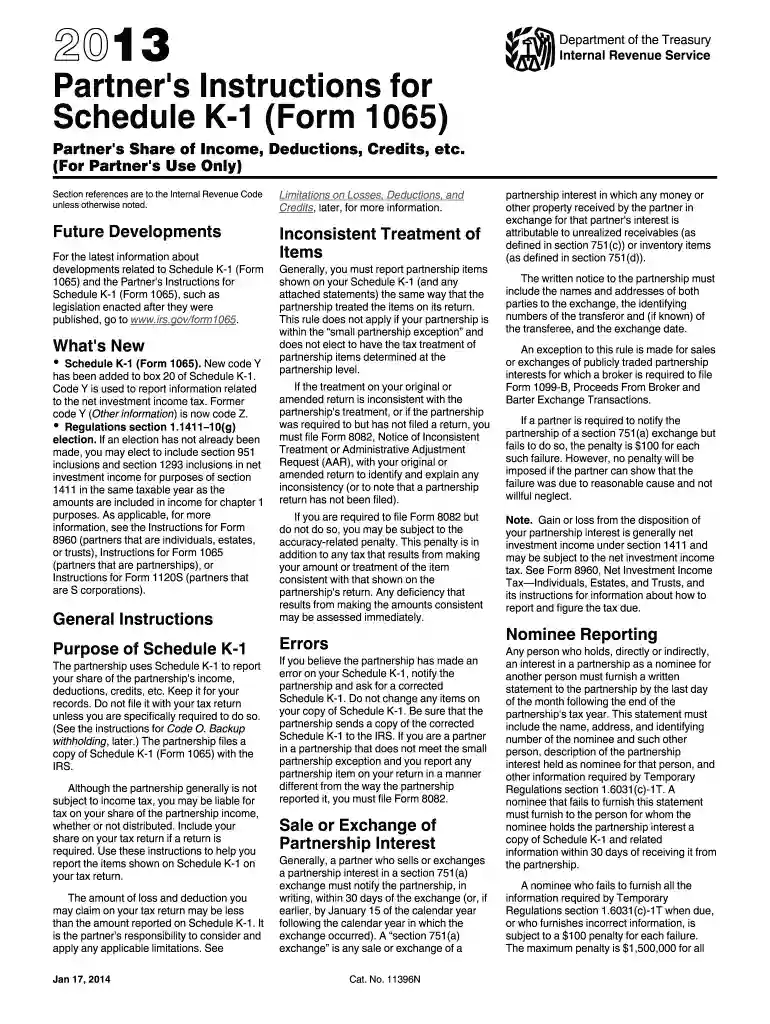
The Form 1041 Schedule K-1 instructions for 2013 are crucial for fiduciaries managing estates or trusts. This form reports each beneficiary's share of the entity’s income, deductions, and other pertinent figures. As such, it requires accurate completion to ensure compliance with IRS requirements. The instructions provide clarity on how the form needs to be completed, detailing which portions of an estate’s earnings should be outlined and how they impact individual tax responsibilities.
Understanding the application of the Form 1041 Schedule K-1 2013 instructions is pivotal for fiduciaries. Start by carefully reviewing each section of the form instructions, which guide you on distributing various income types to beneficiaries. The form reflects each beneficiary's share of the estate or trust income types such as interest, dividends, and capital gains. These amounts must be reported on the beneficiaries’ individual tax returns, making accurate computation essential.
Gather Necessary Information: Before tackling the form, collect all financial income statements for the estate or trust.
Enter Entity Information: Fill in the estate or trust's identifying details such as the taxpayer identification number (TIN) and name.
Allocate Income: Divide the total income among beneficiaries. This includes interest income, ordinary dividends, and royalties.
Deductions and Credits: Record deductions each beneficiary can claim, which may include specific tax credits applicable to the distributed income.
Check for Accuracy: Ensure all calculations and allocations are correct to avoid any compliance issues with the IRS.
Double Check Signatures: Ensure the form has the necessary signatures required before submission.
Understanding the terminology used in the form is essential:
The IRS outlines numerous guidelines for handling estates and trusts under their regulations. Each fiduciary should periodically review the IRS updates on Form 1041 compliance. Accurate reporting and fulfilling the documentation requirements ensure the flow of taxable income information from the trust or estate to individual taxpayers is correctly executed.
Completing and filing Form 1041 and its Schedule K-1 components must adhere to IRS deadlines to avoid penalties. Generally, the filing deadline is April 15 following the tax year. However, extensions can be requested if more time is needed, granting an additional six months which changes the due date to October 15.
The completion process requires various documents:
For those utilizing software to prepare tax forms, compatibility with programs like TurboTax or QuickBooks can streamline the completion process. These platforms may offer specific modules tailored for fiduciaries needing to file Form 1041 Schedule K-1 activities efficiently.
We've got more versions of the form 1041 schedule k 1 instructions 2013 form. Select the right form 1041 schedule k 1 instructions 2013 version from the list and start editing it straight away!
| Versions | Form popularity | Fillable & printable |
|---|---|---|
| 2024 | 4.5 Satisfied (21 Votes) | |
| 2023 | 4.4 Satisfied (35 Votes) | |
| 2022 | 4.6 Satisfied (55 Votes) | |
| 2021 | 4.8 Satisfied (114 Votes) | |
| 2020 | 4.3 Satisfied (135 Votes) | |
| 2019 | 4.3 Satisfied (58 Votes) | |
| 2018 | 4.4 Satisfied (88 Votes) | |
| 2017 | 4.4 Satisfied (69 Votes) | |
| 2016 | 4.4 Satisfied (440 Votes) | |
| 2015 | 4 Satisfied (26 Votes) | |
| 2014 | 4 Satisfied (46 Votes) | |
| 2013 | 4.4 Satisfied (56 Votes) | |
| 2012 | 4 Satisfied (51 Votes) | |
| 2011 | 4.3 Satisfied (39 Votes) | |
| 1995 | 4.2 Satisfied (57 Votes) |
At DocHub, your data security is our priority. We follow HIPAA, SOC2, GDPR, and other standards, so you can work on your documents with confidence.
Under penalties of perjury, I declare that I have examined this return, including accompanying schedules and statements, and to the best of my knowledge andRead more
Feb 18, 2014 Schedule K-1 (Form 1041) is used to notify the beneficiaries of the amounts to be included on their income tax returns. Before preparing FormRead more
This Instruction Manual (Detailed) provides detailed instructions for advanced settings of the FR-A800 series inverters.


