







Definition and Meaning
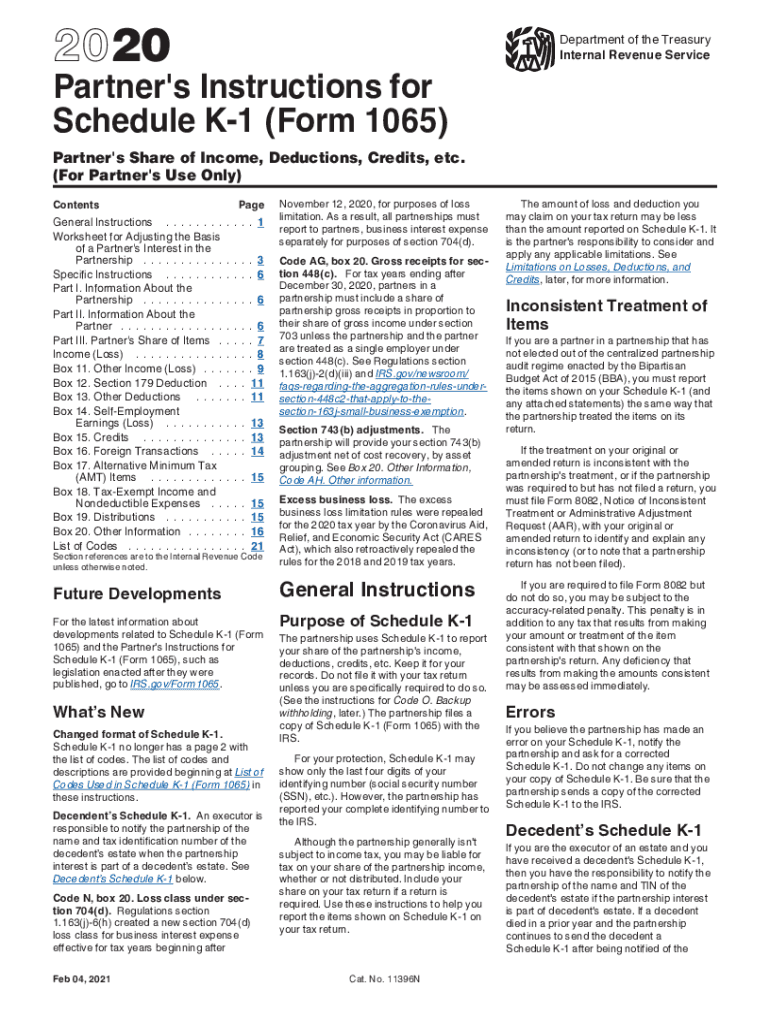
Schedule K-1 (Form 1065) is a tax document used to report each partner's share of income, deductions, credits, and other items from a partnership. Unlike standard tax forms that deal with individual financial data, Schedule K-1 is part of the partnership’s tax filing, providing detailed information about the allocation of the partnership’s income and losses to each partner. This schedule plays a critical role in ensuring that income is taxed at the individual level, in line with the partnership’s flow-through taxation model.
Key Terms in Schedule K-1
Understanding the Schedule K-1 includes familiarity with certain terms:
- Partnership: A business arrangement where two or more individuals or entities share ownership.
- Pass-through Entity: The partnership's income is taxed at the individual level, passing through to the partners, rather than being taxed at the partnership level.
- Distributive Share: Each partner's share of the partnership’s income, gains, losses, deductions, or credits, as outlined in the partnership agreement.
Steps to Complete Schedule K-1 Instructions
Completing the Schedule K-1 efficiently requires careful attention to detail:
- Gather Required Information: Obtain the Partnership's income statement, balance sheet, and any other relevant financial documents.
- Calculate Income Allocation: Use the partnership agreement to determine each partner's distributive share.
- Complete General Information: Fill out basic information such as the partnership's name, address, and Employer Identification Number (EIN).
- Enter Income and Deductions: Record each partner's share of income, deductions, and credits.
- Review Specific Codes: Review the IRS-provided codes that apply to various income types, ensuring proper categorization in each corresponding partner's tax return.
- Verify Information: Double-check all entries for accuracy before submission.
Important Tips for Accuracy
- Stay Informed on Updates: Tax laws and forms can change annually. Always refer to the latest IRS instructions and updates for Schedule K-1.
- Use Software Tools: Consider using tax software like TurboTax or QuickBooks, which can simplify the process through automated calculations and form-filling guidance.
Importance of Schedule K-1 Instructions
The Schedule K-1 instructions are crucial for partners to accurately report their share of partnership income and expenses. Misreporting can lead to discrepancies in taxable income and potential penalties. Understanding these instructions ensures compliance with IRS regulations.
Potential Consequences of Mismanagement
- Tax Discrepancies: Incorrect reporting can lead to underpayment or overpayment of taxes.
- Penalties and Interest: Failure to properly report or correct inaccuracies may result in penalties and interest from the IRS.
Filing Deadlines and Important Dates
The Schedule K-1 is typically due for filing by March 15th for calendar-year partnerships, aligning with the partnership's tax return filing deadline. However, if the partnership files for an extension, this deadline may be adjusted. It is crucial that each partner receives their K-1 in time to complete and file their personal tax returns by April 15th.
Key Dates to Remember
- March 15th: Standard deadline for partnership returns, including Schedule K-1.
- April 15th: Deadline for individual tax returns where Schedule K-1 information is included.
- October 15th: Extended deadline if a filing extension was applied.
Required Documents for Schedule K-1
To accurately complete the Schedule K-1, partners will need the following documents:
- Partnership Agreement: To determine each partner's distributive share.
- Profit and Loss Statement: To assess income and losses within the partnership.
- Balance Sheet: For details on assets and liabilities.
- Prior Year Tax Returns: Useful for verifying consistency and accuracy of reported figures.
Document Organization Tips
- Maintain a centralized repository for financial documents relating to the partnership.
- Establish a timeline at the start of each fiscal year to prepare and manage these documents effectively.
Business Entity Types Benefiting Most from Schedule K-1
The use of Schedule K-1 is prevalent among partnerships, but other entities such as S corporations and LLCs (Limited Liability Companies) taxed as partnerships can also benefit. These entities leverage schedule K-1 to simplify tax reporting through the pass-through taxation method, effectively aligning tax responsibilities and obligations with the individual stakeholders.
Understanding the Application Across Entities
- Partnerships: Direct use of Schedule K-1 for partner distributions.
- S Corporations: Uses K-1 to report to shareholders instead.
- LLCs: Flexibility to choose pass-through taxation, using K-1 if taxed as a partnership.
IRS Guidelines for Schedule K-1
Understanding and adhering to IRS guidelines is vital for accurate completion and filing of Schedule K-1. The IRS outlines detailed instructions for computing and documenting each partner’s share of income, credits, and deductions. These guidelines are periodically updated to reflect changes in tax policy and legislation.
Areas of IRS Emphasis
- Clear Income Allocation: The IRS places significant importance on correctly determining and reporting each partner’s distributive share based on the partnership agreement.
- Code Use Compliance: Accurate use of IRS-provided codes for income types is required to prevent misclassification in personal filings.
Best Practices for Compliance
- Regularly review the IRS’s latest instructions and updates for Schedule K-1.
- Engage a qualified tax professional for complex partnership arrangements.
Examples of Using the Schedule K-1 Instructions
Practical examples of using Schedule K-1 instructions can demystify the process and illustrate common scenarios faced by partnerships.
Scenario 1: Basic Partner Income Reporting
A partnership distributes $100,000 income to three partners. Using Schedule K-1, the partners report:
- Partner A: 40% share - reports $40,000
- Partner B: 35% share - reports $35,000
- Partner C: 25% share - reports $25,000
Scenario 2: Handling Losses and Deductions
A partnership incurs a $25,000 loss. Schedule K-1 helps apportion and report:
- Partner A: 40% share - deducts $10,000
- Partner B: 35% share - deducts $8,750
- Partner C: 25% share - deducts $6,250
These examples provide practical insights into how partners accurately use Schedule K-1 to report their distributive shares, reinforcing the significance of following the IRS guidelines meticulously.




