
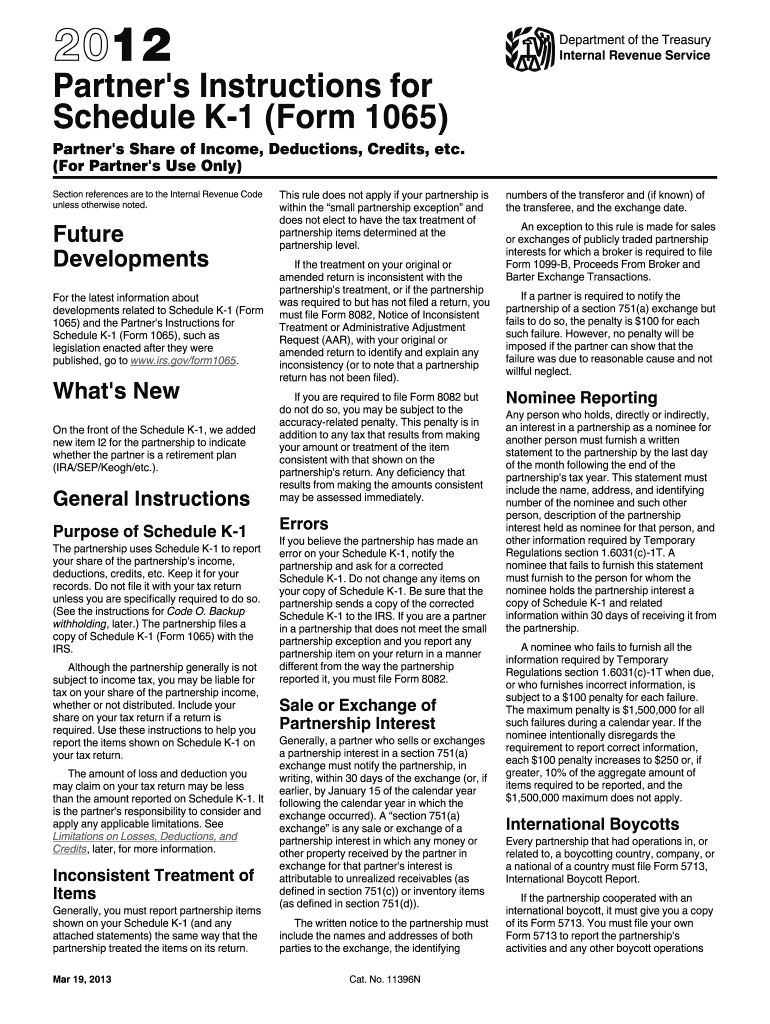







Definition & Meaning
Form 1041 Schedule K-1 is a tax document used in the United States to report income, deductions, and credits from a trust or estate to beneficiaries. Specifically, the 2012 version of the form provides detailed instructions on how to accurately complete this schedule for that tax year. This form is crucial for individual tax filings, as it determines the share of taxable income attributable to each beneficiary. The schedule K-1 essentially breaks down the financial activities of the trust or estate, ensuring beneficiaries report their personal tax obligations accurately.
Key Elements
- Income Distribution: Clearly delineates how trust or estate income is distributed among beneficiaries.
- Deductions & Credits: Outlines allowable deductions and credits individual beneficiaries may claim.
- Trust or Estate Information: Includes pertinent details such as the tax identification number and address.
How to Use the Form 1041 Schedule K-1 Instructions 2012
Understanding how to use Form 1041 Schedule K-1 involves familiarizing yourself with its structure and requirements. The instructions guide tax filers through the process of documenting their share of earnings or losses from a trust or estate.
Step-by-Step Process
- Identify Your Share: Determine your share of income, deductions, and credits from the trust or estate.
- Transfer Information: Transfer this information onto your individual tax return where applicable.
- Review for Accuracy: Ensure that all entries are consistent with the records provided by the fiduciary of the trust or estate.
- Consult the Instructions: Use the 2012 instructions to clarify any uncertainties regarding entries or complex items.
Practical Tips
- Always double-check the data provided by the fiduciary against your own financial records.
- Pay special attention to any unique deductions or tax credits that may apply to your situation.
Steps to Complete the Form 1041 Schedule K-1 Instructions 2012
Completing the 2012 Form 1041 Schedule K-1 involves several important steps to ensure compliance and accuracy.
Detailed Steps
- Collect Required Information: Gather all relevant information provided by the fiduciary, including distributed amounts and any specified deductions.
- Enter Income Details: Fill in income sections with correct amounts related to interest, dividends, and other specified income sources.
- Document Deductions and Credits: Enter applicable deductions and credits as instructed by the 2012 guidelines.
- Verify Entries: Compare the entered information with your own financial data to prevent discrepancies.
Who Typically Uses the Form 1041 Schedule K-1 Instructions 2012
This form is primarily used by beneficiaries of estates and trusts within the United States who received distributions during the tax year 2012. It assists individuals in reporting such income on their tax returns. Fiduciaries of estates and trusts are also involved, as they prepare the K-1 forms for each beneficiary.


Eligible Beneficiaries
- Individual beneficiaries, including family members or other designated parties.
- Entities, such as corporations or partnerships, named as beneficiaries.
IRS Guidelines
The IRS provides specific guidelines on how Form 1041 Schedule K-1 should be completed and reported. These guidelines help maintain uniformity and compliance across filings.
Important Considerations
- Accuracy: Ensure all financial data matches the trust or estate records.
- Timing: Submit within the IRS deadlines to avoid penalties.
- Documentation: Retain copies of all relevant documents for at least three years in case of an audit.
Legal Use of the Form 1041 Schedule K-1 Instructions 2012
Using the 2012 version of Form 1041 Schedule K-1 ensures legal compliance when reporting earnings and expenses associated with trusts and estates for that year. The form is a legal requirement for beneficiaries to correctly report distributions.
Legal Implications
- Compliance: Ensures adherence to federal tax laws.
- Audit Protection: Proper completion protects against potential audits and penalties.
Penalties for Non-Compliance
Failing to properly complete or submit Form 1041 Schedule K-1 can result in penalties imposed by the IRS.
Possible Penalties
- Late Filing: Fees for submitting beyond the IRS deadline.
- Inaccurate Information: Penalties for deliberate misreporting or underreporting of income.
- Failure to File: Additional fines and potential legal action for not filing required forms.
Filing Deadlines / Important Dates
Adhering to filing deadlines is crucial for beneficiaries and fiduciaries to avoid penalties.
Key Deadlines
- Initial Filing Deadline: Typically falls on April 15 of the following tax year.
- Extensions: Possibility of filing for extensions, but only if properly requested before the deadline.
Best Practices
- File as soon as possible to avoid last-minute issues.
- Make use of e-filing options to streamline the submission process.




