
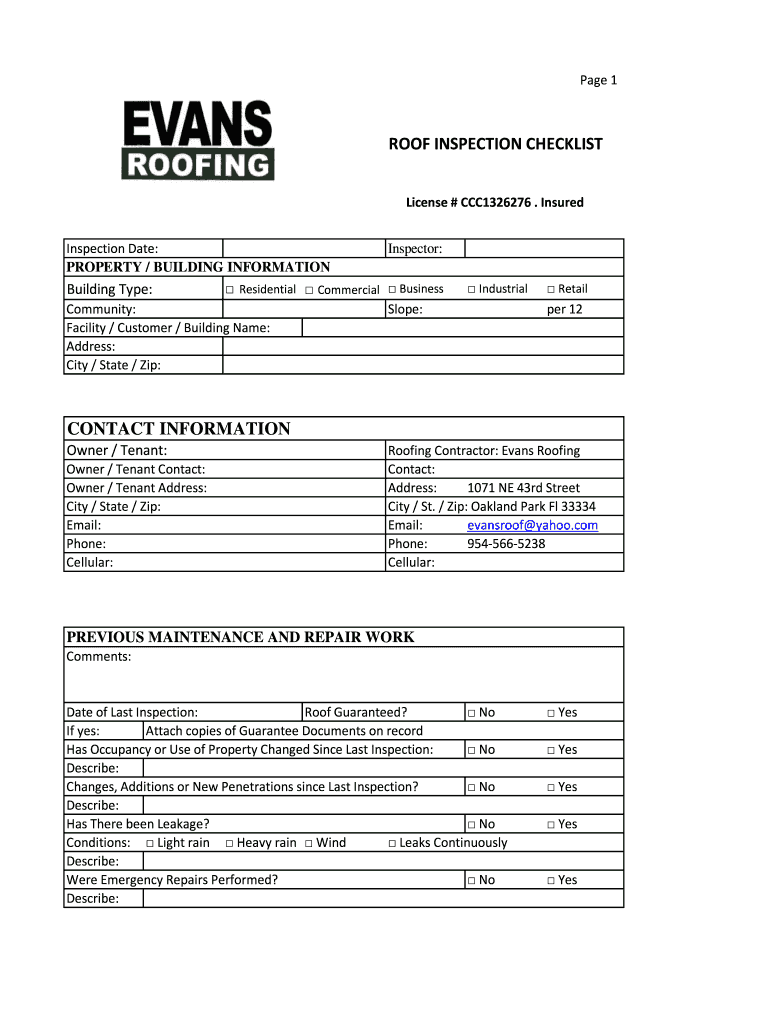







Comprehensive Overview of a Roof Inspection Form PDF
Definition and Purpose of a Roof Inspection Form
A roof inspection form PDF is a specialized document used by professionals to evaluate the condition of a roof. It serves as a structured checklist for assessing different components of various roof types, including flat, sloped, metal, tile, and shingle roofs. The primary purpose of this form is to ensure regular inspections are performed to identify potential issues early, facilitate timely repairs, and extend the overall lifespan of the roof. These inspections are essential not only for safety but also for maintaining the value of the property.
Components of a Roof Inspection Form
A roof inspection form typically includes several critical sections designed to capture detailed information. This includes:
- Property Information: Address, owner details, and any previous inspection reports.
- Roof Type: Identification of the roof type being inspected, whether it's a flat or sloped roof.
- Condition Assessment: Sections for evaluating roofing materials, flashing, gutters, and drainage systems.
- Interior Inspection Notes: An area for documenting the condition observed from the interior, such as signs of leaks or water damage.
- Recommendations for Repairs: Space for specifying needed repairs based on the findings, which can help in planning maintenance activities.
These components allow inspectors to provide thorough assessments tailored to the unique characteristics of each property.
Detailed Inspection Criteria
The effectiveness of a roof inspection form depends on detailed criteria that guide the inspection process. These criteria can include:
-
Exterior Condition Monitoring: Inspectors should check for:
- Shingle Integrity: Look for curling, cracking, or missing shingles.
- Flashing: Ensure that metal flashings are intact and not corroded.
- Gutters and Downspouts: Check for blockages or damages that could affect drainage.
-
Interior Condition Monitoring: Inspect for:
- Ceiling and Walls: Look for stains or dampness indicating leaks.
- Attic Ventilation: Ensure there’s adequate ventilation to prevent moisture buildup.
This thorough evaluation helps in maintaining the quality and safety of the roofing structure.
Creating a Fillable Roof Inspection Form
DocHub enables users to create a fillable roof inspection form PDF effortlessly. Using its form fields feature, users can add:
- Text Boxes: For property addresses or comments.
- Checkboxes: To indicate the presence of issues or repairs needed.
- Signature Fields: For sign-offs by both the inspector and the homeowner.
This interactivity ensures that all necessary information is collected efficiently, improving the data accuracy and ease of use for subsequent analyses.
Collecting and Sharing Inspection Results
Once completed, the roof inspection form PDF can be managed effectively through DocHub's sharing features. Users can:
- Email the Form: Send the completed inspection directly to property owners for their records.
- Track Document Status: Monitor when the form has been opened and signed by recipients through DocHub's automated tracking.
This modern approach to document handling maintains clear communication between inspectors and property owners, enhancing the inspection process.
Legal Implications of Roof Inspections
In addition to maintenance, roof inspections can have legal implications. Regular inspections can provide documentation that demonstrates due diligence for property owners, particularly in the event of disputes or when applying for insurance claims. This record can protect homeowners by verifying that they have proactively addressed potential hazards. Familiarity with local regulations regarding roof maintenance can also guide property owners in conducting regular inspections and ensuring compliance with any required standards.
Best Practices for Roof Inspections
Implementing best practices can enhance the effectiveness of a roof inspection:
- Frequency of Inspections: Homeowners should conduct inspections at least once or twice a year, especially before and after severe weather events.
- Professional Assistance: Engaging a qualified roofing professional for comprehensive inspections can uncover underlying issues that may not be visible to an untrained eye.
- Staying Organized: Maintaining records of past inspections and repairs can inform future evaluations and reinforce trends in roof performance.
Adopting these practices not only maximizes the benefits of a roof inspection but also contributes to the overall safety and maintenance of the property.




