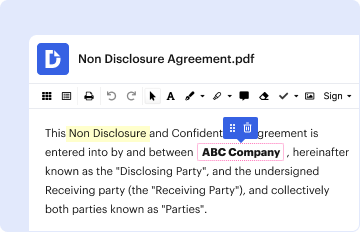
Type text, add images, blackout confidential details, add comments, highlights and more.
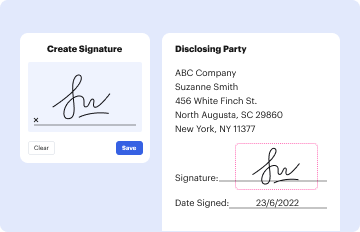
02. Sign it in a few clicks
Draw your signature, type it, upload its image, or use your mobile device as a signature pad.
03. Share your form with others
Send geriatric depression scale score meaning via email, link, or fax. You can also download it, export it or print it out.
How to use or fill out short geriatric depression scale with our platform
Ease of Setup
DocHub User Ratings on G2
Ease of Use
DocHub User Ratings on G2
Click ‘Get Form’ to open the short geriatric depression scale in the editor.
Begin by entering the resident's name, staff interviewer's name, and the date of the interview in the designated fields.
For each question, select the appropriate response: YES, NO, or DK/NR/REF. If a response is 'Sometimes', restate the question as instructed.
After answering all questions, calculate the total score based on your responses. Each bold-faced answer counts as one point.
If more than four questions have DK/NR/REF answers, do not calculate the total score. Indicate the interview outcome by checking either 'Complete' or 'Refused'.
Start using our platform today to easily fill out and manage your forms for free!
Fill out short geriatric depression scale online It's free
No. Question. Answer Score. 1. Are you basically satisfied with your life? YES / NO. 2. Have you dropped many of your activities and interests? YES / NO.Read more
Cookie consent notice
This site uses cookies to enhance site navigation and personalize your experience.
By using this site you agree to our use of cookies as described in our Privacy Notice.
You can modify your selections by visiting our Cookie and Advertising Notice.