
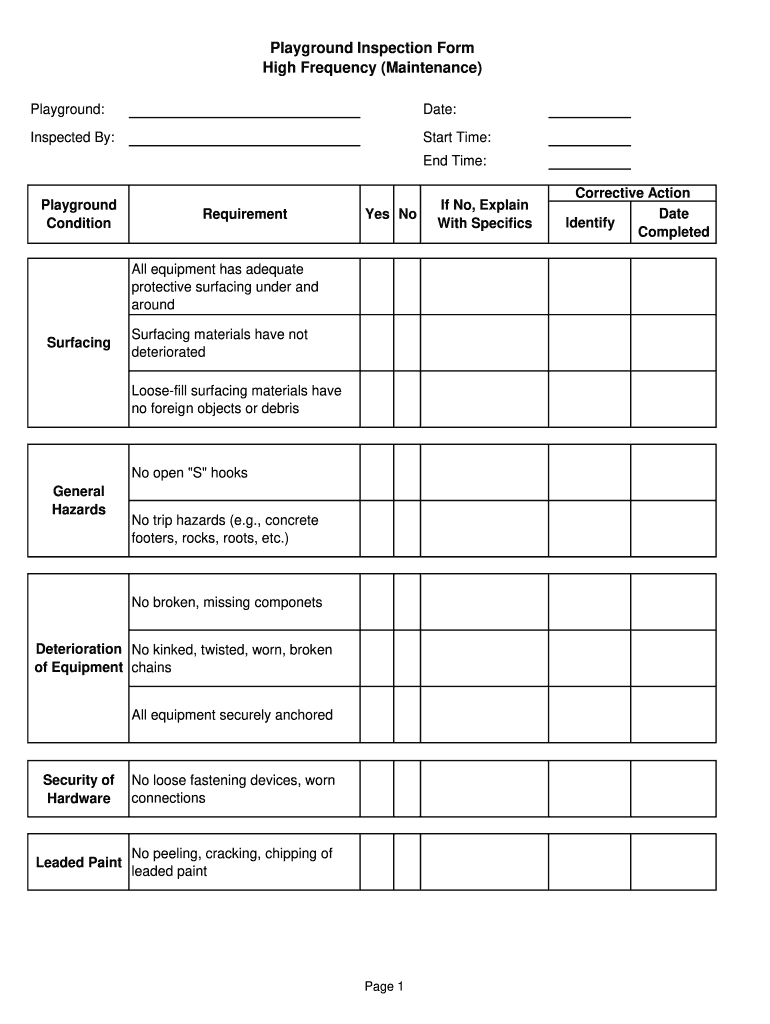







Playground Safety Checklist Overview
A playground inspection checklist is an essential document used by schools, daycare centers, and community organizations to evaluate the safety and maintenance of outdoor play areas. The checklist helps ensure compliance with safety standards and reduces the risk of injuries. Regular inspections are crucial for identifying hazards and ensuring that equipment remains safe for children.
Key Components of a Playground Inspection Checklist
A comprehensive playground inspection checklist includes several key sections to effectively assess the condition of the playground equipment and surrounding areas:
-
Inspection details: This includes the date of inspection, the inspector's name, and the location of the playground. Documenting these details establishes a clear record of when each assessment was conducted.
-
Equipment evaluation: Inspectors should assess each piece of playground equipment for structural integrity and mechanical safe use. This includes examining swings, slides, climbing structures, and other favorites among children.
-
Surfacing material assessment: Evaluate the type and condition of the ground cover, such as mulch, rubber mats, or grass. The appropriate surfacing material should prevent serious injuries from falls, adhering to established safety guidelines.
-
General hazards identification: Inspectors must look for hazards such as loose hardware, sharp edges, or potential entrapment points. Identifying these risks is critical to maintaining a safe environment for children to play.
Monthly and Weekly Inspection Protocols
Regular inspections are necessary for the ongoing safety of playgrounds. Establishing protocols for monthly and weekly inspections ensures that safety measures are in place and issues are promptly addressed.
-
Monthly inspections: These inspections are more detailed and include every aspect of the playground, from equipment condition to surface material adequacy. This thorough approach allows for tracking equipment wear and maintenance needs over time.
-
Weekly checks: These inspections should focus on immediate risks, such as sweeping surfaces to remove debris and checking for any visible damage that may pose hazards to children during play.
Documenting Findings and Actions Taken
Documenting findings during inspections is critical. This section of the inspection checklist should detail any issues found and the subsequent actions taken to address them.
-
Issue reporting: Inspectors should note any maintenance needs or safety concerns identified during an inspection. This documentation serves as a reference for future inspections and maintenance planning.
-
Corrective actions: Include information on repairs made, parts replaced, or any equipment that was removed from service. Recording these actions helps create accountability and ensures that all team members are informed.
Playground Equipment Maintenance Guidelines
Regular maintenance extends the life of playground equipment and promotes safety. This section should detail best practices for maintaining various types of playground apparatus.
-
Inspection schedule: Outline recommended intervals for checking the condition of specific equipment types, such as swings and slides. Create a maintenance calendar that aligns monthly inspections with routine maintenance tasks.
-
Cleaning procedures: Define appropriate cleaning methods for each equipment type, ensuring materials and techniques do not compromise safety or integrity.
Compliance and Regulatory Standards
Playgrounds must comply with safety regulations, which can vary by state and local jurisdictions. This section of the checklist should outline relevant compliance factors.
-
Relevant standards: The checklist should reference pertinent safety standards, such as those set by the U.S. Consumer Product Safety Commission (CPSC) and the American Society for Testing and Materials (ASTM).
-
Documentation for compliance: It's beneficial to keep records, such as inspection dates and maintenance completion, as evidence of compliance in case of audits or inspections by governing bodies.
Customization and Use of Playground Inspection Templates
Playground inspection checklists can be customized to meet specific needs. Organizations may choose to develop templates that reflect their unique circumstances or regulatory requirements.
-
Template creation: Consider creating checklists that cater to specific types of playgrounds, such as public parks or school facilities. Tailoring the checklist ensures that it effectively addresses the unique safety concerns present in different environments.
-
Printable formats: Availability of printable playground inspection checklist templates can enhance accessibility for staff conducting inspections. Look for options that allow for easy distribution and tracking of inspections.
Electronic Documentation and Safety Records
Transitioning to electronic documentation of safety inspections simplifies data management. This section outlines the benefits of adopting digital tools such as DocHub for maintaining playground safety records.
-
Streamlined documentation: Utilize electronic forms for real-time updates and easy access to inspection records, helping staff keep track of past inspections and maintenance efforts.
-
Collaboration features: Enable team members to share feedback or notes on inspections easily. This promotes a culture of safety and continuous improvement in playground management.
Conclusion of the Playground Inspection Checklist Template
A well-structured playground inspection checklist template is vital for ensuring child safety in outdoor play areas. By involving systematic inspections, proper documentation, and maintenance adherence, organizations can significantly mitigate risks associated with playground equipment. Implementing these practices fosters a secure and enjoyable environment for children to play and develop.




