







Understanding Form RF134: Definition and Purpose
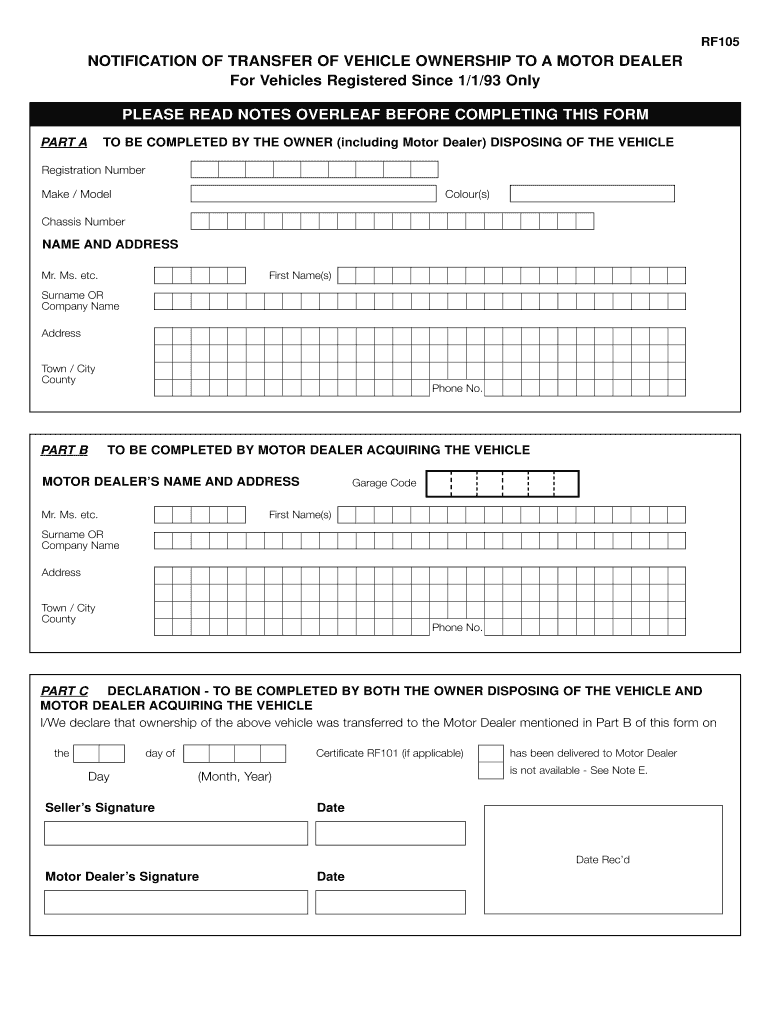
Form RF134 serves as a notification form for the transfer of vehicle ownership in the United States. Specifically, it is utilized when a vehicle's owner needs to transfer the title to another party, such as a dealership or an individual. The form captures essential information about both the seller and the buyer, ensuring that the transfer is documented in a legally recognized manner. It includes sections for personal information, vehicle details, and the signatures of both the seller and buyer, which confirm the agreement of the ownership transfer.
Key Elements of Form RF134
Understanding the critical components of Form RF134 is vital for its proper use. Key elements include:
- Owner's Information: Full name, address, and contact details of the current vehicle owner.
- Buyer’s Information: Full name, address, and contact details of the buyer acquiring the vehicle.
- Vehicle Information: Make, model, year, and vehicle identification number (VIN) of the vehicle being transferred.
- Seller's Declaration: A statement where the seller certifies that the information provided is accurate and true.
- Signatures: Both parties must sign the document to validate the ownership transfer.
These components ensure comprehensive documentation of the vehicle transfer, protecting the interests of both parties involved.
How to Complete Form RF134
Completing Form RF134 requires careful attention to detail. Follow these steps to ensure accuracy:
- Obtain the Form: Access the RF134 form through authorized government websites or other reliable sources.
- Fill in Owner's Information: Accurately provide the current owner's personal details, including name and address.
- Input Buyer’s Information: Enter the buyer's full name and address.
- Detail the Vehicle: Accurately fill in the vehicle's make, model, year, and VIN.
- Review and Sign: Both the owner and the buyer must read through the completed form for accuracy, then sign and date it at the designated areas.
Each step is crucial because incomplete or inaccurate information can lead to delays in processing the ownership transfer or legal complications.
Legal Requirements and Compliance
The legal use of Form RF134 is essential to comply with state laws regarding vehicle ownership transfers. Key compliance points include:
- Legality: The form should be completed according to the regulations outlined by the respective state DMV.
- Signatures: Both parties’ signatures confirm consent to the transfer, making it a legally binding document.
- Filing: Depending on the state, the completed RF134 may need to be filed with a state agency alongside other documents, such as proof of insurance or payment of fees.
Understanding these legal aspects helps to ensure that the transfer process is legitimate and protects both parties from potential disputes or misunderstandings.
Common Use Cases for Form RF134
Form RF134 is commonly utilized in various scenarios related to vehicle ownership transfers:
- Private Sales: When an individual sells a car to another individual, Form RF134 documents the transfer.
- Dealer Transactions: Car dealerships often use this form when purchasing vehicles from private sellers.
- Gifts or Inheritance: The form can also be used when transferring vehicle ownership as a gift or upon the death of the owner.
- Integrating with Other Forms: Often, this form is used alongside other documentation, such as the RF101 form, especially when dealing with tax obligations or registration.
These use cases highlight the form's flexibility and importance across different transaction types.
Potential Issues and Solutions
While using Form RF134, several issues may arise that could complicate the ownership transfer. Here are some common problems and how to address them:
- Incomplete Information: Ensure all sections are correctly filled out. If any information is missing, the transfer process may be delayed.
- Discrepancies in Ownership: If the owner's name on the title does not match the seller’s information, additional documentation may be necessary to establish ownership, such as bills of sale or affidavits.
- Notarization Requirements: Some states require the form to be notarized. Verify state regulations ahead of time to understand if this step applies.
- Timing Issues: Ensure that the transfer is completed promptly to avoid potential fines or penalties related to registration or taxes.
Addressing these issues proactively can streamline the process and mitigate complications during the vehicle ownership transfer.




