







Definition & Meaning
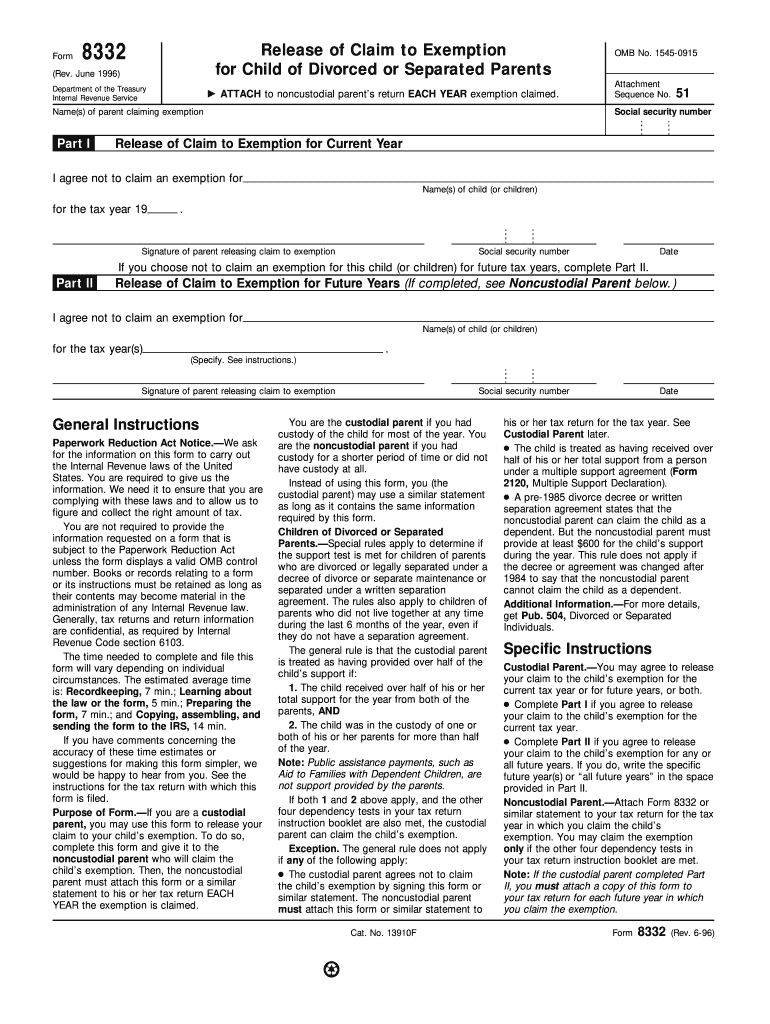
Form 8332 is a tax document primarily used by custodial parents to officially release their claim to a child's dependency exemption. This form permits the noncustodial parent to claim the exemption for a specified tax year or multiple years. By using Form 8332, custodial parents provide written consent, which the noncustodial parent then submits alongside their tax return to the IRS. This agreement can impact how tax refunds and obligations are calculated between divorced or separated parents.
How to Use the Form 8332 PDF
To effectively utilize the Form 8332 PDF, the custodial parent must fill out specific sections that release the claim to the child's exemption. The form has essential parts for both current and future year exemptions. Once completed, the custodial parent signs it to validate the release. The noncustodial parent then includes the signed form with their filing to assert the right to the exemption. It's crucial to follow the IRS guidelines to ensure the validity of the claim.
Completing Release Sections
- Current Year Release: This section allows the custodial parent to release the exemption for the ongoing tax year.
- Future Year Release: Intended for longer-term agreements beyond the current year, allowing the noncustodial parent to claim the exemption in advance.
How to Obtain the Form 8332 PDF
Obtaining Form 8332 PDF is straightforward, as it's accessible through several channels. The IRS website provides a downloadable version, ensuring you have the most current form. Additionally, online tax preparation software often includes the form as part of their package. For those preferring physical copies, local IRS offices offer printed versions. It's essential to use a reputable source to secure an authentic form for filing.
Steps to Complete the Form 8332 PDF
- Download and Print the Form: Access the form from the IRS website or a trusted tax preparation service.
- Enter Custodial Parent Information: Provide full legal name and address, ensuring accuracy.
- Specify Tax Years: Clearly indicate the tax year(s) for which the exemption release applies.
- Sign and Date: The custodial parent must sign and date the form, demonstrating consent.
- Provide to Noncustodial Parent: Hand over the signed form for inclusion with the noncustodial parent's tax filing.
Who Typically Uses the Form 8332 PDF
The primary users of Form 8332 are custodial and noncustodial parents navigating tax exemptions for dependents. It is especially relevant for divorced or separated parents where custody arrangements dictate who can claim dependency exemptions each year. This form ensures clarity and legal compliance, reducing disputes over exemptions during tax filing.


Key Elements of the Form 8332 PDF
Several critical components must be filled out on Form 8332 to ensure its validity:
- Custodial Parent Information: Must be accurate and match IRS records.
- Noncustodial Parent's Details: Although primarily a custodial parent's document, it often includes relevant details for the noncustodial parent.
- Tax Year Specification: Clearly indicate each year intended for exemption transfer.
- Signature and Date: No form is complete without the custodial parent's signature and date.
IRS Guidelines
The IRS stipulates specific guidelines around the use of Form 8332 to control who may claim a child's tax exemption. Custodial parents must furnish this signed release to legally permit claims by noncustodial parents. The IRS mandates timely submission of the form with the tax return to honor these claims. Failing to adhere to these guidelines may result in penalties or rejection of the exemption claim.
Consequences of Non-compliance
- Denial of Exemption: Failure to provide Form 8332 may result in the noncustodial parent losing the ability to claim the child’s exemption.
- Legal Repercussions: Incorrect or fraudulent claims made without this form can lead to fines or additional scrutiny from the IRS.
Filing Deadlines / Important Dates
The deadlines for submitting Form 8332 coincide with standard IRS tax deadlines. The custodial parent should complete and provide the form well before the noncustodial parent's tax filing due date, typically April 15, unless an extension is requested. Awareness of these critical timelines ensures both parties remain compliant and avoid penalties.
Penalties for Non-Compliance
Non-compliance with the proper filing and use of Form 8332 can result in significant penalties. The IRS may disallow claimed exemptions, resulting in amended returns and potential late fees. Further noncompliance may trigger audits, additional fines, and delays in processing future returns. Ensuring the form is accurately filled and promptly submitted minimizes these risks.




