





Definition and Meaning of IRS Form 8332
IRS Form 8332, officially titled "Release/Revocation of Release of Claim to Exemption for Child by Custodial Parent," is a crucial document used within tax-related procedures. This form is primarily utilized by custodial parents to allow a noncustodial parent to claim tax exemptions for a dependent child. The form outlines the permission given by the custodial parent to the noncustodial parent to claim the dependency exemption, which can significantly affect their reported taxable income. Through IRS Form 8332, the custodial parent can specify the tax years the exemption is allocated to the noncustodial parent.
Importance of the IRS Form 8332
This form holds significance as it directly impacts tax liabilities and benefits related to a child-dependent. Forms like the IRS Form 8332 ensure that only one parent claims the child-related tax benefits, avoiding legal disputes or IRS complications. It allows for the orderly and legal transfer of tax benefits in situations where parents are separated or divorced and ensures compliance with IRS guidelines on dependency claims.
Steps to Complete the IRS Form 8332
To accurately fill out IRS Form 8332, follow these structured steps:
-
Obtain the Form: Start by downloading the form available on the IRS official website. Ensure it is the latest version to comply with any recent changes to tax laws.
-
Enter Child Information: In Part I, include the full names of the child or children for whom you are releasing the claim to exemption.
-
Provide Your Information: As the custodial parent, fill in your name and Social Security Number (SSN) accurately to ensure identification.
-
Enter the Noncustodial Parent's Information: Provide the noncustodial parent's name and SSN.
-
Designation of Tax Years: Clearly specify the tax year or years for which the exemption is being released to the noncustodial parent.
-
Revocation Details (if applicable): Use Part II if you intend to revoke a previously granted exemption. Include specific details about the revocation terms.
-
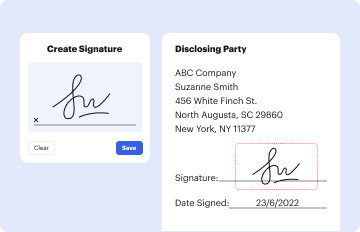
Signature and Date: Sign and date the form. This step finalizes your release or revocation, making the document legally binding.
-
Submission to the IRS: Send the completed form to the noncustodial parent, who must attach it to their tax return. There is no need to send the form directly to the IRS.
Practical Tips
- Double-check all provided information for accuracy to prevent delays in processing.
- It’s advisable to keep a copy of the signed form for your records.
Key Elements of IRS Form 8332
Understanding the key elements of Form 8332 facilitates its correct usage and submission. Essential components include:
- Part I: Where you release your claim to exemption for future years.
- Part II: Used specifically to revoke a release of claim that was previously granted.
- Part III: Allows for release of the claim for the current tax year, if applicable.
These sections outline clearly the terms and conditions of the release or revocation, ensuring both parents understand their responsibilities concerning tax filing and claims.
Penalties for Non-Compliance with IRS Form 8332
Failing to adhere to the requirements of IRS Form 8332 or incorrect application can lead to consequences. The IRS can deny the tax benefits if the form is not appropriately completed or submitted, leading to potential tax liability increases and legal disputes between the parents. Furthermore, not providing a legitimate form when claiming exemptions can expose both parents to audits, legal ramifications, or fines.
Examples of Non-Compliance
- Attempting to claim a child-dependent tax exemption without a signed Form 8332.
- Filling out the form incorrectly, affecting the legitimacy of the exemption.
Legal Use and Implications of IRS Form 8332
IRS Form 8332 plays a pivotal role in legal settings, especially amidst divorce or child custody agreements. The form legally transfers the exemption capability from one parent to another, thus impacting financial responsibilities and benefits.
Legal Considerations
- The form must be completed voluntarily by the custodial parent.
- Revocations must be communicated clearly to the noncustodial parent and recorded correctly using the form.
Required Documents for IRS Form 8332
Having the necessary documents on hand simplifies the completion of Form 8332:
- Proof of Custodianship: Legal documents establishing custodial rights.
- Child’s Identification: Birth certificate or social security card, aiding in accurate details provided on the form.
- Divorce Decree (if applicable): Details the custody arrangements that inform the use of the form.
Ensure these documents are updated and reflect the current legal and custody situation.
State-Specific Rules Regarding IRS Form 8332
While IRS Form 8332 is federally recognized, states may have additional requirements or nuances in handling the tax implications of custodial agreements.
State Variations
- Some states require additional local documentation to validate the release.
- Impacts of state tax laws on exemptions may differ and should be consulted with local tax professionals.
Exploring these state-specific requirements ensures full compliance and awareness of any supplementary obligations or benefits.
Digital vs. Paper Version of IRS Form 8332
The IRS provides options for filing the form both electronically and on paper. Each method has its own benefits:
- Digital Version: Convenient for those who prefer paperless filing and faster processing.
- Paper Version: Often retained for personal records or in situations where digital submission might not be feasible.
Always verify the method suitability according to your personal situation or preference. Maintaining a consistent filing method can simplify future tax submissions and audits.