APPENDIX B AERIAL LIFT INSPECTION CHECKLIST 2026

Get Form
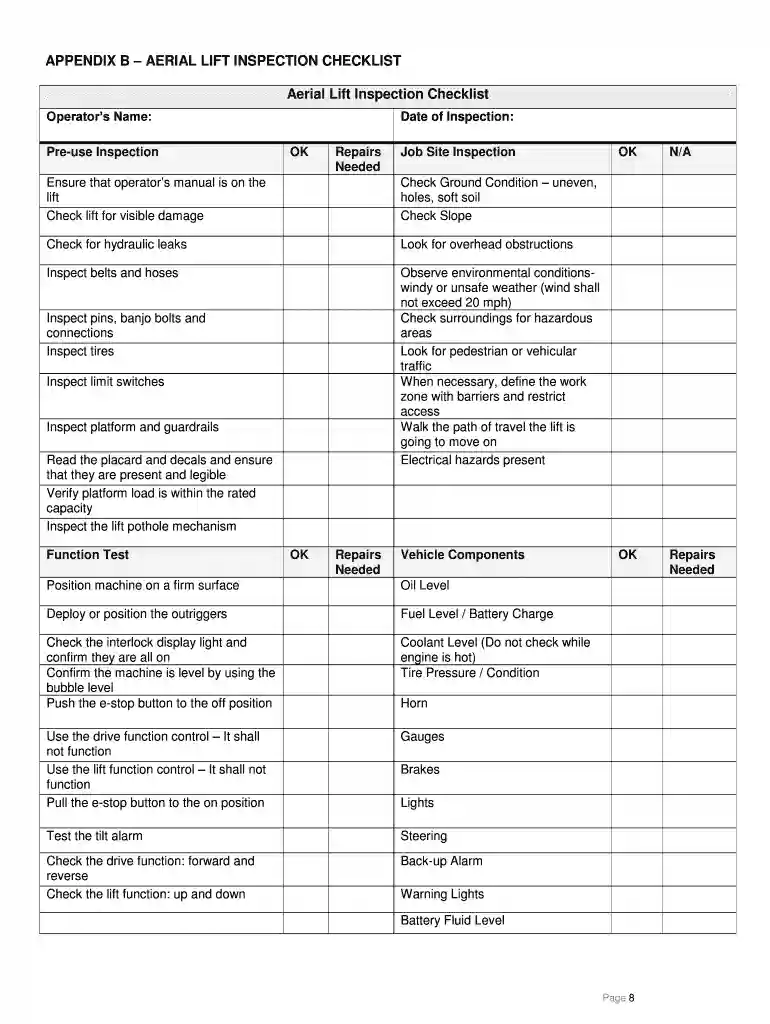
APPENDIX B AERIAL LIFT INSPECTION CHECKLIST Preview on Page 1

Here's how it works

01. Edit your form online
Type text, add images, blackout confidential details, add comments, highlights and more.

02. Sign it in a few clicks
Draw your signature, type it, upload its image, or use your mobile device as a signature pad.

03. Share your form with others
Send it via email, link, or fax. You can also download it, export it or print it out.

Definition and Purpose of the Appendix B Aerial Lift Inspection Checklist

The Appendix B Aerial Lift Inspection Checklist is a vital tool designed to ensure the safety and functionality of aerial lifts before their operation. This checklist provides a structured approach to inspect various components of the lift, covering areas such as pre-use inspections, vehicle components, and environmental conditions. By adhering to this checklist, operators can minimize risks and enhance workplace safety.

Key Areas Covered in the Checklist

  • Pre-Use Inspections: Includes checks for visible damage, hydraulic leaks, and electrical issues.
  • Vehicle Components: Focuses on tires, brakes, steering, and emergency systems.
  • Site Conditions: Considers weather and ground stability to ensure safe operation.
  • Operational Controls: Verifies the functionality of lift controls and safety devices.

How to Use the Aerial Lift Inspection Checklist

Using the Appendix B Aerial Lift Inspection Checklist involves a systematic approach to assessing the equipment before use. Operators should follow these steps to complete the checklist accurately:

  1. Review the Checklist: Before commencing the inspection, familiarize yourself with the checklist's sections and requirements.
  2. Conduct a Visual Inspection: Check for any visible damage or wear on the lift and its components.
  3. Inspect Vehicle Components: Examine tires, brakes, and other critical parts to ensure they are in good working order.
  4. Assess Job Site Conditions: Ensure the site is safe and stable for lift operation, considering factors like weather and ground conditions.
  5. Test Operational Controls: Operate the controls to confirm they are functioning correctly and safely.
  6. Document Any Issues: Record any deficiencies or concerns found during the inspection for further evaluation.

Why Use the Appendix B Aerial Lift Inspection Checklist

This checklist is essential for several reasons:

  • Safety Assurance: Ensures the lift is safe to operate, reducing the risk of accidents.
  • Compliance with Regulations: Aids in meeting OSHA and other regulatory requirements for equipment safety.
  • Preventive Maintenance: Helps identify issues before they become major problems, extending the life of the equipment.

Benefits for Operators and Employers

  • Enhanced Safety: Reduces the likelihood of workplace accidents and injuries.
  • Legal Compliance: Ensures adherence to industry standards, avoiding potential fines or legal issues.
  • Operational Efficiency: Regular inspections help maintain equipment performance, minimizing downtime.

Steps to Complete the Appendix B Aerial Lift Inspection Checklist

Performing a thorough inspection with the checklist involves the following steps:

  1. Preparation: Gather the necessary tools and personal protective equipment (PPE).
  2. Initial Assessment: Conduct a walk-around inspection, noting any visible defects.
  3. Detailed Component Check: Examine crucial parts such as hydraulic systems, controls, and safety devices.
  4. Functionality Test: Operate the lift to verify control responsiveness and stability.
  5. Documentation: Record findings and submit the completed checklist for review and follow-up actions.

Who Typically Uses the Aerial Lift Inspection Checklist

The checklist is primarily used by:

  • Aerial Lift Operators: Individuals responsible for the day-to-day operation and safety of aerial lifts.
  • Safety Inspectors: Professionals conducting routine safety audits and compliance checks.
  • Maintenance Teams: Personnel tasked with the upkeep and repair of lifting equipment.
decoration image ratings of Dochub

Industry Applications

  • Construction Sites: Where elevated work platforms are commonly used.
  • Maintenance Operations: In settings like warehouses and factories requiring overhead repairs.
  • Utility Companies: For tasks such as electrical line maintenance and repair.

Key Elements of the Aerial Lift Inspection Checklist

Understanding the critical components of the checklist enhances its effectiveness:

Vehicle and Equipment Condition

  • Structural Integrity: Assess the physical condition of the lift for cracks, rust, or other damage.
  • Fluid Levels: Check for proper levels and leaks in hydraulic and fuel systems.

Safety Features

  • Warning Devices: Ensure alarms and indicators are functioning and easily visible.
  • Protective Rails and Guards: Verify the installation and condition of fall protection systems.

Environmental Considerations

  • Ground Stability: Assess terrain conditions to prevent tip-overs.
  • Weather Adaptation: Determine if rain, wind, or other elements could impact operation safety.

Versions and Alternatives to the Aerial Lift Inspection Checklist

While the Appendix B Aerial Lift Inspection Checklist is widely adopted, variations exist to cater to specific equipment types or regulatory requirements:

  • Manufacturer-Specific Checklists: Some manufacturers provide proprietary checklists tailored to their equipment models.
  • Customized Checklists: Companies may develop personalized forms to address unique operational needs or local regulations.

Adapting the Checklist

  • Customization: Modify sections to suit particular operational contexts or the specific features of different lift models.
  • Updates: Regularly review and update the checklist to incorporate new safety guidelines or technological advancements in lift design.
be ready to get more

Complete this form in 5 minutes or less

Get form

Got questions?

We have answers to the most popular questions from our customers. If you can't find an answer to your question, please contact us.
Contact us
An inspection checklist, when used properly, is an assurance that a particular piece of equipment has been inspected. As each item on the checklist is ticked off, the person doing the inspection is verifying that each component of the equipment is in correct working order.
Once a year (no later than 13 months from the previous one), ANSI and CSA guidelines require equipment owners and fleet managers to conduct annual machine inspections (AMI) on all mobile elevating work platforms (MEWPs), including self-propelled and trailer-mounted (also referred to as towable or tow behind) boom lifts

Security and compliance

At DocHub, your data security is our priority. We follow HIPAA, SOC2, GDPR, and other standards, so you can work on your documents with confidence.
Learn more
ccpa2
pci-dss
gdpr-compliance
hipaa
soc-compliance