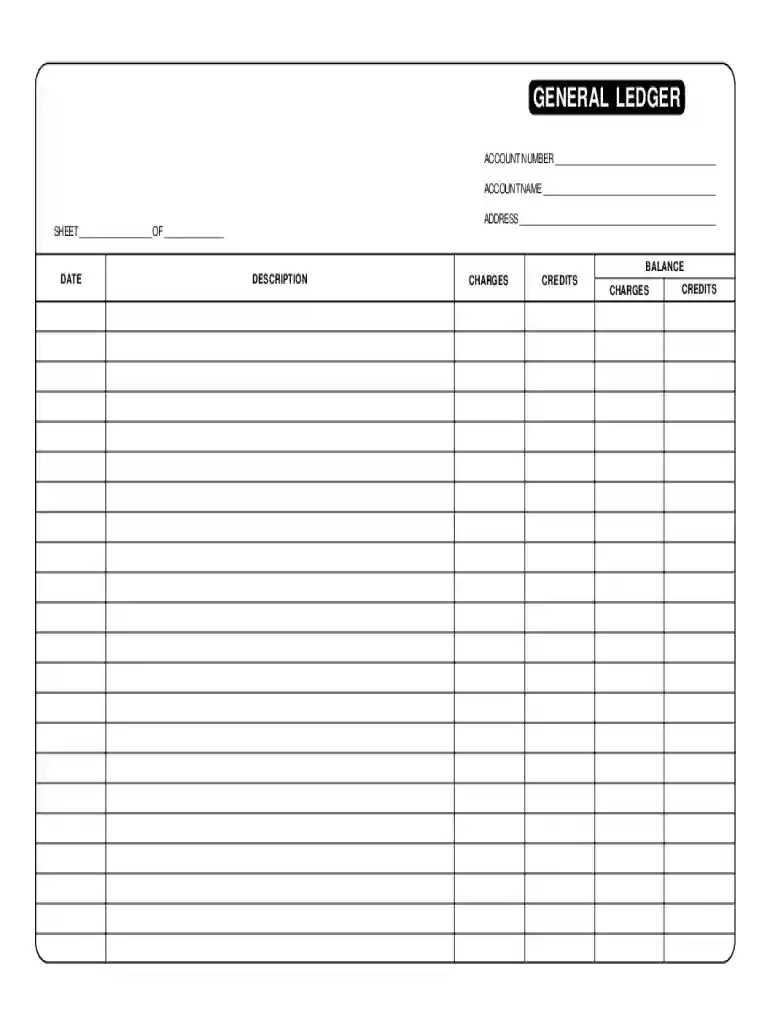
A ledger example is a detailed record, like a Cash Ledger, showing a businesss cash inflows (receipts) and outflows (payments) with running balances, tracking every dollar for accuracy, such as starting with $5,000, paying $500 for supplies, leaving $4,500, and receiving $2,500 for services, ending with $7,000. Ledgers categorize transactions (e.g., Sales Ledger, Fixed Asset Ledger, Payroll Ledger) to provide summaries for financial reports like the Balance Sheet, summarizing debits and credits for each account. General Ledger Example (Simplified) A general ledger (GL) is the master record containing all accounts (Assets, Liabilities, Equity, Revenue, Expenses). 1. Initial Transaction (Journal Entry): Purchased office supplies for $500 cash on Jan 15. Debit: Office Supplies ($500) Credit: Cash ($500) 2. Posting to the Ledger Accounts: Cash Ledger: Shows a decrease (credit) of $500, reducing the balance. Office Supplies Ledger: Shows an increase (debit) of $500. 3. Another Transaction: Received $2,500 cash for services on Jan 31. Debit: Cash ($2,500) Credit: Revenue ($2,500) 4. Ledger Account Balances (After Transactions): Cash Ledger: (Starting Balance) + $2,500 (Revenue) - $500 (Supplies) = $4,500 (Ending Balance). Office Supplies Ledger: $500 (Ending Balance). Revenue Ledger: $2,500 (Ending Balance). Other Ledger Examples Fixed Asset Ledger: Tracks equipment, vehicles, calculating depreciation. Accounts Payable Ledger: Details amounts owed to suppliers (creditors). Accounts Receivable Ledger: Tracks money owed by customers (debtors). Sales Ledger: Records credit sales and payments. AI can make mistakes, so double-check responsesGeneral Ledger Examples - LendioLets walk through some examples to help you understand how youll typically interact with your general ledger in practice. Say yoLendioLedger in accounting: Process, example free template - FreshBooksMar 28, 2019 A ledger is a book or digital record that stores bookkeeping entries, categorizing and recording all financial transacFreshBooks