




01. Edit your iaa consignment form online
Type text, add images, blackout confidential details, add comments, highlights and more.

Type text, add images, blackout confidential details, add comments, highlights and more.

Draw your signature, type it, upload its image, or use your mobile device as a signature pad.

Send vehicle consignment agreement via email, link, or fax. You can also download it, export it or print it out.
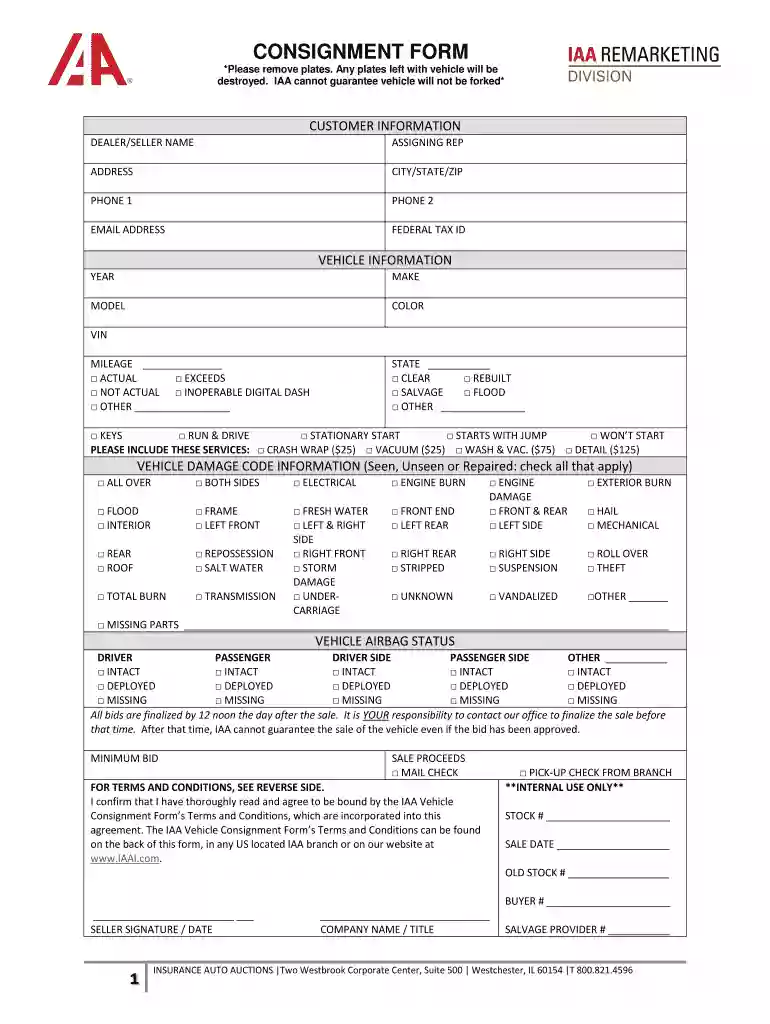
The IAAI consignment refers to the formal process utilized by Insurance Auto Auctions (IAA) for selling vehicles on behalf of individuals or businesses. This process is initiated through a specific consignment form that outlines the terms and conditions of the sale, ensuring that both the seller and IAA understand their responsibilities and obligations. It acts as a binding agreement between the consignor (the seller) and IAA, which details the responsibilities of the seller, outlines fees, and covers liability limitations.
Understanding these terms is essential for any individual or business engaging in the consignment process, ensuring clarity and legal protection for both parties.
The IAAI consignment form is straightforward, but it requires careful attention to detail. This is how to effectively use the form:
Gather Required Information: Before starting, collect all necessary information about the vehicle, including its make, model, year, VIN (Vehicle Identification Number), mileage, and condition details.
Complete the Form: Fill out the consignment form accurately. Sections will typically include:
Review Terms and Conditions: Carefully read through any legal clauses or fee structures mentioned on the form to understand your rights and responsibilities.
Submit the Form: Once completed, submit the form to IAA as detailed in the instructions. This may involve mailing it in, submitting it online, or delivering it in person.
Confirm Listing: After submitting, verify with IAA that the vehicle has been listed for sale and maintain communication regarding potential offers or sales.
This systematic approach ensures a smooth consignment process, leading to successful vehicle sales.
Understanding the critical components of the IAAI consignment agreement is vital for a successful transaction. Key elements include:
These components create a comprehensive understanding for both parties, mitigating potential disputes and streamlining the selling process.
Completing the IAAI consignment form requires a series of systematic steps to ensure accuracy and compliance. Follow this outlined process:
Download the Form: Access the IAAI consignment form from the official IAA website or authorized source. Ensure you have the latest version to avoid any discrepancies.
Fill in Personal Details: Begin with your personal or business information, including contact details and any relevant identification numbers.
Provide Vehicle Information: Enter the necessary details about the vehicle, ensuring to mention any significant attributes or defects. This can include:
Understanding Fees: Look for the fee schedule and mark your approval or acknowledgment where required, indicating you understand any charges that may apply.
Sign and Date the Form: After reviewing for accuracy, sign and date the form where indicated, confirming your agreement to the consignment terms.
Keep a Copy: Before submitting, make a copy for your records. This serves as proof of your submission and an official reference in case of disputes or queries.
Submit the Form: Deliver the completed form according to the method specified, ensuring to confirm receipt if applicable.
This structured process helps prevent errors and ensures that the consignment is processed promptly.
The IAAI consignment form is applicable in various scenarios that demonstrate its flexibility and utility in the vehicle sales industry. Here are practical examples:
Individual Sellers: A personal vehicle owner uses the form to sell a sedan that is no longer needed, providing all vehicle information and disclosing its condition, including minor scratches and service history.
Dealerships: A used car dealership utilizes the IAAI consignment process to offload excess inventory, listing multiple vehicles at once with varying conditions and features.
Estate Sales: Executors of an estate may employ the consignment process to liquidate a deceased relative’s vehicles. Accurate documentation helps in clarifying the estate’s asset disposition.
These examples showcase how diverse sellers can leverage the IAAI consignment form to facilitate ease in vehicle sales while adhering to legal requirements.
We've got more versions of the iaa consignment form form. Select the right iaa consignment form version from the list and start editing it straight away!
Sure, you’ll find many different applications for this on the web. However, if you need to eSign your iaai consignment form without installing additional software, DocHub is the best choice you can make. This robust editor works on mobile devices just like on desktops. Open our editor in any internet browser, register or sign in to your account, and start managing your paperwork.
If you want to edit your form consignment template online quickly, it does not matter what web browser you use. DocHub’s simple editing instruments are available using any internet browser. Just open the appropriate tab within our editor, add your file, and fill it out without stress.
At DocHub, your data security is our priority. We follow HIPAA, SOC2, GDPR, and other standards, so you can work on your documents with confidence.


