
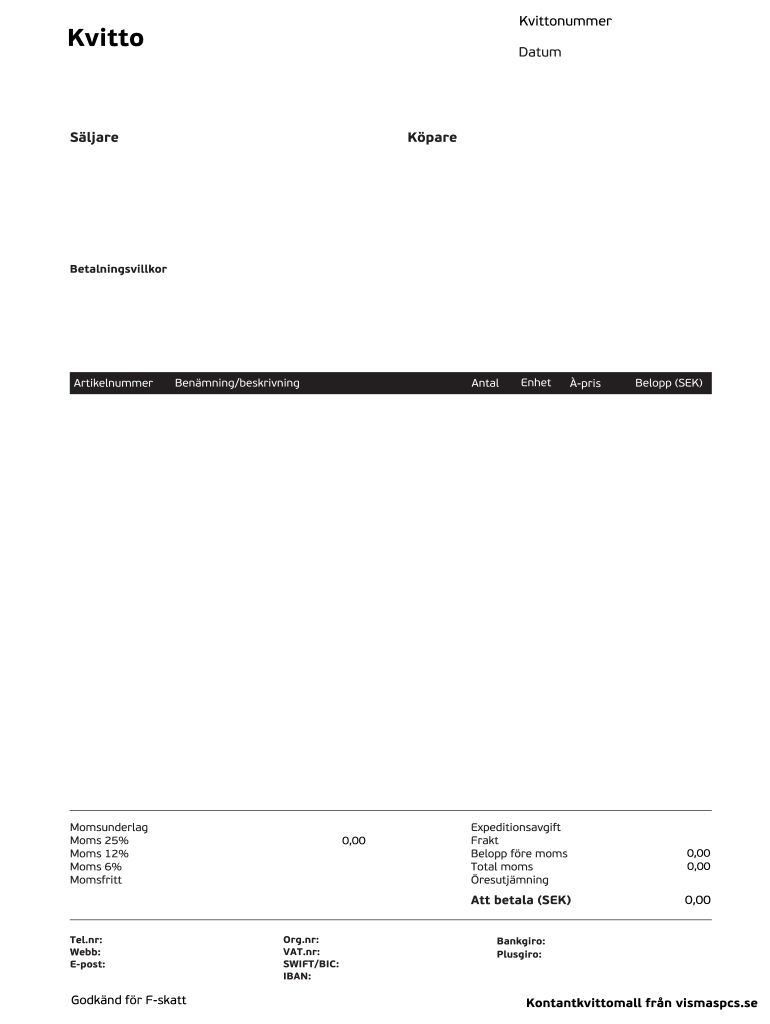







Definition and Meaning of Kontantkvitto Mall
A kontantkvitto mall is a standardized template for creating receipts typically used in cash transactions. This document serves as proof of purchase and includes essential transaction details necessary for both the seller and buyer. The core components of a kontantkvitto include the date of the transaction, the names and contact information of the seller and buyer, a description of the items or services provided, pricing information, and any taxes applied. In the context of cash transactions, the receipt also indicates that payment has been received in full, offering both parties legal documentation should disputes arise.
Importance of a Kontantkvitto
- Legal Documentation: A receipt serves as an official record, providing legal protection for both buyer and seller.
- Transparency: It promotes transparency in cash transactions, thereby preventing potential misunderstandings.
- Accountability: Both parties can track their financial transactions for tax and accounting purposes, ensuring all income and expenses are documented adequately.
How to Use the Kontantkvitto Mall
Using a kontantkvitto mall is designed to be straightforward. Follow these steps to ensure the receipt meets all necessary requirements:
- Select the Template: Download or open a kontantkvitto mall template in a compatible format, such as Word or PDF.
- Fill in Transaction Details: Ensure to input the following:
- Date of the transaction
- Seller’s name, contact information, and business name
- Buyer’s name and contact information
- Detailed description of goods or services rendered
- Pricing, including itemized costs and taxes
- Include Payment Terms: Clearly state payment terms, especially if future payments are involved.
- Sign the Document: If required, both parties may sign the document to acknowledge agreement.
- Distribute Copies: Provide copies of the receipt to all involved parties for their records.
Key Tips for Effective Usage
- Use clear and precise language to avoid misunderstandings.
- Maintain a copy for bookkeeping purposes, especially for businesses.
- Ensure all entries are accurate and reflective of the actual transaction.
Key Elements of a Kontantkvitto Mall
Understanding the fundamental components of a kontantkvitto mall is crucial for effective use:
- Transaction Date: Indicates when the sale took place; essential for record-keeping.
- Seller Information: Includes name and contact details, thus establishing the party who provided the goods or services.
- Buyer Information: Captures the name of the purchasing party, adding another layer of verification.
- Item Description: A detailed list of products or services sold, aiding both in clarity and accountability.
- Pricing and Tax Information: The itemized pricing must include any applicable taxes, ensuring full transparency.
Legal Use of the Kontantkvitto Mall
In the U.S., legal recognition of a kontantkvitto mall primarily relies on its role in confirming cash transactions. For a receipt to be considered valid, it should meet the following criteria:
- Completeness: All required fields must be filled out entirely; missing information may lead to disputes.
- Clarity: The language used should be straightforward, providing definitive proof of the goods or services exchanged.
- Documentation of Payment: It must explicitly state that payment was made, thus protecting both parties in case of disputes.
- Retention: Parties should retain their copies of the receipt in case verification is needed in the future.
Best Practices for Compliance
- Familiarize oneself with local laws surrounding cash transactions and receipts.
- Consider keeping electronic copies alongside physical ones for redundancy.
Examples of Using the Kontantkvitto Mall
Real-world scenarios can illuminate how a kontantkvitto mall is employed across various contexts:
-
Small Business Transactions: A local bakery sells pastries and uses a kontantkvitto mall for each cash sale to provide customers with proof of their purchase, which is vital for both warranty claims and financial tracking.
-
Services Rendered: A contractor completes a home repair and gives the homeowner a receipt via a kontantkvitto mall after receiving cash payment, thereby formalizing the transaction for both parties.
-
Market Sales: At a farmer’s market, vendors often utilize kontantkvitto templates to generate immediate receipts for customers who pay in cash, ensuring both sides retain a record of the transaction.
Variations in Use
- Private vs. Business Transactions: While the core components remain similar, receipts issued to businesses may include additional tax identification information for accounting purposes.




