YOUR HANDY-DANDY DOO-DOO DOCUMENT 2026

Get Form
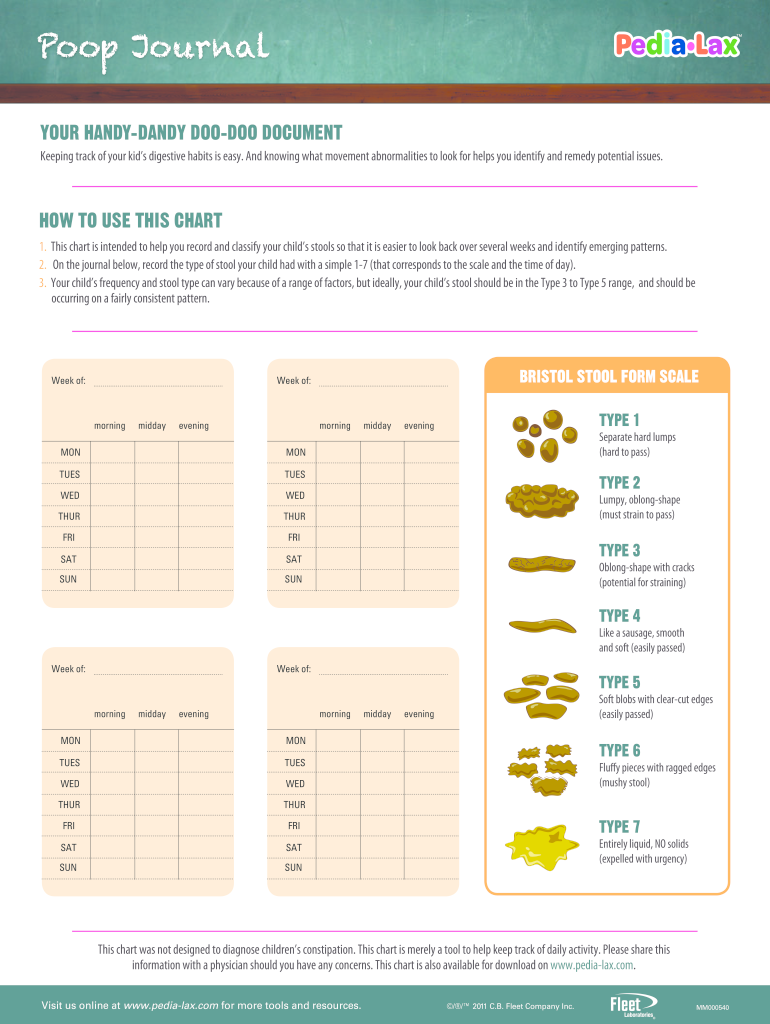
YOUR HANDY-DANDY DOO-DOO DOCUMENT Preview on Page 1

Here's how it works

01. Edit your form online
Type text, add images, blackout confidential details, add comments, highlights and more.
02. Sign it in a few clicks
Draw your signature, type it, upload its image, or use your mobile device as a signature pad.
03. Share your form with others
Send it via email, link, or fax. You can also download it, export it or print it out.

How to use or fill out YOUR HANDY-DANDY DOO-DOO DOCUMENT with our platform

Form edit decoration
9.5
Ease of Setup
DocHub User Ratings on G2
9.0
Ease of Use
DocHub User Ratings on G2
  1. Click ‘Get Form’ to open it in the editor.
  2. Begin by entering the 'Week of' date at the top of the chart. This will help you track your child's stool patterns over time.
  3. For each day of the week, record the type of stool your child had by selecting a number from 1 to 7 based on the Bristol Stool Form Scale provided.
  4. Indicate the time of day (morning, midday, evening) for each entry to provide a clearer picture of your child's digestive habits.
  5. Review the entries regularly to identify any patterns or abnormalities that may require attention. Remember, this chart is a tool for tracking and should be shared with a physician if concerns arise.

Start using our platform today to easily track and manage your child's digestive health for free!

be ready to get more

Complete this form in 5 minutes or less

Get form

Got questions?

We have answers to the most popular questions from our customers. If you can't find an answer to your question, please contact us.
Contact us
Poop that is soft means that your toddler is happy and healthy. If you feel your toddlers poop is too soft, first eliminate all juice and sugary beverages. Sometimes viruses, like stomach bugs, will cause softer or even watery poop, and if this is excessive it could lead to dehydration.
The Bristol Stool Chart is widely used as a research tool to evaluate the effectiveness of treatments for various diseases of the . The chart is used to describe the shapes and types of stools. It is also used as a tool to diagnose constipation, diarrhoea and irritable syndrome.
Mushy and watery/liquid: Mushy stool is usually made up of very soft pieces that fall apart when they hit the water. This may be due to poor lifestyle/diet change, higher stress than what the body is used to or an intestinal disorder. It can also happen when there is a change in exercise routine.
When it comes to frequency, Grow says children should poop every one to two days and the consistency should be soft and formed, much like soft serve ice cream. If a childs poop is hard, dry, resembles pellets, or if a child has to strain, they may be constipated.

Security and compliance

At DocHub, your data security is our priority. We follow HIPAA, SOC2, GDPR, and other standards, so you can work on your documents with confidence.

Learn more
ccpa2
pci-dss
gdpr-compliance
hipaa
soc-compliance
be ready to get more

Complete this form in 5 minutes or less

Get form