






Definition and Overview
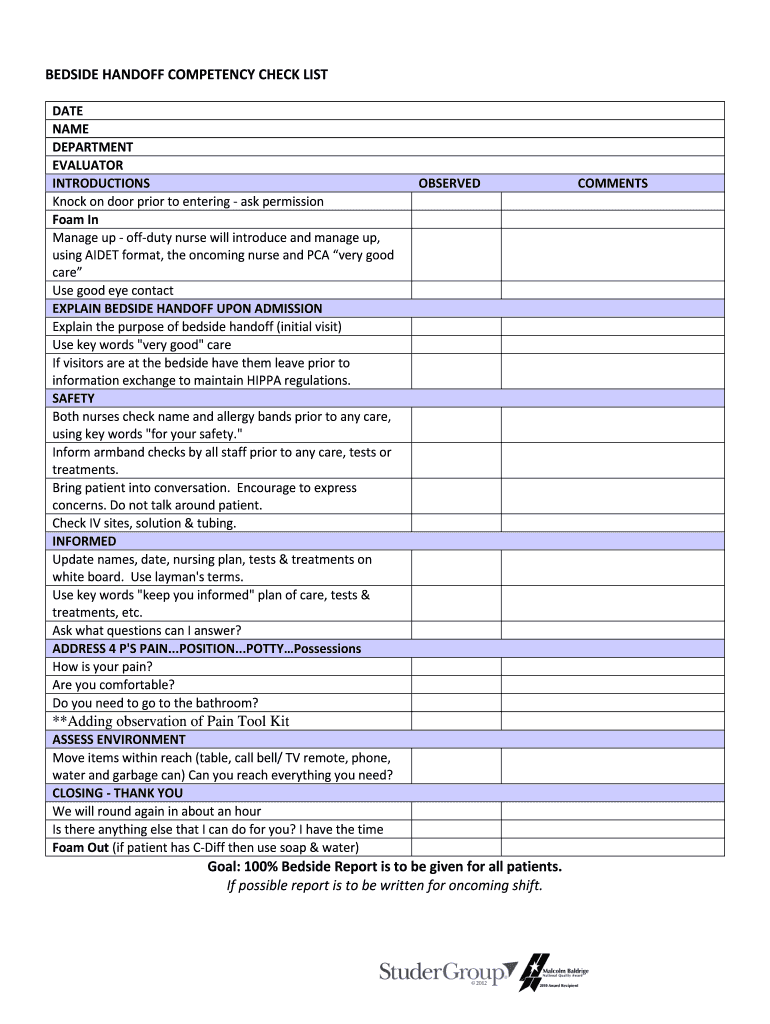
The bedside handoff competency checklist is a structured tool used in healthcare settings to ensure effective communication during shift changes between nurses and other healthcare providers. This checklist outlines essential components that must be addressed during patient handoffs to promote safety and continuity of care. The primary goal is to engage patients actively in their care while adhering to standards of communication that help minimize errors and enhance patient experiences.
Key Components of the Checklist
- Introduction Procedure: Ensures all parties involved are properly introduced, fostering a respectful environment.
- Verification of Patient Information: Confirms identity, medical history, and current medications, ensuring data accuracy.
- Safety Checks: Reviews potential safety concerns, including fall risks and allergies, to mitigate adverse events.
- Patient Involvement: Encourages participation from patients in discussions about their care preferences and current needs.
How to Utilize the Bedside Handoff Competency Checklist
To effectively use the bedside handoff competency checklist, healthcare providers should follow a structured approach. This approach ensures that no critical information is overlooked, ultimately leading to better patient outcomes.
- Prepare for the Handoff: Gather all relevant patient information, ensuring that both your own and the incoming staff understand the patient's current status.
- Engage the Patient: Introduce yourself to the patient, explain the handoff process, and encourage them to ask questions or express concerns.
- Review the Checklist: Go through each item on the checklist systematically, ensuring that all aspects are covered before concluding the handoff.
- Confirm Understanding: Ask the incoming provider to summarize the information shared to confirm they have fully understood the patient’s current condition and care needs.
Examples of Checklist Utilization
- During a shift change, a nurse may ask the patient about any pain or discomfort they are experiencing, facilitating better care.
- A checklist item might include confirming that the patient has received their scheduled medications, reducing the risk of medication errors.
Steps to Complete the Bedside Handoff Competency Checklist
Successfully completing the bedside handoff competency checklist involves a series of defined steps that staff should adhere to:
- Initiate the Handoff: Start with a proper greeting to the patient and introduce the incoming provider.
- Detail Patient Information: Discuss vital signs, treatment plans, and any immediate concerns that may need addressing.
- Perform A Safety Check: Complete a thorough safety review to identify and mitigate risks to the patient.
- Document the Handoff: Log the utilized checklist outcomes in the patient’s record to maintain continuity of care across shifts.
Importance of Each Step
- Initiating the handoff creates a welcoming atmosphere, crucial for effective communication.
- Documenting the process ensures that information is not lost and can be referenced in future care discussions.
Key Elements of the Bedside Handoff Competency Checklist
Several critical elements define the competency checklist, contributing to enhanced patient safety and care transitions:
- Clear and Concise Communication: Avoiding jargon enhances clarity for all parties involved, especially patients.
- Thorough Documentation: Keeping detailed records of handoffs fosters accountability and tracks care pathways effectively.
- Continuous Quality Improvement: Regularly updating and reviewing the checklist promotes adherence to best practices and addresses any issues arising from handoff processes.
Emphasizing Accountability
Each healthcare provider has a responsibility to ensure that patient handoffs are performed according to the established guidelines, thus minimizing the risk of errors and improving care coordination.
Who Uses the Bedside Handoff Competency Checklist?
The bedside handoff competency checklist is primarily utilized by:
- Registered Nurses (RNs): Directly involved in patient care and responsible for handing off care to peers.
- Nurse Managers: Overseeing the implementation of the handoff procedures to ensure compliance with standards.
- Healthcare Assistants: Supporting nursing staff in collecting and communicating pertinent patient information.
Broader Utilization Across Healthcare Settings
In addition to nursing staff, other healthcare professionals such as physicians and allied health professionals may also engage with the checklist, enhancing multidisciplinary teamwork during patient transitions.
Examples of Bedside Handoff Practices
The following scenarios demonstrate effective application of the bedside handoff competency checklist in daily practice:
- Hospital Ward: A nurse uses the checklist to transfer care for a patient recovering from surgery, discussing pain management and rehabilitation needs.
- Long-term Care: During a shift change in a nursing home, staff member reviews the checklist to inform the incoming team about any changes in patient status or family concerns.
Real-World Applications
Effective bedside handoffs using the checklist directly correlate to improved patient satisfaction and reduced hospital readmission rates, affirming the need for structured communication protocols in healthcare.