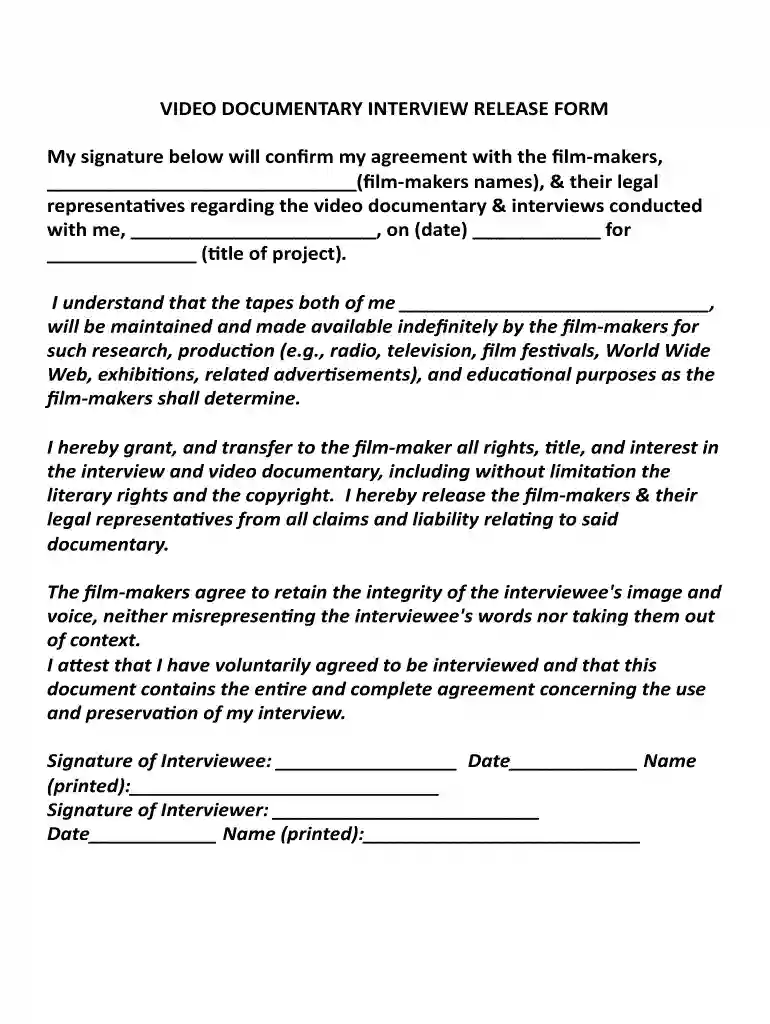
Definition & Meaning of a Documentary Release Form
A documentary release form is a legally binding agreement between a filmmaker and an interviewee that permits the filmmaker to use recorded interviews and other related content. This document outlines the rights granted to the filmmakers concerning the use of the recording, ensuring that the interviewee's representation is accurate and releases the filmmakers from liability associated with the use of the recorded material. Typically utilized in documentary filmmaking, the form is crucial for protecting creative works while ensuring the subjects involved are fully informed and consenting.
The form serves several purposes, including:
- Establishing ownership: It clarifies that the filmmakers have rights to use the footage, which may include broadcasting, streaming, and distribution across various platforms.
- Protecting the filmmaker: By releasing the filmmakers from liability, the form shields them from legal repercussions related to the portrayal of the interviewee or the content of the interview.
- Ensuring ethical representation: The form promotes transparency and respect for the interviewee by clearly stating how their likeness and words will be used in the final product.
Key Elements of a Documentary Release Form
A well-crafted documentary release form contains several critical elements to ensure clarity and legal compliance. Understanding these key elements is essential for both filmmakers and interviewees.
- Identifying Information: Each party involved must be clearly identified, including full names and contact information of both the interviewee and the filmmaker or production company.
- Scope of Use: This section outlines how the interview material may be utilized, including specific media (television, internet, social media) and purposes (for educational, promotional, or commercial uses).
- Rights Granted: Clearly defines the rights transferred from the interviewee to the filmmaker, encompassing audio, video, and related content.
- Compensation: If applicable, details whether the interviewee receives any compensation for the use of their likeness and remarks.
- Consent and Release: Acknowledges that the interviewee understands and agrees to the terms outlined and voluntarily consents to the release.
Steps to Complete a Documentary Release Form
Completing a documentary release form requires careful consideration by both parties to ensure mutual understanding and agreement. Here’s a straightforward process for filling out the form:
- Review the Form: Both the filmmaker and interviewee should read the entire document thoroughly to comprehend its contents and implications.
- Fill Out Personal Information: Enter the required identifying information, including full names, addresses, and contact details. Each party must bear this information to avoid future disputes.
- Define Usage Terms: Clearly state how the footage will be used and in which formats. This prevents ambiguity regarding the extent of the rights granted to the filmmaker.
- Discuss Compensation: If compensation is promised, ensure to outline it explicitly in the form. Discuss and agree upon whether the interviewee will receive financial payment or any other form of consideration.
- Sign the Document: Both the interviewee and the filmmaker must sign and date the form. This act of signing indicates that both parties agree to the terms as stated.
Ensuring every step is addressed helps create a legally sound and effective release form.
Importance of Legal Protections in Documentary Filmmaking
Legal protections are integral for filmmakers, particularly when utilizing personal interviews that can evoke vivid emotions or sensitive subjects. Properly executed documentary release forms provide several legal safeguards:
- Litigation Prevention: By having a signed release form, filmmakers can drastically reduce the risk of lawsuits from interviewees claiming misrepresentation or unauthorized use of their likeness.
- Clarity of Rights: A well-defined release form specifies the rights granted, thereby reducing the risk of legal disputes over ownership and usage of the interview footage.
- Preserving Ethical Integrity: The use of a documentary release form fosters ethical filmmaking practices by ensuring subjects are fully aware of how their contributions will be represented and used.
Examples of Documentary Release Forms in Practice
Documentary release forms can vary in structure and verbiage but serve the same purpose across different contexts. Here are some practical scenarios demonstrating their use:
- Interviewing Public Figures: When filmmakers document a prominent figure’s life, a release form is crucial to outline how footage will be disseminated, ensuring mutual protection against potential misinterpretations.
- Covering Sensitive Topics: For documentaries addressing challenging subjects such as mental health or personal trauma, release forms help mitigate potential fallout by clearly outlining how sensitive information is handled and represented.
- Collaborating with Nonprofits: Filmmakers partnering with nonprofit organizations often use release forms to specify how the shared stories of individuals will be leveraged for fundraising or awareness campaigns, fostering a transparent partnership.
Variations of Documentary Release Forms
Documentary release forms can take several forms depending on the specific use case. Here are common variations:
- Appearance Release Form: This version focuses solely on the likeness and visual representation of the interviewee within the film.
- Interview Release Form: Specifically relates to the verbal content shared in interviews, detailing how the words will be used.
- Photo Release Form: Pertains to images captured during the filming process, granting permission for their use in promotional materials or broadcasts.
Each variant caters to specific needs, ensuring that the rights and permissions align with the intended use of the content.