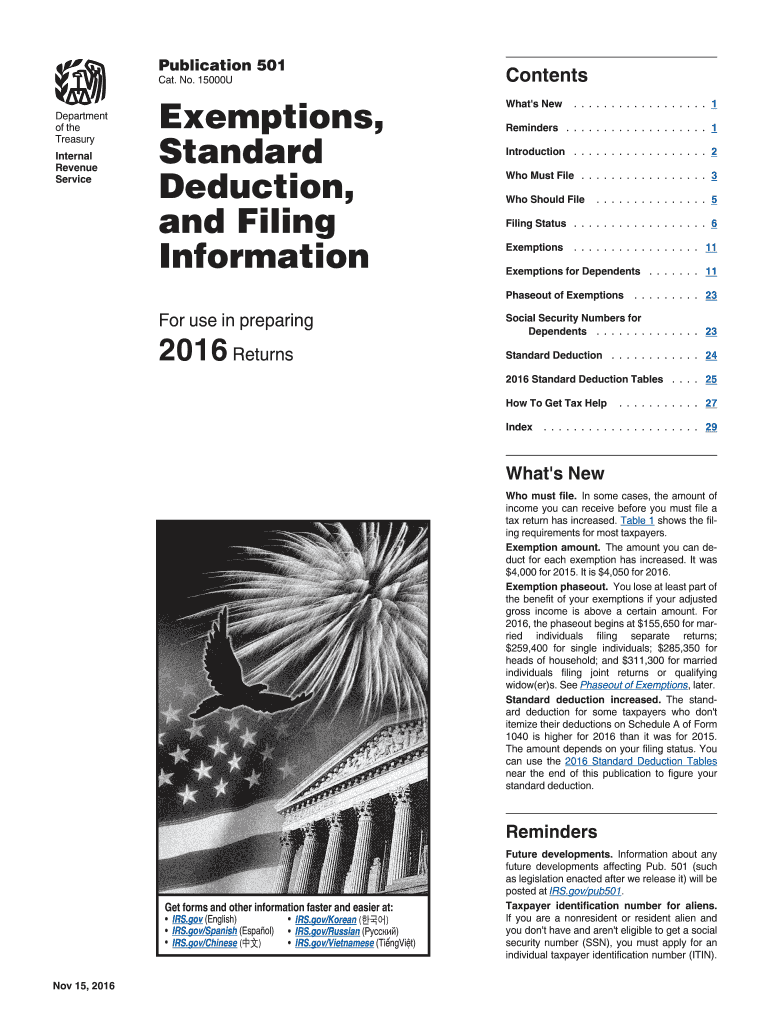







Definition & Significance of Publication Form
Publication 501, for the 2016 tax year, is an essential IRS document providing guidance on exemptions, standard deductions, and filing requirements for U.S. taxpayers. This form is particularly significant as it details who needs to file a tax return for the year, offering updates on any changes from previous years. It aids taxpayers in accurately determining their filing status and outlines exemptions applicable to them, such as those related to dependents. Understanding these aspects ensures compliance with tax laws and helps in making informed decisions about filing the correct tax forms.
How to Use Publication Form
To effectively use Publication 501 for the 2016 tax year, follow these steps:
- Determining Filing Status: The form details how to establish your filing status, whether you're single, married, filing jointly, or head of household.
- Reviewing Exemptions: Check the sections on personal and dependent exemptions to understand who qualifies and what documentation might be needed.
- Calculating Deductions: Utilize the guidance on standard deductions tailored to your filing status and life circumstances.
- Comparing Changes: Analyze how changes from the previous tax year may affect your filing, particularly if you experienced significant life events such as marriage or the birth of a child.
These steps not only help in using the Publication 501 correctly but also aid in ensuring that all applicable deductions and exemptions are claimed.
How to Obtain the Publication Form
Publication 501 can be accessed through several avenues:
- Direct Download from the IRS Website: Visit the IRS website and search for "Publication" to download it directly in PDF format.
- Order by Mail: Request a physical copy through the IRS's order form service, which will mail you the publication free of charge.
- Visit IRS Offices: Pick up a printed version from local IRS offices if you prefer a hard copy for physical reference.
Accessing and retaining this form is vital for ensuring all necessary tax information is at your fingertips come tax season.
Steps to Complete the Publication Form
Completing the Publication 501 involves understanding and inputting specific tax information:
- Gather Necessary Documentation: Collect all related documents such as W-2s, 1099s, and records of deductible expenses.
- Establish Filing Status and Exemptions: Use the form's guidelines to select the appropriate filing status and list all applicable exemptions.
- Calculate Deductions: Cross-verify standard deductions against itemized options if applicable to ensure maximum tax benefits.
- Review Instructions for Reporting Income and Tax Credit Claimed: Make sure each entry aligns with the IRS's expectations, avoiding potential errors.
Completing these steps thoroughly will minimize errors and streamline the filing process.
Key Elements of Publication Form
Publication 501 includes several key components critical to the filing process:
- Filing Requirements: Specifies income thresholds for filing based on age and filing status.
- Filing Status Descriptions: Offers detailed explanations of available filing statuses to aid taxpayers in choosing the correct one.
- Exemptions Information: Provides criteria and amounts for personal and dependent exemptions, enabling deductions that reduce taxable income.
These elements ensure users comprehend the document's full scope, aiding in precise filing.
IRS Guidelines for Publication Form
The IRS guidelines present in Publication 501 offer directives on:
- Filing Thresholds: Clarify the minimum income levels requiring a return for each filing status.
- Exemptions Limitations: Define circumstances under which certain exemptions cannot be claimed.
- Special Situations: Address unique cases such as nonresident aliens and people with overseas income.
Adhering to these guidelines ensures compliance with IRS regulations.
Penalties for Non-Compliance
Failure to comply with Publication 501 guidance can lead to consequences:
- Penalties for Incorrect Filing: Inaccuracies or misstatements could result in fines or additional taxes.
- Late Filing Penalties: Missing filing deadlines can incur fees, adding financial strain.
- Potential Audit Triggers: Non-compliance increases the chance of IRS audits, which can be both time-consuming and costly.
These penalties underscore the importance of thorough and accurate form completion.
Taxpayer Scenarios for Using Publication Form
Publication 501 is applicable to a range of taxpayer scenarios:
- Self-Employed Individuals: Need to account for both income from self-employment and standard deductions.
- Retirees: Must consider income from pensions and social security benefits.
- Students and Young Workers: Often need to determine whether they can be claimed as dependents or should file independently.
Understanding taxpayer-specific scenarios helps navigate potential complexities in tax filing, ensuring each claim is accurate and appropriate.