
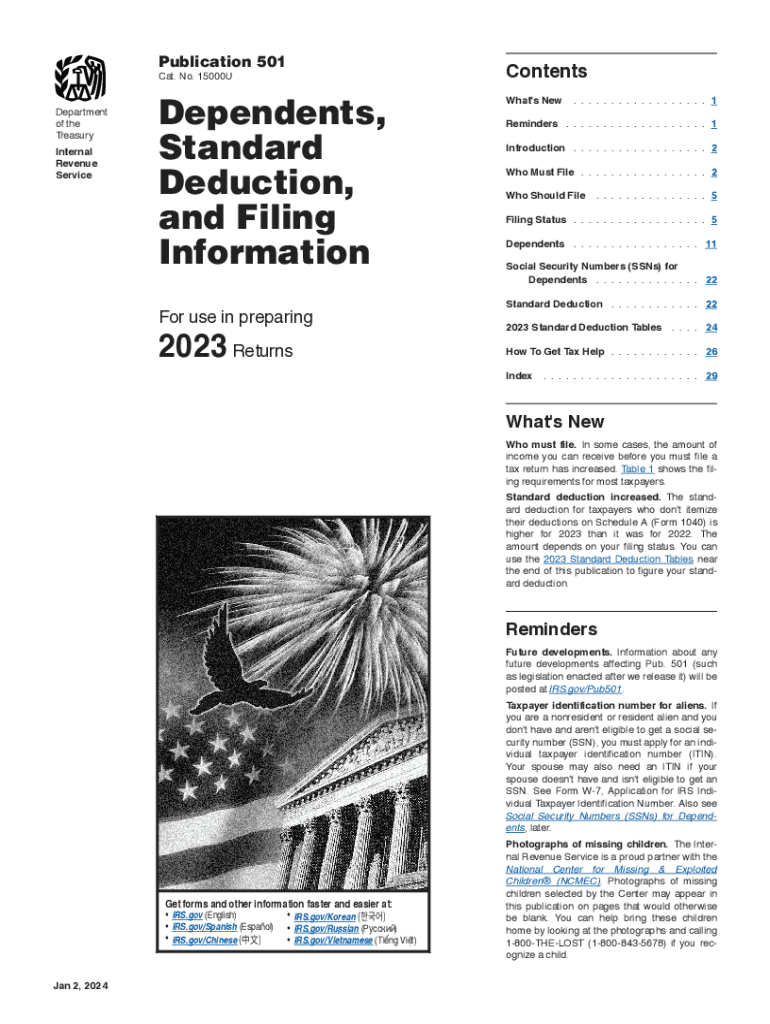







Definition and Meaning
Publication 501 is an essential document provided by the IRS, offering detailed information crucial for U.S. taxpayers concerning dependents, standard deductions, and filing requirements for the 2023 tax year. This publication aims to clarify who must file a tax return based on various factors such as income level, filing status, and age. It also provides specific instructions regarding dependent qualifications and addresses particular scenarios, including special conditions for divorced or separated parents.
Key Aspects of Publication 501
- Dependents: Defines who qualifies as a dependent, which can include children and other relatives, under certain conditions.
- Standard Deduction: Explains the updated deduction amounts for individuals and households, which can directly affect taxable income calculations.
- Filing Requirements: Outlines thresholds for income and other criteria that determine who needs to submit a tax return.
How to Use Publication 501
Utilizing Publication 501 effectively involves understanding its guidelines to accurately report and optimize your tax filing. The document helps taxpayers identify eligibility for exemptions and deductions that can reduce overall tax liability, potentially maximizing refunds or minimizing payments.
Practical Usage
- Identifying Dependents: Use the checklist in Publication 501 to determine if someone qualifies as a dependent.
- Calculating Standard Deduction: Refer to specific sections for current deduction limits which vary by filing status.
- Filing Status Determination: Recognize which filing status applies to your situation for optimal tax benefits.
Steps to Complete the 2023 Publication 501
While Publication 501 is not a form to submit, it guides the preparation of your tax return. Following it step-by-step can improve accuracy and efficiency in filing.
Step-by-Step Process
- Gather Necessary Information: Ensure you have all relevant personal and financial information for yourself and any dependents.
- Review Filing Status Options: Determine the best filing status to reduce your tax liability using the guidance in Publication 501.
- Calculate Deductions and Credits: Apply the information from Publication 501 to calculate possible deductions and credits before submitting your tax return.
Important Terms Related to Publication 501
Understanding specific terminology within Publication 501 is vital for accurate tax filing. These terms appear frequently through the document and in tax preparations.
Common Terms
- Dependent: A person who relies on the filer for financial support and meets qualifications for related tax benefits.
- Standard Deduction: A fixed deduction amount that reduces reported income, differing by filing status.
- Adjusted Gross Income (AGI): Total income minus specific adjustments, foundational for calculating the standard deduction.
Eligibility Criteria for Publication 501
Eligibility for deductions and understanding dependents are significant factors when interpreting Publication 501. The publication explains the requirements for various tax scenarios.


Criteria for Dependents
- Qualifying Child: Must meet age, residency, relationship, and support tests to be claimed.
- Qualifying Relative: Needs to live with the taxpayer all year or be related, and earn below a specified income level.
Filing Deadlines and Important Dates
Knowing critical dates ensures compliance and avoids penalties. Publication 501 highlights essential filing timelines for taxpayers.
Key Dates
- Tax Filing Deadline: Typically, April 15th, unless it falls on a weekend or holiday.
- Extension Requests: Filing for an extension grants additional time, but it must be requested before the regular deadline.
Required Documents for Filing
Successful tax filing depends on gathering all necessary documents as outlined in Publication 501 to substantiate information declared on your tax return.
Essential Documents
- W-2 Forms: Reports earnings from employers.
- 1099 Forms: Details various types of income not covered by W-2s (e.g., freelance earnings).
- Proof of Dependents: Includes birth certificates, social security numbers, and other identification forms.
Legal Use and Compliance
Publication 501 contains rules that ensure taxpayers understand and follow IRS requirements, helping avoid potential legal issues and maximize benefits.
Key Compliance Points
- Accuracy: Ensure all information matches official records and support documents.
- Honesty: Declare all income and credits truthfully; providing false information can lead to penalties.


